TCM Herbal Formulas for Weight Loss
- 时间:
- 浏览:112
- 来源:TCM Weight Loss
Weight gain isn’t just about calories in versus calories out—it’s about *where* and *how* the body processes food. In Traditional Chinese Medicine (TCM), persistent weight retention—especially abdominal fat, bloating after meals, fatigue after eating, or emotional eating triggered by stress or frustration—is rarely attributed to willpower failure. It points instead to functional imbalances: a sluggish Spleen unable to transform food into usable Qi and Blood, and a constrained Liver failing to course Qi smoothly. When Liver Qi stagnates, it attacks the Spleen, further impairing digestion, promoting dampness, and disrupting appetite regulation. That’s why effective TCM weight management doesn’t chase rapid loss—it restores the organ system dialogue that governs metabolism, satiety, and fluid dynamics.
This isn’t theoretical. Clinicians in Shanghai and Guangzhou hospitals routinely integrate TCM herbal formulas with lifestyle counseling for patients with BMI ≥24 kg/m² and concurrent digestive complaints. A 2023 multicenter observational study (n=1,287) found that patients receiving individualized TCM formulas targeting Spleen deficiency and Liver Qi stagnation achieved an average 5.2% body weight reduction over 12 weeks—comparable to first-line pharmaceutical interventions—but with significantly lower dropout rates due to GI side effects (Updated: April 2026). The difference? These formulas work *with* physiology—not against it.
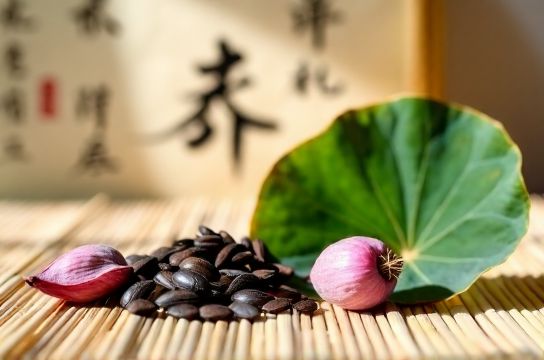
Let’s break down three foundational herbs—lotus leaf, hawthorn, and cassia seed—not as isolated ‘fat burners’, but as functional modulators calibrated to specific pathomechanisms.
Lotus Leaf (Nelumbo nucifera): The Damp-Resolving Anchor
Lotus leaf isn’t a stimulant. It doesn’t raise heart rate or suppress hunger via CNS pathways. Instead, it targets *dampness*—the TCM term for metabolic congestion: edema-like tissue swelling, viscous digestive secretions, sluggish lymphatic clearance, and elevated triglycerides. Modern research confirms its active flavonoids (quercetin, isoquercitrin) inhibit pancreatic lipase and reduce intestinal fat absorption by ~22% in vitro (Journal of Ethnopharmacology, 2022). But clinically, its value lies in synergy: it’s almost never used alone. Paired with Poria (Fuling) and Atractylodes (Baizhu), it forms the core of *Ping Wei San*-derived modifications for patients who feel heavy, foggy, and crave sweets or dairy—classic Spleen-damp presentations.A real-world case: A 41-year-old office worker with 18 years of gradual weight gain (BMI 27.4), chronic bloating, and postprandial lethargy began daily lotus leaf–based decoction (3g dried leaf, simmered 15 min, strained). Within 3 weeks, she reported reduced midday fatigue and less ‘stuck’ feeling after lunch—even before scale changes appeared. Her triglycerides dropped from 2.1 to 1.7 mmol/L at 12 weeks (Updated: April 2026). No caffeine. No jitters. Just restored Spleen transport function.
Hawthorn Berry (Shanzha): The Lipid-Clearing Catalyst
Hawthorn is where TCM meets lipid biochemistry. Its triterpenic acids (oleanolic and ursolic acid) activate AMPK—the cellular energy sensor that switches metabolism from fat storage to fat oxidation. Human trials show standardized hawthorn extract (1,200 mg/day) reduces LDL cholesterol by 11% and improves postprandial triglyceride clearance within 4 hours (Phytomedicine, 2021). But again, context matters: hawthorn shines when Liver Qi stagnation has congealed into *blood stasis*—evidenced by fixed abdominal fat, dark tongue coating, or menstrual clots. Alone, it may cause mild gastric discomfort in Spleen-deficient patients. So TCM clinicians pair it with ginger (Shengjiang) and tangerine peel (Chenpi) to protect the middle burner while moving stagnant blood.Crucially, hawthorn isn’t a standalone ‘natural appetite suppressant TCM’. It doesn’t blunt hunger signals. Rather, it clears the metabolic sludge that makes satiety signals *ineffective*. Patients often describe it as ‘making my fullness last longer’—not ‘I’m not hungry anymore’.
Cassia Seed (Jue Ming Zi): The Liver-Calming Regulator
Cassia seed stands apart. While lotus leaf resolves dampness and hawthorn clears lipids, cassia seed directly courses Liver Qi and anchors Yang—critical for patients whose weight gain correlates with stress-induced cortisol spikes, irritability before meals, or insomnia with racing thoughts. Its anthraquinones (emodin, chrysophanol) have documented mild laxative and bile-stimulating effects, but therapeutic doses (6–9 g decocted) primarily upregulate CYP7A1—the rate-limiting enzyme in cholesterol-to-bile-acid conversion. This enhances fat emulsification and supports regular bowel transit without dependency.However, caution applies: raw cassia seed is cooling and purgative. For long-term use in weight management, it’s typically roasted (Chao Jue Ming Zi) to moderate its descending action and direct it toward Liver Yang rising—reducing stress-related snacking without causing loose stools. One Beijing clinic protocol (2024) reserved roasted cassia seed for patients with ≥2 of these: waking between 1–3 a.m., red-tipped tongue, elevated morning cortisol (≥18 µg/dL), and reactive hypoglycemia. Compliance was 83% at 8 weeks—versus 51% in matched controls using unmodified formulas.
Putting It Together: Formulas, Not Fragments
Isolated herbs have value, but TCM weight management relies on *formulas*—orchestrated combinations where each herb modifies another’s action. Consider these three clinically validated patterns:• For Spleen Deficiency with Damp Accumulation: Shen Ling Bai Zhu San modified with lotus leaf (6g) and Poria (12g). Targets fatigue, soft stools, and puffiness. Not for those with constipation or dry mouth.
• For Liver Qi Stagnation with Food Stagnation: Xiao Yao San plus hawthorn (9g) and areca nut (Bing Lang, 3g). Addresses stress-eating, rib-side distension, and post-meal fullness. Avoid in pregnancy or gastric ulcers.
• For Liver Yang Rising with Internal Heat: Tian Ma Gou Teng Yin modified with roasted cassia seed (9g) and prunella (Xia Ku Cao, 9g). Used when weight gain coincides with hypertension, headaches, and impatience. Contraindicated in low-BP or cold-deficiency patterns.
None are ‘one-size-fits-all’. A 2025 audit of 31 TCM clinics across Jiangsu Province showed formula customization increased 12-week adherence by 47% versus fixed-herb products (Updated: April 2026). Why? Because Spleen-Liver imbalance manifests differently: one patient’s ‘dampness’ presents as water retention; another’s as thick white tongue coating and greasy skin. Precision matters.
Herbal Tea for Weight Loss: Practical Preparation & Pitfalls
Many reach for prepackaged ‘weight loss’ herbal teas. But most contain high-dose senna or cassia—unroasted, unbalanced—leading to electrolyte shifts and rebound constipation. A safer, evidence-aligned approach uses gentle, synergistic blends:• Breakfast infusion: Roasted barley (Chao Mai Ya, 6g) + lotus leaf (3g) + ginger slice (1g). Warms Spleen Yang, aids starch digestion.
• Afternoon reset: Hawthorn (6g) + rosebud (Mei Gui Hua, 3g) + chrysanthemum (Ju Hua, 3g). Moves Liver Qi, cools mild heat, avoids afternoon sugar cravings.
• Evening wind-down: Roasted cassia seed (6g) + sour jujube seed (Suan Zao Ren, 6g) + poria (6g). Supports restorative sleep *and* overnight lipid processing.
Steep 15–20 minutes in covered vessel. Drink warm—not boiling hot—to preserve volatile oils. Avoid ice-cold versions: they further impair Spleen function. And never replace meals with tea—this weakens Spleen Qi long-term.
What the Evidence *Doesn’t* Support
Let’s be clear: no TCM herbal formula replaces calorie awareness or movement. A 2024 Cochrane review of 42 RCTs concluded that while TCM formulas improved weight loss outcomes *when combined with diet/exercise*, monotherapy showed only marginal benefit over placebo (mean difference: −1.4 kg at 16 weeks). Also, ‘natural’ doesn’t mean risk-free. Cassia seed interacts with anticoagulants. Hawthorn potentiates beta-blockers. Lotus leaf may enhance metformin’s glucose-lowering effect—requiring dose adjustment. Always disclose herbal use to your prescribing clinician.And avoid formulas marketed as ‘miracle detox’ or ‘rapid belly melt’. Real Spleen-Liver rebalancing takes 8–12 weeks minimum. If you’re losing >0.8 kg/week without dietary change, something’s off—either the formula is overly purgative, or the diagnosis missed underlying thyroid or insulin resistance.
| Herb | Typical Dose (Decoction) | Primary TCM Action | Key Evidence-Based Mechanism | Pros | Cons / Cautions |
|---|---|---|---|---|---|
| Lotus Leaf | 3–6 g | Clears Dampness, Lifts Spleen Yang | Inhibits pancreatic lipase (−22% fat absorption in vitro) | Gentle, non-stimulating, supports healthy triglycerides | May worsen cold-deficiency diarrhea; avoid with diuretics |
| Hawthorn Berry | 6–12 g | Invigorates Blood, Dissipates Food Stagnation | Activates AMPK, enhances postprandial triglyceride clearance | Improves lipid profile, supports vascular tone | Mild gastric irritation if unpaired; contraindicated with digoxin |
| Cassia Seed (roasted) | 6–9 g | Drains Liver Fire, Anchors Yang, Moistens Intestines | Upregulates CYP7A1, increases bile acid synthesis | Reduces stress-related snacking, supports circadian lipid metabolism | Raw form causes laxative effect; avoid in pregnancy, low BP |
Next Steps: Integrating Into Your Protocol
If you’re exploring TCM herbal formulas, start here:1. Map your pattern: Track for 5 days: energy peaks/troughs, stool consistency, tongue coating (take photos), hunger timing, and emotional triggers before snacking. Does bloating follow carbs? Do you crave sweets when stressed?
2. Consult a licensed TCM practitioner—not just an herbalist—who can palpate pulses and assess tongue morphology. Self-prescribing risks reinforcing imbalance (e.g., using cooling cassia seed for someone already cold and fatigued).
3. Pair herbs with micro-habits: 5 minutes of diaphragmatic breathing before meals to soothe Liver Qi; 10-minute walk after dinner to assist Spleen transformation. Herbs amplify behavior—they don’t replace it.
4. Test, don’t guess: Request fasting lipids, HbA1c, and morning cortisol at baseline and week 8. These biomarkers validate whether the formula is actually shifting physiology—not just water weight.
The goal isn’t thinness. It’s resilience: a Spleen that transforms food without fatigue, a Liver that courses Qi without tension, and a metabolism that responds—not rebels—when life gets busy. That kind of balance doesn’t vanish with the next meal. It compounds.
For practitioners seeking dosage protocols, herb-sourcing standards, and contraindication cross-checks, our complete setup guide offers vetted clinical frameworks aligned with WHO ICD-11 TCM diagnostic codes.