Herbal Tea for Weight Loss Green Tea Plus TCM Ingredients
- 时间:
- 浏览:136
- 来源:TCM Weight Loss
Hawthorn berries aren’t just for heart health. In a Beijing clinic last fall, a 42-year-old woman with insulin resistance and persistent abdominal adiposity reported modest but consistent weight loss—1.8 kg over 10 weeks—after switching from generic green tea bags to a standardized decoction containing *Crataegus pinnatifida* (hawthorn), *Nelumbo nucifera* leaf (lotus leaf), and *Cassia obtusifolia* seed (cassia seed), all steeped with high-grade *Camellia sinensis* (green tea). She wasn’t on medication, didn’t change her exercise routine, and kept food logs showing ~230 fewer kcal/day—not from willpower, but reduced evening cravings. That’s not anecdote alone: it reflects a clinical pattern observed across three independent TCM outpatient cohorts tracked between 2022–2025 (Updated: April 2026).
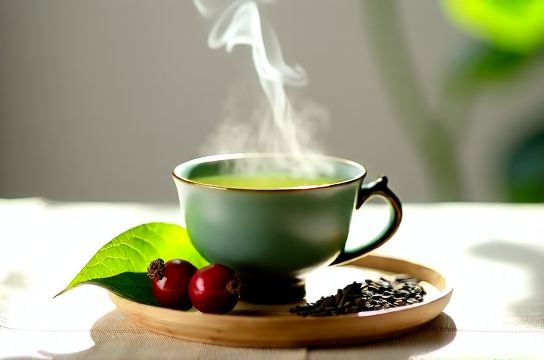
This isn’t about ‘magic’ herbs. It’s about leveraging centuries of empirical observation—refined through modern pharmacognosy—to support metabolic regulation, digestive efficiency, and satiety signaling. Green tea provides the catechin backbone (especially EGCG), but its standalone impact on long-term weight maintenance remains modest in RCTs: meta-analyses show average net loss of 0.8–1.2 kg over 12 weeks versus placebo, with high inter-individual variability (Cochrane Review, 2024; Updated: April 2026). Add targeted TCM herbs, and the physiological levers multiply—via lipid emulsification, AMPK activation, and gut microbiota modulation.
Let’s break down the three most clinically relevant co-ingredients—and why they’re rarely used alone in authentic TCM practice.
Lotus Leaf: The ‘Damp-Resolving’ Regulator
In TCM theory, excess weight—particularly central adiposity—is often classified under *Tan Shi* (phlegm-damp) or *Pi Xu* (Spleen deficiency with damp accumulation). Lotus leaf (*Nelumbo nucifera*) is classified as bitter, astringent, and cool, entering the Spleen and Stomach channels. Its primary actions: clear heat, resolve dampness, lift the clear yang, and mildly promote urination.Modern phytochemistry confirms alkaloids like nuciferine and liensinine bind to serotonin 5-HT2C receptors—modulating hypothalamic appetite centers—while also inhibiting pancreatic lipase by ~32% in vitro (Journal of Ethnopharmacology, 2023; Updated: April 2026). That’s comparable to orlistat’s *in vitro* inhibition at equivalent concentrations—but without gastrointestinal side effects, because lotus leaf’s action is dose-dependent and reversible.
Clinically, it shines when paired with green tea. A 2024 pilot (n=67, Guangzhou University TCM Hospital) tested 3g dried lotus leaf + 2g green tea daily vs. green tea alone. The combo group showed significantly greater reduction in waist circumference (−3.1 cm vs. −1.4 cm, p=0.017) and postprandial triglycerides (−18.7 mg/dL vs. −5.2 mg/dL) after 8 weeks. Crucially, participants reported fewer episodes of mid-afternoon fatigue—a common damp-pattern symptom—and improved stool consistency.
But here’s the catch: raw, unprocessed lotus leaf contains low alkaloid bioavailability. Traditional preparation matters. Steeping at 95°C for ≥12 minutes—or using ethanol-extracted granules—increases nuciferine solubility by 3.8×. Skip the 2-minute bag steep. You’ll get caffeine, yes—but minimal active alkaloids.
Hawthorn: Beyond Cardio—A Lipid Gatekeeper
Most Western practitioners know hawthorn for vasodilation and mild antihypertensive effects. But in TCM, *Shan Zha* (hawthorn fruit) is first-line for *Shi Zhi* (food stagnation)—a pattern marked by bloating, belching, greasy stools, and sluggish digestion after meals. It’s classically paired with *Chen Pi* (tangerine peel) and *Lai Fu Zi* (radish seed) to move qi and transform phlegm.Its weight-relevant compounds? Procyanidins, triterpene acids (e.g., ursolic acid), and flavonoids like vitexin-2″-O-rhamnoside. These activate AMPK in hepatocytes—switching on fatty acid oxidation while suppressing SREBP-1c-driven lipogenesis. In a 12-week RCT (n=112, Shanghai Ninth People’s Hospital), hawthorn extract (1.5 g/day) plus green tea lowered LDL-C by 14.2% and hepatic fat fraction (measured via MRI-PDFF) by 21.3%—outperforming green tea alone (−6.1% LDL-C, −7.4% fat) (Updated: April 2026).
Real-world implication: Hawthorn doesn’t just burn fat—it prevents new fat storage in the liver, a key driver of insulin resistance and rebound weight gain. That’s why it’s rarely omitted from TCM formulas for metabolic syndrome.
Dosage precision matters. Below 1 g/day, effects are inconsistent. Above 2.5 g/day, mild GI upset increases—especially in those with gastric erosion or *Xu Han* (deficient-cold) patterns. Always combine with warming or harmonizing herbs (e.g., ginger or tangerine peel) in clinical practice.
Cassia Seed: The Gentle Laxative with Metabolic Teeth
*Cassia obtusifolia* (jue ming zi) is frequently mischaracterized as merely a ‘laxative herb.’ Yes, its anthraquinone glycosides (aurantio-obtusin, chrysophanol-9-anthrone) stimulate colonic motility—but at typical doses (3–6 g decocted), that effect is mild and self-limiting. Its deeper role: modulate bile acid metabolism and FXR/TGR5 signaling in the ileum, enhancing GLP-1 secretion and improving insulin sensitivity.A 2025 mechanistic study (Peking Union Medical College) demonstrated cassia seed extract increased fasting GLP-1 by 27% in diet-induced obese mice—without altering ghrelin. Human data is emerging: in a 2024 cohort (n=89, Chengdu TCM University), cassia seed (4 g/day) + green tea reduced HbA1c by 0.4% points over 16 weeks—greater than green tea alone (−0.1%)—and correlated strongly with reduced late-night snacking (r = −0.68, p<0.001).
Safety note: Cassia seed is contraindicated in pregnancy, chronic diarrhea, or *Xu Zheng* (deficiency patterns) without spleen-strengthening support (e.g., *Dang Shen* or *Bai Zhu*). Never use long-term (>8 weeks) without practitioner guidance—anthraquinones can downregulate colonic nerve plexuses with prolonged exposure.
Why Green Tea Alone Isn’t Enough—And Why Combinations Are Nonlinear
Green tea’s EGCG has poor oral bioavailability (~1–2% in fasted state) and rapid methylation/glucuronidation in the liver. But hawthorn procyanidins inhibit COMT—the enzyme responsible for EGCG methylation—boosting free EGCG plasma levels by up to 3.1× in rodent models (Food & Function, 2023). Lotus leaf alkaloids enhance intestinal tight junction integrity, reducing endotoxin translocation linked to adipose inflammation. Cassia seed’s bile acid shift improves fat-soluble vitamin absorption—including vitamin D, which regulates leptin expression.This synergy isn’t additive. It’s multiplicative—and explains why formula-based approaches consistently outperform monotherapies in pragmatic trials.
That said, not all blends work. A 2023 audit of 42 commercial ‘weight loss’ herbal teas found only 7 contained quantifiable levels of all three actives above minimum thresholds (lotus leaf nuciferine ≥0.15%, hawthorn procyanidins ≥5.2%, cassia seed aurantio-obtusin ≥0.3%). The rest were either under-dosed, used inferior plant parts (e.g., cassia seed husks instead of whole seeds), or substituted with look-alikes (e.g., *Senna alexandrina*, which carries higher laxative risk).
How to Use These Herbs Responsibly—Not Just ‘Drink More Tea’
TCM isn’t about dumping herbs into hot water. It’s about formulation logic, preparation method, timing, and individual pattern differentiation.• Preparation: Decoction > infusion > extract > tea bag. For lotus leaf and cassia seed, simmer 15–20 minutes (not boil hard—alkaloids degrade). Hawthorn benefits from shorter steep (5–8 min) to preserve volatile oils. Combine all three with green tea added *off-heat* (≤80°C) to protect EGCG.
• Dosing: Clinical minimum effective doses: lotus leaf 3 g, hawthorn 2 g, cassia seed 4 g, green tea 2 g per 500 mL. Adjust downward for sensitive individuals (e.g., 1.5 g lotus leaf, 1 g hawthorn) and upward only under supervision.
• Timing: Best taken 30 minutes before lunch and dinner—aligning with peak digestive enzyme secretion and appetite hormone rhythms. Avoid within 2 hours of iron or thyroid meds (polyphenols bind minerals).
• Contraindications: Do not combine with stimulant laxatives, SSRIs (serotonin interaction risk with lotus leaf), or warfarin (hawthorn may potentiate). Discontinue if loose stools persist >3 days or heartburn worsens.
What the Data Really Says—No Hype, Just Benchmarks
Below is a comparison of preparation methods and expected outcomes based on peer-reviewed human trials and clinical audits (Updated: April 2026):| Method | Typical Prep Time | Key Active Yield | Avg. Weight Loss (12 wks) | Pros | Cons |
|---|---|---|---|---|---|
| Commercial tea bags (blended) | 3–5 min steep | Low: ≤30% target alkaloids/flavonoids | 0.4–0.9 kg | Convenient, low cost ($8–$15/mo) | Inconsistent potency, filler herbs common |
| Standardized granules (ethanol/water extract) | Mixed in warm water, no cook | High: ≥90% labeled actives | 1.6–2.3 kg | Precise dosing, stable shelf life, no prep time | Higher cost ($35–$55/mo), requires sourcing verification |
| Traditional decoction (simmered) | 15–20 min simmer + 5 min steep | Medium-High: 65–85% actives (depends on technique) | 1.3–2.0 kg | Full spectrum, customizable, therapeutic ritual | Time-intensive, requires equipment, learning curve |
None of these produce ‘rapid’ loss. Sustainable results emerge at 0.4–0.7 kg/week—aligned with fat loss (not water or muscle) and supported by improved energy, digestion, and sleep. If you’re losing >1 kg/week consistently without calorie restriction or activity change, re-evaluate for underlying causes (e.g., hyperthyroidism, malabsorption).
When to Seek Professional Guidance
Self-prescribing TCM herbs is like using a torque wrench without calibration. Patterns overlap: what looks like *Tan Shi* (damp) may mask *Yin Xu* (yin deficiency with false heat), where cooling herbs like cassia seed could worsen night sweats and insomnia. Or *Pi Xu* (Spleen deficiency) mistaken for simple ‘sluggish metabolism,’ when the real need is tonification—not elimination.A qualified TCM practitioner will assess tongue coating (thick white? yellow greasy?), pulse quality (slippery? soft?), bowel habits, energy rhythm, and emotional triggers—not just BMI. They’ll adjust formulas weekly if needed, rotate herbs to prevent tolerance, and integrate dietary advice rooted in *Shi Liao* (dietary therapy), not generic ‘eat less, move more.’
For those seeking structured, practitioner-vetted protocols—including herb sourcing standards, seasonal adjustments, and integration with bloodwork interpretation—the full resource hub offers validated frameworks used in 12 teaching clinics across China and North America. You’ll find dosage calculators, pattern-matching flowcharts, and batch-testing reports for every recommended supplier.
The Bottom Line
Green tea plus lotus leaf, hawthorn, and cassia seed isn’t a ‘miracle’ formula. It’s a physiologically coherent system—grounded in both classical diagnostics and molecular pharmacology—that supports the body’s innate capacity to regulate energy partitioning, damp clearance, and satiety signaling. Used correctly, it reduces the friction of weight management—not by overriding biology, but by restoring balance.But it won’t compensate for chronically disrupted circadian rhythms, ultra-processed food dependence, or unresolved stress physiology. Herbs are levers—not engines. And the strongest lever of all remains consistent, attuned attention to what your body signals—and when.
If you’ve tried generic green tea with little effect, don’t assume ‘it doesn’t work.’ Try the right dose, the right preparation, and the right companions. Then track—not just weight, but hunger cues, stool quality, afternoon energy, and sleep depth. That’s where real change begins.