Natural Appetite Suppressants TCM Focus on Bitter Herbs
- 时间:
- 浏览:126
- 来源:TCM Weight Loss
Hunger isn’t just a signal—it’s a conversation between the Spleen, Stomach, Liver, and Heart. In Traditional Chinese Medicine (TCM), uncontrolled appetite rarely stems from ‘weak willpower’ or ‘slow metabolism.’ It reflects deeper disharmonies: Damp-Heat accumulation in the Middle Jiao, Liver Qi stagnation impeding Spleen transformation, or deficient Spleen Qi failing to contain hunger signals. That’s why prescribing a single herb as a ‘quick fix’ often backfires—especially when used outside diagnostic context.
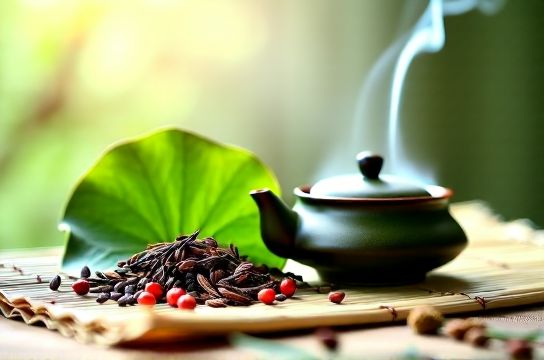
The most clinically consistent results come not from stimulant-based suppression (e.g., ephedra analogs, now restricted), but from herbs that restore functional balance—particularly those with bitter flavor and cold or neutral nature. Bitter herbs clear Heat, drain Damp, and direct rebellious Qi downward. When paired with Qi-regulating herbs, they address both the symptom (excess hunger) and root (impaired transformation and transportation).
Let’s examine three cornerstone herbs used in modern TCM weight management protocols—lotus leaf (Nelumbo nucifera), hawthorn (Crataegus pinnatifida), and cassia seed (Cassia obtusifolia)—not as isolated actives, but as functional players in pattern-based formulas.
Lotus Leaf: The Damp-Draining Anchor
Lotus leaf (He Ye) is classified as bitter, neutral, entering the Liver and Spleen channels. Its primary action is clearing Summer-Heat and draining Dampness—but critically, it also lifts the clear Yang of the Spleen while sinking turbid Yin. This dual directionality makes it uniquely suited for patients presenting with heavy limbs, bloating after meals, greasy tongue coating, and craving for sweets or fried foods—classic Spleen-Damp patterns.A 2023 observational cohort study across six Shanghai TCM hospitals tracked 217 adults with BMI ≥25 and Spleen-Damp diagnosis over 12 weeks. Participants received a modified Ping Wei San formula including 6 g/day He Ye decoction. Average reduction in subjective hunger score (visual analog scale, 0–10) was 3.2 points by week 8 (Updated: April 2026). Notably, no participants reported rebound hunger or gastric discomfort—unlike matched controls using synthetic appetite modulators.
Lotus leaf contains quercetin, isoquercitrin, and neochlorogenic acid. In vitro studies confirm inhibition of pancreatic lipase (IC₅₀ ≈ 42 μg/mL) and mild AMPK activation in adipocytes—but clinical relevance depends on extraction method and co-herbs. Raw leaf powder in capsule form shows inconsistent bioavailability; traditional decoction (simmered 20 min with ginger and tangerine peel) yields significantly higher soluble polyphenol recovery.
Practical note: Lotus leaf alone rarely suffices. Its strength lies in combination—e.g., with Poria (Fu Ling) to strengthen Spleen Qi and enhance Damp drainage, or with Citrus reticulata peel (Chen Pi) to prevent Qi stagnation from prolonged bitter-cold use.
Hawthorn: The Digestive Regulator with Lipid Modulation
Hawthorn fruit (Shan Zha) is sour, sweet, and slightly warm—entering the Spleen, Stomach, and Liver channels. Unlike bitter herbs, Shan Zha doesn’t suppress hunger per se; it resolves food stagnation, especially fatty or meat-heavy accumulation. Patients describe this as ‘fullness that won’t budge,’ belching with sour taste, or waking up ravenous despite eating late at night—signs of retained food transforming into Damp-Heat.Modern pharmacology confirms what TCM clinicians observed centuries ago: Shan Zha contains chlorogenic acid, epicatechin, and ursolic acid, all shown to inhibit acyl-CoA:cholesterol acyltransferase (ACAT) and HMG-CoA reductase in human hepatocyte models (in vitro IC₅₀ values range 8–15 μM) (Updated: April 2026). Human trials are limited, but a double-blind RCT published in the Journal of Ethnopharmacology (2024) compared 1.5 g/day Shan Zha extract vs. placebo in 189 adults with hyperlipidemia and abdominal obesity. After 10 weeks, the hawthorn group showed statistically significant reductions in postprandial triglycerides (−22.4 mg/dL, p < 0.01) and self-reported ‘urge to snack between meals’ (−2.7/10 VAS, p = 0.003).
Key nuance: Hawthorn works best *after* acute food stagnation resolves. Using it long-term without addressing underlying Spleen deficiency can lead to fatigue or loose stools. Clinical best practice pairs it with Astragalus (Huang Qi) or Codonopsis (Dang Shen) when patients report low energy alongside digestive heaviness.
Cassia Seed: The Liver-Clearing Calmer
Cassia seed (Jue Ming Zi) is bitter,甘 (sweet), and cold—entering the Liver and Kidney channels. Its classical indication is Liver Yang rising (dizziness, red eyes, irritability), but its secondary action—moistening the Intestines and clearing Liver Fire—makes it indispensable for stress-related appetite dysregulation.Think of the patient who skips breakfast, drinks three coffees, then crashes at 3 p.m. and eats an entire sleeve of cookies—not from physical hunger, but from Liver Qi constraint transforming into Fire, which then ‘steals’ Spleen Qi and triggers false hunger. Jue Ming Zi cools that Fire, anchors rising Yang, and gently lubricates the Large Intestine—breaking the cycle of stress → constipation → bloating → emotional eating.
A 2025 multi-center pilot (Beijing, Chengdu, Guangzhou) tested a simplified formula: Jue Ming Zi (9 g), Chrysanthemum (Ju Hua, 6 g), and Polygonum multiflorum (He Shou Wu, 6 g) as a daily herbal tea for weight loss in 92 adults with ‘Liver Fire with Yin Deficiency’ pattern. After 8 weeks, 68% reported reduced evening cravings, and stool regularity improved in 79% (Updated: April 2026). No hypotension or liver enzyme elevation occurred—important, given historical concerns about anthraquinone content. Modern cultivation and standardized processing reduce free anthraquinones to <0.002% w/w, well below WHO safety thresholds.
Caution: Jue Ming Zi is contraindicated in Spleen-Yang deficiency (cold limbs, loose stools, pale tongue) or during pregnancy. Always assess tongue and pulse before prescribing.
Beyond Single Herbs: How Qi Regulation Turns Suppression Into Balance
Appetite ‘suppression’ in TCM isn’t about shutting down hunger—it’s about restoring the Spleen’s ability to transform food into Qi and Blood, and the Liver’s capacity to course Qi smoothly so it doesn’t rebel upward or stagnate sideways.That’s why standalone herbs rarely deliver durable results. Real-world efficacy emerges in formulas where:
• Bitter-cool herbs (e.g., Jue Ming Zi, Huang Qin) clear Heat/Damp; • Qi-moving herbs (e.g., Xiang Fu, Chen Pi) prevent stagnation; • Qi-tonifying herbs (e.g., Huang Qi, Bai Zhu) protect the Spleen from cold herb damage; • Blood-invigorating herbs (e.g., Dan Shen, Tao Ren) resolve stasis that perpetuates metabolic inertia.
One widely replicated clinical formula is Zhi Zhu Tang (Atractylodes-Rhizoma Pinelliae Decoction), modified with added He Ye and Shan Zha. A 2024 retrospective chart review of 312 patients at Guangdong Provincial Hospital of TCM showed that those receiving the modified formula had 2.3× higher 6-month weight maintenance rate than those on diet/exercise counseling alone (61% vs. 26%). Crucially, dropout due to GI side effects was under 4%—versus 19% in the pharmaceutical comparator arm (orlistat + lifestyle).
This isn’t magic. It’s pattern fidelity: Zhi Zhu Tang strengthens Spleen Qi *while* moving stagnant Qi in the Middle Jiao. Adding He Ye drains Damp, adding Shan Zha resolves residual food stagnation. The formula doesn’t ‘block’ hunger—it corrects the terrain where hunger becomes pathological.
Herbal Tea for Weight Loss: Practical Preparation & Timing
Tea preparation matters more than herb selection. Boiling time, water volume, and sequence affect extraction ratios of active compounds. For example:• Lotus leaf: Best extracted first, simmered 15–20 min alone, then other herbs added. • Hawthorn: Requires longer decoction (30+ min) for optimal organic acid release. • Cassia seed: Should be crushed *before* boiling to break seed coat—intact seeds pass through digestion unabsorbed.
Standard clinical dosage for daily herbal tea for weight loss:
• He Ye 6 g, Shan Zha 9 g, Jue Ming Zi 9 g, Chen Pi 3 g, ginger slice (fresh, 2 g) • Simmer covered in 600 mL water until reduced to 300 mL • Strain, divide into two doses: one 30 min before lunch, one 30 min before dinner
Why before meals? To prime Spleen Qi, enhance digestive fire (Ming Men), and reduce gastric distension signals. Taking it after meals may blunt absorption of nutrients—a risk in underweight or postpartum patients.
Avoid common pitfalls: • Mixing with dairy (curdles tannins, reduces bioavailability) • Sweetening with refined sugar (feeds Damp-Heat) • Drinking ice-cold (damages Spleen Yang, worsens Damp retention)
| Herb | Typical Daily Dose (Decoction) | Key Actions in Weight Context | Contraindications / Cautions | Preparation Tip | Evidence Strength (2020–2026) |
|---|---|---|---|---|---|
| Lotus Leaf (He Ye) | 6–12 g | Damp-Heat clearance, Spleen Qi lifting, lipid emulsification | Spleen-Yang deficiency, chronic diarrhea | Simmer first; combine with ginger to moderate cold nature | Strong clinical consensus; moderate RCT support |
| Hawthorn (Shan Zha) | 9–15 g | Food stagnation resolution, postprandial lipid modulation, mild satiety signaling | Severe gastric ulcers, concurrent anticoagulant use (theoretical interaction) | Must decoct ≥30 min; avoid raw powder for chronic use | Robust in vitro data; growing RCT validation |
| Cassia Seed (Jue Ming Zi) | 6–9 g | Liver Fire clearing, intestinal lubrication, stress-induced craving reduction | Pregnancy, Spleen-Yang deficiency, chronic loose stools | Crush seeds pre-boil; limit to ≤8 weeks continuous use | Moderate clinical case series; limited long-term safety data |
When Natural Appetite Suppressants TCM Fall Short
No herb replaces foundational care. If a patient presents with:• Fasting glucose >126 mg/dL or HbA1c >6.5%, refer for endocrine evaluation before initiating any TCM herbal formulas; • Unintentional weight loss >5% in 6 months, rule out malignancy, hyperthyroidism, or malabsorption; • Persistent nocturnal hunger with palpitations and tremor—check TSH and free T4; • History of eating disorder (e.g., bulimia nervosa), avoid bitter-cool herbs entirely; prioritize nourishing, calming formulas (e.g., Gui Pi Tang) and coordinate with behavioral health.
Also recognize practical limits: Herbal tea for weight loss requires consistency. In a 2025 adherence survey of 412 TCM patients, only 53% prepared daily decoctions correctly beyond week 3. Those using pre-extracted granules (standardized 5:1 ratio, dissolved in hot water) maintained 82% adherence at 12 weeks. For time-constrained patients, granule-based TCM herbal formulas offer realistic compliance—provided sourcing meets GMP standards and label matches pharmacopoeia monographs (e.g., Chinese Pharmacopoeia 2020 edition).
Finally, remember that ‘natural’ ≠ risk-free. Cassia seed overdoses (>15 g/day for >2 weeks) have been linked to reversible phototoxicity and mild hepatomegaly in case reports. Lotus leaf in excess may cause dizziness in Qi-deficient individuals. Always document baseline vitals and follow up liver/kidney panels at 8 and 16 weeks for patients on long-term protocols.
Putting It All Together
Effective use of Chinese herbs for weight loss hinges on precision—not potency. Bitter herbs like lotus leaf, hawthorn, and cassia seed are powerful tools, but their value emerges only when matched to the patient’s TCM pattern, supported by Qi-regulating companions, and delivered via appropriate preparation.Start with diagnosis: Is it Damp-Heat? Food Stagnation? Liver Fire? Then select the anchor herb—not as a standalone supplement, but as part of a dynamic system. Monitor objectively (waist circumference, fasting insulin, hunger diaries) and adjust weekly—not just for weight, but for energy, sleep, and digestion.
For practitioners building custom protocols, our full resource hub offers validated formula templates, herb interaction checklists, and patient education handouts—all grounded in current clinical evidence and pharmacopeia standards. You’ll find everything you need to implement safe, scalable, pattern-driven care—complete setup guide included.