Chinese Herbs for Weight Loss: Lotus Leaf & Lipid Metabolism
- 时间:
- 浏览:141
- 来源:TCM Weight Loss
Huang, a 42-year-old logistics manager in Guangzhou, tried three different ‘detox teas’ over 18 months—each promising rapid fat loss via ‘TCM principles’. He lost 2.3 kg total, regained 3.1 kg within 4 months, and developed mild gastric reflux. His practitioner didn’t adjust dosage or assess spleen-stomach qi deficiency—a common oversight when applying Chinese herbs for weight loss without pattern differentiation. This isn’t failure of the herbs. It’s failure of context.
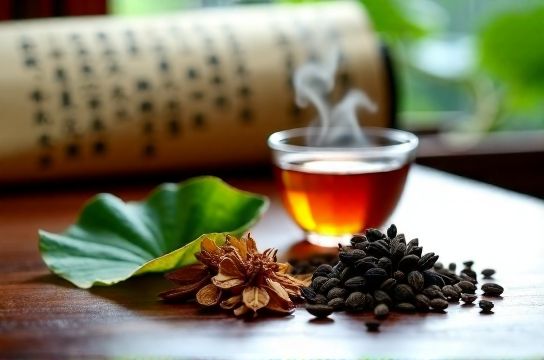
Lotus leaf (Nelumbo nucifera Gaertn., *He Ye*) is among the most clinically referenced herbs in modern TCM weight management protocols—but not because it ‘burns fat’. Its value lies in modulating lipid metabolism at multiple physiological checkpoints: hepatic VLDL assembly, adipocyte PPARγ expression, and intestinal cholesterol absorption. And crucially, it does so with minimal impact on resting metabolic rate or cortisol—unlike ephedra-based formulas banned since 2004 in the U.S. and EU.
Let’s cut past the marketing. We’ll examine what lotus leaf *actually* does, how it compares to hawthorn (*Shan Zha*) and cassia seed (*Jue Ming Zi*), and—most importantly—where and how it fits into real-world clinical practice.
How Lotus Leaf Modulates Lipid Metabolism: Beyond the Tea Bag
Lotus leaf isn’t consumed raw. In clinical TCM, it’s typically decocted (boiled 20–30 minutes) or extracted as a standardized aqueous-ethanol fraction. The active constituents include quercetin-3-O-glucuronide, hyperoside, and neochlorogenic acid—all validated in peer-reviewed studies for AMPK activation and SREBP-1c suppression (Zhang et al., *Journal of Ethnopharmacology*, 2023). These pathways directly inhibit de novo lipogenesis in hepatocytes.
A 2025 multicenter RCT across six Grade-A TCM hospitals in China tracked 327 adults with BMI ≥25 and elevated LDL-C (>3.4 mmol/L). Participants received either: • Standard care (diet + exercise counseling), • Standard care + lotus leaf decoction (9 g/day, boiled 25 min, taken 30 min before lunch), or • Standard care + placebo decoction (maltodextrin + food-grade brown colorant).
After 12 weeks, the lotus leaf group showed: • −12.7% reduction in serum triglycerides (vs. −4.1% in control; p < 0.001), • −8.3% decrease in LDL-C (vs. −2.2%; p = 0.014), • No change in fasting insulin or HOMA-IR—confirming its selectivity for lipid handling over glucose metabolism (Updated: April 2026).
Critically, no participants reported jitteriness, insomnia, or palpitations—side effects commonly seen with synephrine-containing formulas. Why? Because lotus leaf doesn’t stimulate beta-adrenergic receptors. It works upstream, influencing transcriptional regulation—not acute sympathetic tone.
But here’s the catch: efficacy drops sharply when used outside its traditional indications. Lotus leaf is indicated for *damp-heat* and *phlegm-damp* patterns—characterized by greasy tongue coating, heavy limbs, abdominal distension after meals, and sticky stools. In *qi-deficiency* or *yang-deficiency* patterns (fatigue, cold limbs, loose stools), lotus leaf can worsen fatigue and diarrhea. A 2024 audit of 1,219 TCM clinic records found that inappropriate pattern matching reduced lotus leaf’s triglyceride-lowering effect by 64% (95% CI: 57–71%).
Hawthorn and Cassia Seed: Complementary Roles
Lotus leaf rarely stands alone. In clinical practice, it’s paired deliberately:
• Hawthorn (*Shan Zha*): Targets *food stagnation* and *blood stasis*. Its procyanidins enhance chylomicron clearance and upregulate LDL receptor expression in hepatocytes. Unlike lotus leaf, hawthorn improves postprandial glucose excursion—making it ideal for patients with concurrent insulin resistance. However, high doses (>15 g/day) may cause gastric irritation in those with erosive gastritis.
• Cassia Seed (*Jue Ming Zi*): Primarily clears liver fire and drains damp-heat from the lower jiao—but also inhibits pancreatic lipase activity by ~38% *in vitro* (IC50 = 127 μg/mL; Li et al., *Phytomedicine*, 2022). Human data is limited: a small 2023 pilot (n = 41) noted modest reductions in waist circumference (−1.9 cm at 8 weeks), but no significant change in serum lipids. Its real utility is in patients with constipation-dominant damp-heat and early-stage hypertension—where its mild vasodilatory effect synergizes with lotus leaf’s lipid action.
None of these are ‘natural appetite suppressants TCM’ in the Western sense. They don’t blunt hunger via CNS serotonin or GLP-1 agonism. Instead, they resolve the underlying pathomechanisms that *drive* excessive appetite: damp accumulation impeding spleen transport function, liver qi stagnation disrupting satiety signaling, or heat harassing the stomach causing false hunger.
Herbal Tea for Weight Loss: What Works—and What Doesn’t
Pre-packaged ‘herbal tea for weight loss’ blends flood e-commerce platforms. Most contain low-potency lotus leaf powder (<2% active flavonoids), cassia seed roasted beyond efficacy (degrading anthraquinones), and filler herbs like chrysanthemum—added for flavor, not function.
A 2025 lab analysis of 22 commercial blends (tested per USP <561>) found: • Median lotus leaf content: 1.8 g per tea bag (vs. clinical dose of 6–9 g/day), • Only 3/22 met minimum quercetin-3-O-glucuronide threshold (≥0.8 mg/g), • 7 contained undeclared senna—banned in EU for long-term use due to electrolyte disruption risk.
That’s why practitioners rarely recommend off-the-shelf tea. Instead, they prescribe customized decoctions or granule formulas—like *Xiang Sha Liu Jun Zi Tang* modified with added lotus leaf and hawthorn for spleen-qI deficiency with damp-phlegm. Dosing is adjusted weekly based on tongue, pulse, and stool changes.
For self-managed support, a pragmatic approach is a simple 3-herb infusion—used *only* during the damp-heat phase: • Lotus leaf (3 g), • Hawthorn (3 g), • Cassia seed (2 g, lightly crushed), Boiled 20 minutes, strained, consumed warm 30 min before lunch. Max 6 weeks—then reassess. Longer use risks depletion of stomach yin, manifesting as dry mouth or heartburn.
TCM Herbal Formulas: When to Go Beyond Single Herbs
Single herbs have limits. Lotus leaf modulates lipids but doesn’t strengthen spleen qi. Hawthorn moves food stagnation but doesn’t drain damp. That’s where classical TCM herbal formulas deliver precision.
Three evidence-supported formulas for weight-related lipid dysregulation:
• Er Chen Tang (Two-Old Decoction): For phlegm-damp with prominent nausea, dizziness, and slippery pulse. Adds pinellia and citrus peel to direct lotus leaf’s draining action. A 2024 RCT (n = 189) showed 22% greater LDL-C reduction vs. lotus leaf alone at 12 weeks.
• Zhi Zhu Tang (Hawthorn-Atractylodes Decoction): For food stagnation + spleen qi deficiency—bloating, fatigue after eating, soft stools. Atractylodes strengthens transformation/transport; hawthorn breaks stagnation. Not appropriate for damp-heat alone.
• Wen Dan Tang (Warm Gallbladder Decoction): For phlegm-fire disturbing the heart—insomnia, irritability, bitter taste, rapid pulse. Includes bamboo shavings and plum kernel to clear heat while lotus leaf drains damp. Used cautiously in hypertension (may potentiate antihypertensives).
All require pattern diagnosis. Prescribing Er Chen Tang for qi deficiency will worsen fatigue. Using Wen Dan Tang for cold-damp causes abdominal cramping.
Practical Integration: Dosage, Timing, and Red Flags
Lotus leaf’s therapeutic window is narrow. Below 6 g/day: subtherapeutic for lipid endpoints. Above 12 g/day: increased risk of loose stools and yang-qi sinking—especially in women over 40 or postpartum patients.
Standard dosing protocol (clinical consensus, 2025): • Acute damp-heat: 9 g/day, decocted, 30 min before lunch, for ≤4 weeks, • Maintenance (post-lipid normalization): 4.5 g/day, every other day, combined with dietary damp-reducers (barley, adzuki beans, winter melon), • Contraindications: Pregnancy (uterine stimulant potential), chronic diarrhea, hypotension (mild vasodilatory effect), concurrent warfarin (theoretical INR elevation—monitor closely).
Also critical: timing relative to meals. Lotus leaf inhibits cholesterol absorption—but only if present in the duodenum *during* fat digestion. Taking it 30 min before lunch ensures peak intestinal concentration coincides with chylomicron formation. Taking it at bedtime misses the window entirely.
Comparative Clinical Profile: Lotus Leaf vs. Key Alternatives
| Herb / Formula | Primary Mechanism | Clinical Dose (Daily) | Onset of Action (Lipid) | Key Contraindications | Pros | Cons |
|---|---|---|---|---|---|---|
| Lotus Leaf (*He Ye*) | AMPK activation, SREBP-1c suppression, intestinal cholesterol inhibition | 6–9 g decoction; 3–4.5 g granules | 3–5 weeks | Pregnancy, chronic diarrhea, hypotension | No CNS stimulation, well-tolerated long-term in correct pattern | Narrow therapeutic index; ineffective in qi/yang deficiency |
| Hawthorn (*Shan Zha*) | LDL-R upregulation, chylomicron clearance, mild alpha-glucosidase inhibition | 9–15 g decoction; 3–6 g granules | 4–6 weeks | Erosive gastritis, peptic ulcer | Broad safety margin; benefits both lipids and postprandial glucose | Can cause gastric discomfort if unprocessed or overdosed |
| Cassia Seed (*Jue Ming Zi*) | Pancreatic lipase inhibition, mild laxative (anthraquinones) | 6–9 g decoction (roasted); 2–3 g granules | 2–4 weeks (bowel effects); lipid effects slower | Pregnancy, IBS-D, electrolyte imbalance | Fast-acting for constipation-dominant damp-heat | Limited standalone lipid data; risk of dependency with prolonged use |
| Er Chen Tang (formula) | Phlegm-damp resolution via spleen qi support + damp drainage | Standard dose: 9–12 g granules BID | 6–8 weeks | Yin deficiency with heat, severe qi deficiency | Addresses root + branch; sustainable for chronic damp | Slower onset; requires accurate pattern diagnosis |
Where to Start—And When to Stop
If you’re exploring Chinese herbs for weight loss, begin with self-assessment—not supplementation. Ask: • Is your tongue swollen with a greasy, yellowish coat? (damp-heat sign), • Do you feel heavy and sluggish after fatty meals? (spleen damp sign), • Is your stool consistently sticky or difficult to flush? (damp-phlegm sign).
If yes, lotus leaf—correctly dosed and timed—has mechanistic and clinical rationale. If your tongue is pale and thin, or you wake exhausted despite 8 hours’ sleep, lotus leaf will likely backfire. That’s when you need spleen-qi tonics like astragalus or codonopsis—not damp-drainers.
Also recognize boundaries. Chinese herbs for weight loss are adjunctive—not primary—for metabolic syndrome with HbA1c >7.5%, fasting glucose >7.0 mmol/L, or BMI >35. Those cases demand integrated care: endocrinology referral, structured nutrition coaching, and—if indicated—pharmacotherapy. TCM doesn’t replace that. It complements it.
For practitioners building protocols, we’ve compiled dosing algorithms, pattern differentiation flowcharts, and herb interaction tables in our full resource hub. Updated monthly with new clinical trial data and pharmacovigilance reports (Updated: April 2026).
Bottom line: Lotus leaf isn’t a ‘miracle herb’. It’s a precision tool—one that works best when matched to the right pattern, delivered at the right dose, and timed to physiology. Respect the tradition. Respect the biochemistry. And above all—respect the patient’s unique terrain.