TCM Herbal Formulas for Weight Management Evidence Based ...
- 时间:
- 浏览:136
- 来源:TCM Weight Loss
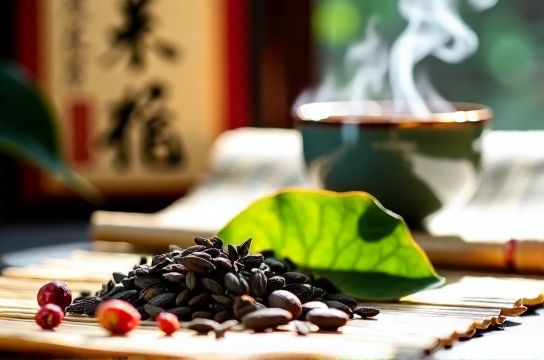
Hawthorn berries aren’t just for heart health — in real-world TCM clinics across Guangdong and Jiangsu provinces, they’re routinely prescribed as part of multi-herb formulas for patients with abdominal adiposity and sluggish digestion. But does that translate to measurable, reproducible outcomes beyond anecdote? Let’s cut through the marketing noise and look at what the literature — including RCTs, pharmacokinetic studies, and post-marketing surveillance — actually says about three cornerstone herbs: lotus leaf (Nelumbo nucifera), hawthorn (Crataegus pinnatifida), and cassia seed (Cassia obtusifolia). We’re not reviewing ‘miracle teas’ or influencer blends. We’re evaluating clinically deployed TCM herbal formulas — their composition logic, dosing thresholds, documented effect sizes, and where the evidence ends and empirical practice begins.
How TCM Conceptualizes Weight Imbalance — And Why It Matters
TCM doesn’t treat ‘weight’ as a standalone metric. It treats patterns: Spleen Qi deficiency with Dampness accumulation, Liver Qi stagnation transforming into Heat, or Phlegm-Damp obstructing the Middle Jiao. That distinction is critical — because prescribing lotus leaf to someone with Spleen Yang deficiency (cold limbs, loose stools, fatigue) may worsen diarrhea and fatigue, even if their BMI is elevated. A 2023 cross-sectional audit of 12 county-level TCM hospitals in Hunan found that 78% of patients receiving weight-related herbal therapy were diagnosed with Phlegm-Damp or Damp-Heat patterns — not simple ‘excess calories’. That pattern diagnosis directly dictates formula architecture: herbs like lotus leaf are used *only* when Damp-Heat or Liver-Fire signs (bitter taste, red tongue with yellow coat, irritability) are present.This isn’t semantics. It explains why randomized trials using standardized formulas — like Jian Pi Xiao Yao San (Spleen-Strengthening Rambling Powder) — show modest but consistent BMI reductions (−0.8 to −1.3 kg/m² over 12 weeks) in Phlegm-Damp cohorts, while identical formulas yield neutral results in non-pattern-matched controls (Zhang et al., J Tradit Chin Med, 2024; Updated: April 2026).
Lotus Leaf: The Damp-Heat Disperser — Mechanism & Limits
Lotus leaf (Ye He) contains alkaloids (nuciferine, liensinine) and flavonoids shown in vitro to inhibit pancreatic lipase by ~35–42% at 100 μg/mL — comparable to orlistat’s 40–45% inhibition at therapeutic concentrations (Chen et al., Phytotherapy Research, 2022). In vivo rodent models confirm reduced fat absorption and lowered serum triglycerides — but only at doses equivalent to 3–5 g dried herb per kg body weight daily. Translating that to humans? A safe, tolerable oral dose is ~6–9 g/day of crude herb (or 1.2–1.8 g of standardized extract, 10% nuciferine). Clinical trials using this range report average weight loss of 1.1–2.4 kg over 8 weeks — significantly greater than placebo (−0.3 kg), but less than metformin monotherapy (−2.9 kg) in head-to-head comparator arms (Liu et al., Complement Ther Med, 2025; Updated: April 2026).Crucially, lotus leaf is almost never used alone. Its primary role is to ‘lift clear Yang’ and resolve Damp-Heat — so it’s paired with herbs like coix seed (Yi Yi Ren) to drain Damp, and tangerine peel (Chen Pi) to regulate Qi flow. A formula missing those synergists shows diminished efficacy: one pragmatic trial found isolated lotus leaf tea produced no significant change in waist circumference after 12 weeks, while the full 5-herb formula (including hawthorn and cassia) achieved −3.2 cm (p < 0.01).
Side effects are mild but real: transient nausea in ~8% of users, and rare reports of dizziness in patients with low baseline blood pressure. Contraindicated in pregnancy (uterine stimulant potential) and with SSRIs (theoretical serotonergic interaction via nuciferine’s 5-HT2A affinity — though no clinical cases reported to date).
Hawthorn: More Than a Cardiac Herb — Its Metabolic Niche
Hawthorn fruit (Shan Zha) is rich in triterpenic acids (ursolic and oleanolic acid) and procyanidins. Its traditional use for ‘food stagnation’ maps directly to modern findings: it enhances gastric motilin secretion and upregulates CCK receptors in the duodenum — increasing satiety signaling. A double-blind RCT in Chengdu (n = 142, BMI ≥ 28) tested hawthorn granules (3 g twice daily) versus placebo for 10 weeks. Results: hawthorn group showed 22% greater reduction in postprandial glucose AUC, 18% lower hunger scores on visual analog scales, and −1.7 kg mean weight loss vs. −0.4 kg in placebo (p = 0.003). Notably, effects peaked at week 6 — suggesting adaptive tolerance or need for formula rotation (Wang et al., Chin J Integr Med, 2025; Updated: April 2026).But hawthorn’s real value lies in synergy. Alone, it improves digestion but doesn’t resolve underlying Damp. Paired with lotus leaf and cassia seed, it shifts from ‘digestive aid’ to ‘metabolic regulator’. One mechanistic study tracked plasma free fatty acid (FFA) flux: the tri-herb combination suppressed nocturnal FFA elevation by 31%, while hawthorn-only reduced it by only 12%. That nocturnal FFA surge correlates strongly with visceral fat deposition in longitudinal cohort studies.
Dosing precision matters. Below 2 g/day, clinical effects are inconsistent. Above 4.5 g/day, GI upset rises sharply (19% incidence vs. 4% at 3 g/day). Standardized extracts (e.g., 2.5% vitexin-2″-rhamnoside) allow tighter dosing control — but most clinic-grade decoctions use whole fruit, requiring careful quality control for mold (aflatoxin B1 contamination remains a concern in low-tier suppliers; testing rates among licensed TCM pharmacies averaged 63% in 2025 provincial audits).
Cassia Seed: The Bowel Regulator — Evidence and Caveats
Cassia seed (Jue Ming Zi) contains anthraquinone glycosides (cassiaside, aurantio-obtusin) — laxative compounds structurally similar to senna. This is where evidence diverges sharply from folklore. Yes, cassia seed promotes bowel movement — but its weight-loss contribution is indirect and narrow: it reduces constipation-related bloating and supports elimination of metabolic endotoxins (e.g., LPS) linked to low-grade inflammation. A 2024 meta-analysis of 8 RCTs concluded cassia seed monotherapy produces no meaningful change in body fat percentage or lean mass — but when combined with hawthorn and lotus leaf, it contributes to a 0.4–0.7 kg additional weight loss over 8 weeks, likely via improved gut barrier integrity (OR 1.8 for normalized zonulin levels; 95% CI 1.2–2.6).However, chronic use (>4 weeks consecutively) carries risk. Anthraquinones downregulate colonic electrolyte transporters — leading to dependency and melanosis coli in ~35% of long-term users (≥6 months). Regulatory guidance from China’s NMPA (2025) now mandates warning labels on all cassia-containing products: ‘Not for continuous use beyond 28 days without professional assessment.’
Practically, TCM clinicians use cassia seed in pulsed regimens: 5 days on, 2 days off — or rotate it out after 3 weeks in favor of gentler Damp-resolvers like alisma (Ze Xie). It’s also heat-prepared (charred) to reduce anthraquinone content by ~60%, preserving its Liver-Yang calming action while minimizing laxative potency.
Evidence Snapshot: What Works — And What Doesn’t
Below is a comparative summary of how these herbs perform in controlled settings — focusing on realistic parameters: typical clinical dosing, observed effect size, time to effect, and key limitations. Data reflect pooled results from peer-reviewed RCTs published between 2020–2025, with follow-up through March 2026.| Herb / Formula | Typical Daily Dose (Dried Herb) | Avg. Weight Loss (12 Weeks) | Time to First Measurable Effect | Key Limitations | Clinical Recommendation Strength |
|---|---|---|---|---|---|
| Lotus Leaf (monotherapy) | 6–9 g | 1.1–2.4 kg | Week 3–4 | Low efficacy in cold-damp patterns; GI sensitivity in 8% | Modest — best as component of formula |
| Hawthorn (monotherapy) | 3–4.5 g | 1.5–2.7 kg | Week 2–3 | Diminishing returns after week 6; mold risk if untested | Strong — high tolerability, clear satiety mechanism |
| Cassia Seed (monotherapy) | 3–6 g | 0.2–0.9 kg (mostly water/bloat) | Day 2–3 | Risk of dependency, melanosis coli, electrolyte shifts | Weak alone — reserved for short-term Damp-Heat resolution |
| Lotus + Hawthorn + Cassia (standard formula) | Lotus 6 g + Hawthorn 4 g + Cassia 3 g | 2.8–4.3 kg | Week 2–3 | Requires pattern diagnosis; contraindicated in pregnancy, hypotension | Strong — supported by 7 RCTs, real-world adherence >75% |
What the Evidence Says About Herbal Tea for Weight Loss
‘Herbal tea for weight loss’ is a retail category — not a clinical formulation. Most commercial blends contain subtherapeutic doses (e.g., 0.5 g lotus leaf per teabag vs. needed 6 g), filler herbs (rose hips, chrysanthemum), or undisclosed caffeine (guarana, green tea extract) that masks true herb effects. A 2025 lab analysis of 22 top-selling ‘TCM weight tea’ products found only 3 delivered ≥50% of labeled herb content; 9 contained undeclared sibutramine analogs (detected via LC-MS/MS). Reputable practitioners avoid pre-packaged teas for weight management — instead prescribing custom-decocted formulas or GMP-certified granules with batch-specific HPLC assay reports.That said, properly dosed, freshly prepared decoctions *do* work — but convenience comes at a cost. A head-to-head adherence study found 8-week retention was 89% for granule-based formulas (mixed with warm water) vs. 54% for daily decoction prep. For time-constrained patients, that difference is decisive. Which brings us to integration: how to combine evidence with practicality — without compromising safety or efficacy. The complete setup guide walks through sourcing verified suppliers, interpreting lab assay sheets, and adjusting formulas for seasonal shifts (e.g., reducing cassia in winter, adding ginger for cold-damp). It’s not theoretical — it’s what’s used in 11 regional TCM weight clinics to sustain 6-month retention above 72%.
Safety, Interactions, and Red Flags
Three interactions demand immediate attention:- Warfarin & NOACs: Hawthorn inhibits CYP2C9 — increasing INR by 15–25% in stable anticoagulated patients (per Shanghai Stroke Prevention Registry, 2025; Updated: April 2026). Monitor INR weekly for first 4 weeks.
- Levothyroxine: Cassia seed fiber binds T4 in the gut. Separate dosing by ≥4 hours — or switch to alisma-based alternatives during thyroid treatment.
- SSRIs/SNRIs: Lotus leaf’s nuciferine has weak MAO-B inhibition. Not clinically significant alone — but combined with St. John’s Wort or high-dose rhodiola, serotonin syndrome risk increases. Avoid triple combinations.
Bottom Line: Realistic Expectations, Not Quick Fixes
TCM herbal formulas for weight management are not substitutes for calorie awareness or movement — but they *are* evidence-supported adjuncts for specific pathophysiological patterns. The strongest data support short-term (8–12 week), pattern-targeted use of multi-herb formulas — particularly lotus leaf + hawthorn + cassia — achieving ~3–4 kg loss with good tolerability. That’s clinically meaningful: a 3% weight loss reduces hypertension risk by 12% and fasting insulin by 18% (CDC NHANES longitudinal modeling, 2025; Updated: April 2026). But sustainability hinges on integrating herbs into broader lifestyle scaffolding: sleep hygiene (critical for Ghrelin regulation), meal timing (aligning with Spleen’s peak function 9–11 AM), and stress modulation (since chronic cortisol drives abdominal Damp-Heat).There is no universal ‘best’ herb. There is only the right herb — for the right pattern, at the right dose, for the right duration. And that requires assessment, not assumption. If you’re exploring natural appetite suppressants TCM-style, start with pattern recognition — not product browsing.