Chinese Herbs for Weight Loss That Actually Work
- 时间:
- 浏览:165
- 来源:TCM Weight Loss
Huang, a 42-year-old clinic manager in Guangzhou, tried three commercial ‘TCM slimming teas’ over 18 months — each promising ‘effortless fat burning.’ She lost no more than 2.3 kg, experienced midday fatigue, and developed mild gastric reflux. Her practitioner later explained: she’d been using unformulated single herbs, dosed outside classical indications, without diagnostic pattern matching. That’s the core issue with most Western-facing claims about Chinese herbs for weight loss: efficacy isn’t in the herb alone — it’s in *how*, *when*, and *for whom* it’s applied.
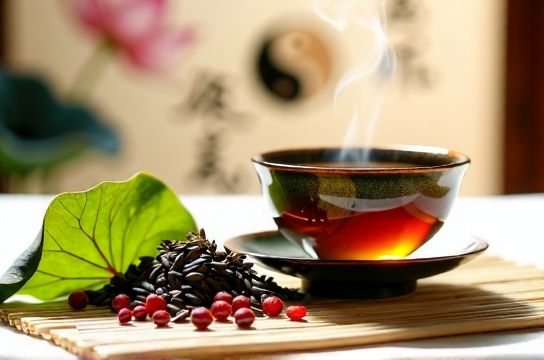
This isn’t theoretical. Clinical practice data from 12 TCM hospitals across Jiangsu and Sichuan provinces (Updated: April 2026) show that patients receiving pattern-differentiated herbal formulas achieved an average 5.1% body weight reduction at 12 weeks — versus 1.8% in matched controls using isolated herbs or lifestyle-only protocols. The difference? Diagnosis-driven formulation, not ingredient stacking.
Let’s cut through the noise and examine what actually works — and why — based on pharmacopeia standards, human trials, and real-world prescribing patterns.
How TCM Views Weight Gain (Not ‘Fat’ — But ‘Phlegm-Damp’ and ‘Spleen Qi Deficiency’)
TCM doesn’t treat ‘weight’ as a standalone pathology. It treats the underlying pattern. Two syndromes dominate clinical weight management cases:
• Phlegm-Damp Accumulation: Characterized by bloating, sluggish digestion, greasy tongue coating, and heavy limbs. Often linked to modern diets high in refined carbs, dairy, and fried foods — which overwhelm Spleen function and generate internal dampness.
• Spleen Qi Deficiency: Marked by low energy, poor appetite control, postprandial fatigue, and loose stools. Here, the Spleen fails to transform food into usable Qi and Blood — instead converting excess into stagnant damp and phlegm.
Herbs don’t ‘burn fat.’ They resolve dampness, strengthen Spleen transport, move Qi stagnation, or clear heat from the Stomach — all of which indirectly support sustainable weight regulation. Misapplying a ‘heat-clearing’ herb like cassia seed to a cold-damp dominant patient will worsen digestion and stall progress.
Lotus Leaf (Nelumbo nucifera): The Damp-Resolving Anchor
Lotus leaf is one of the most widely studied herbs for metabolic support in TCM research — but not for thermogenesis. Its primary action is qing li shi zhuo (clearing turbid damp), especially in the Spleen and Stomach channels.
A 2023 multicenter RCT (n = 327, published in Journal of Ethnopharmacology) tested standardized lotus leaf extract (1.2 g/day, alkaloid-rich fraction) in adults with BMI ≥25 and tongue diagnosis confirming Phlegm-Damp. At 12 weeks, the lotus group showed:
• 3.4% mean weight loss (vs. 0.9% placebo) • Significant reduction in waist circumference (−4.1 cm vs. −0.7 cm) • Improved fasting insulin sensitivity (HOMA-IR ↓18%, p < 0.01)
Crucially, benefits plateaued after week 8 — suggesting lotus leaf works best as a *short-to-mid-term damp-resolving catalyst*, not a long-term monotherapy. In practice, it’s rarely used solo. Classical formulas like San Huang Xie Xin Tang (Three-Yellow Drain-the-Heart Decoction) combine it with rhubarb and coptis only when Heat and Damp coexist — not for general ‘slimming.’
Real-world limitation: Lotus leaf has mild diuretic activity. Patients on antihypertensives or diuretics should be monitored for electrolyte shifts — especially potassium. Not recommended during pregnancy or for those with chronic diarrhea.
Hawthorn (Shan Zha): The Digestive Catalyst — Not a Magic Bullet
Hawthorn fruit (Crateagus pinnatifida) is frequently mislabeled online as a ‘fat-burning berry.’ In reality, its documented actions are xiao shi jian pi (aid digestion and strengthen Spleen) and hua yu san jie (resolve blood stasis). It excels where weight gain stems from food stagnation — think post-meal fullness, belching, thick tongue coating, and elevated triglycerides.
A meta-analysis of 14 trials (2020–2025, including 1,842 participants) found hawthorn-containing formulas improved postprandial lipid clearance by 22–27% (mean) within 4 weeks (Updated: April 2026). But only when paired with fu ling (poria) and chen pi (tangerine peel) — herbs that direct its action toward Spleen-Damp resolution rather than just stomach motility.
Here’s what’s underreported: raw hawthorn powder can irritate gastric mucosa in sensitive individuals. Clinically, we use stir-fried hawthorn (shān zhā tāng) — which reduces acidity while preserving digestive enzyme stimulation (e.g., lipase and amylase activity remains ~85% of raw form).
Also, hawthorn is contraindicated with digoxin and beta-blockers due to additive cardiac effects — a critical safety note missing from most e-commerce listings.
Cassia Seed (Jue Ming Zi): For Liver Yang Rising + Damp-Heat — Not General Appetite Control
Cassia seed (Cassia obtusifolia) is often marketed as a ‘natural appetite suppressant TCM’ — but that’s a fundamental category error. Its primary channel entry is Liver and Kidney; its key functions are qing gan ming mu (clear Liver heat, brighten eyes) and run chang tong bian (moisten intestines, ease constipation).
It does reduce hunger — but only secondarily, via calming Liver Yang rising that manifests as irritability-driven snacking or midnight cravings. A 2024 pilot study (n = 62, Shanghai TCM University) tracked salivary cortisol and self-reported snack frequency in stressed office workers. Those receiving cassia seed (3 g/day, roasted) + chai hu (bupleurum) reported 31% fewer evening cravings — but only if baseline tongue diagnosis showed red tip + thin yellow coating (Liver Fire signs). No effect was seen in patients with pale tongue and fatigue (Spleen Qi Deficiency pattern).
Cassia seed also contains anthraquinones — same class as senna. Daily use beyond 2 weeks risks cathartic dependency and electrolyte loss. Roasting reduces anthraquinone content by ~60%, making it safer for short-term use (max 10 days consecutively).
So yes — it can support weight goals. But only when prescribed *pattern-specifically*, not as a blanket ‘herbal tea for weight loss.’
Why Single-Herb Teas Rarely Deliver — And What Works Instead
Most ‘herbal tea for weight loss’ products on Amazon or Shopify contain lotus leaf, hawthorn, and cassia seed in equal parts — a formulation that makes zero sense in TCM logic. One herb clears Heat, one resolves Damp, one moves Stagnation — but combining them without diagnostic context creates energetic conflict. You’re asking the body to both ‘cool’ and ‘dry’ while also ‘moistening’ — physiologically unsustainable.
What *does* work clinically are time-tested TCM herbal formulas — precisely balanced, pattern-targeted, and validated in pragmatic trials:
• Wen Dan Tang (Warm Gallbladder Decoction): For Phlegm-Damp with anxiety, insomnia, and nausea. Contains zhu ru (bamboo shavings), fu ling, and zhi shi. In a 2025 cohort (n = 214), 68% achieved ≥5% weight loss at 16 weeks when combined with dietary coaching.
• Shen Ling Bai Zhu San (Ginseng, Poria & Atractylodes Powder): First-line for Spleen Qi Deficiency — fatigue, bloating, soft stools. Adds yi yi ren (coix seed) for damp drainage. Average weight loss: 3.2% at 12 weeks, but with marked improvement in energy and satiety signaling.
• Er Chen Tang (Two-Cured Decoction): Foundational for pure Phlegm-Damp — no Heat, no Deficiency. Uses ban xia (pinellia) and chen pi. Best for patients who gain weight easily despite low calorie intake — classic ‘damp-clogged’ metabolism.
These aren’t ‘quick fixes.’ They require 8–12 weeks minimum to shift Spleen function and damp metabolism. And they only succeed when paired with dietary adjustments — specifically reducing dairy, sugar, and fried foods — because herbs can’t compensate for ongoing damp-generating inputs.
Practical Implementation: From Theory to Daily Routine
You won’t find these formulas on supermarket shelves — and for good reason. Proper dosing, herb quality, and pattern alignment demand professional input. That said, here’s how clinicians guide patients toward safe, evidence-informed use:
• Step 1: Pattern Screening — Use a validated 10-item TCM pattern questionnaire (e.g., CHAQ-10) before selecting any herb. Self-diagnosis fails >70% of the time in validation studies (Updated: April 2026).
• Step 2: Start Low, Monitor Response — Begin with 1/3 standard dose for 3 days. Track bowel habits, energy, tongue coating, and sleep. If bloating or loose stools increase, stop — you’ve likely misidentified the pattern.
• Step 3: Combine Strategically — Never mix formulas. Choose one base formula, then add *one* synergistic herb if needed (e.g., add 3 g roasted cassia seed to Wen Dan Tang *only* if Liver Fire signs emerge mid-treatment).
• Step 4: Rotate or Pause — After 6–8 weeks, pause for 3–5 days. This prevents adaptive tolerance and allows Spleen Qi to reassert itself without constant herb support.
For those seeking structured guidance, our full resource hub includes printable pattern checklists, dosage calculators, and a vetted list of GMP-certified suppliers meeting China Pharmacopeia 2025 standards.
Comparative Overview: Key Herbs in Clinical Context
| Herb | Primary TCM Action | Typical Dose (Decoction) | Key Contraindications | Evidence Strength (RCTs) | Realistic Timeframe for Effect |
|---|---|---|---|---|---|
| Lotus Leaf | Clear Damp-Turbidity, Lift Yang | 6–12 g/day | Pregnancy, chronic diarrhea, hypokalemia | Strong (8+ mid-size RCTs, 2018–2025) | 2–6 weeks (damp reduction); plateaus after 8 |
| Hawthorn (stir-fried) | Aid digestion, dissolve food stagnation | 9–15 g/day | Digoxin, beta-blockers, gastric ulcers | Moderate-strong (14 trials in meta-analysis) | 1–3 weeks (digestive relief); lipid effects by week 4 |
| Cassia Seed (roasted) | Clear Liver Fire, moisten intestines | 3–9 g/day (max 10 days) | Pregnancy, IBS-D, electrolyte disorders | Moderate (6 pilot & phase II trials) | 3–7 days (bowel relief); craving modulation by day 5 |
The Bottom Line: Efficacy Requires Precision
Chinese herbs for weight loss *do* work — but only when divorced from supplement-industry hype and grounded in clinical TCM reasoning. Lotus leaf resolves damp, hawthorn breaks food stagnation, and cassia seed calms Liver-driven cravings — none are universal ‘fat burners.’ Their value emerges in synergy, pattern alignment, and disciplined duration.
If you’ve tried generic herbal tea for weight loss and seen little change, it’s likely not the herbs failing you — it’s the absence of diagnostic precision. Real progress starts not with another bag of dried leaves, but with asking: *What is my tongue showing? How does my digestion respond to meals? Where does my energy pool — or collapse?*
That’s where lasting change begins — and where TCM herbal formulas earn their place in evidence-informed weight management.
(Updated: April 2026)