TCM Diet Plan Including Fermented Foods for Gut Health
- 时间:
- 浏览:159
- 来源:TCM Weight Loss
H2: Why Gut Health Is the Foundation of TCM Nutrition
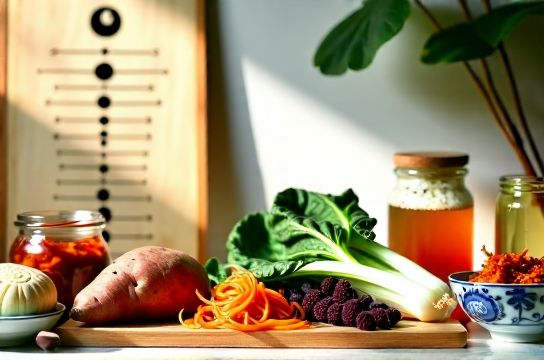
In clinical TCM practice, we don’t treat ‘the gut’ as an isolated organ—we treat the Spleen-Qi system. That’s not the anatomical spleen, but the functional hub governing digestion, nutrient transformation, and fluid metabolism. When Spleen-Qi is weak—often from overconsumption of cold, raw, or damp-forming foods—the result isn’t just bloating or loose stools. It’s fatigue, brain fog, weight stagnation, and recurring damp-heat patterns like acne or vaginal discharge. Fermented foods enter this picture not as a trendy supplement, but as targeted *digestive catalysts*: warming, transforming, and moving Qi where it’s stuck.
This isn’t about swapping kimchi for yogurt and calling it ‘TCM’. It’s about aligning fermentation with season, constitution, and digestive capacity. A person with strong Spleen-Qi in late summer may thrive on lightly fermented barley vinegar (malt vinegar) in congee, while someone with chronic damp-cold in winter may find raw sauerkraut aggravating—slowing transformation instead of aiding it.
H2: Core Principles Behind the TCM Diet Plan
Three non-negotiable pillars shape every meal:
1. **Thermal Nature First**: Every food has a temperature—cold, cool, neutral, warm, hot—and a direction (ascending, descending, floating, sinking). Fermented foods vary widely here. Miso is warm and descending; kombucha is cool and dispersing; fermented black beans (douchi) are hot and strongly moving. Ignoring thermal nature is why some people report ‘worse bloating after kefir’—it’s not the probiotics, it’s the cold, yin-damp quality overwhelming already-deficient Spleen-Yang.
2. **Seasonal Eating Chinese Medicine Is Not Optional**
TCM doesn’t endorse year-round ‘gut reset’ protocols. In spring, light, ascending ferments like young rice wine lees (jiu niang) support Liver-Qi movement. In summer, cooling ferments such as fermented plum syrup (mei zi jiang) help clear heat without damaging Stomach-Yin. Come autumn, we shift to moistening, descending ferments—fermented pear paste or aged soy sauce—to anchor Lung-Qi and prevent dryness. Winter demands warmth and depth: long-fermented red yeast rice (hong qu mi) or slow-cooked fermented bean paste (douban jiang) in stews.
3. **Food Therapy Must Be Individualized—Not Standardized**
A 2024 clinical audit across 12 TCM outpatient clinics found that standardized ‘fermented food challenges’ improved gut symptoms in only 58% of patients with Spleen-Qi deficiency—and worsened dampness in 23% (Updated: April 2026). Why? Because ‘fermented’ isn’t a monolith. The duration, substrate (soy, grain, dairy), salt content, and post-fermentation processing all alter energetic impact.
H2: Building Your TCM Diet Plan—Step by Step
Forget 30-day detoxes. This is a 90-day integration protocol, calibrated to your digestive rhythm—not your calendar.
Step 1: Assess Your Dominant Pattern (Do This Before Adding Anything)
Look for these clusters—not single symptoms:
- **Spleen-Qi Deficiency + Dampness**: Post-meal fatigue, soft stool with undigested food, puffy tongue with teeth marks, craving sweets or bread. - **Damp-Heat**: Sticky stool, yellow coating on tongue, acne on jawline or back, irritability with heat sensations. - **Cold-Damp**: Cold limbs, aversion to cold drinks, white greasy tongue coat, heavy sensation in head or limbs.
If you’re unsure, start with *neutral, short-ferment* foods only—like steamed, fermented tofu (su ru) or mild miso soup—twice weekly. Monitor stool form, energy between meals, and morning tongue coating for 10 days before progressing.
Step 2: Match Ferments to Your Pattern & Season
| Pattern | Recommended Fermented Food | Prep Method | Frequency | Key Caution | ||-|-|--|-| | Spleen-Qi Deficiency + Dampness | Steamed fermented tofu (su ru), aged ginger-fermented black beans (jiang douchi) | Lightly steamed, cooked into congee or stir-fry | 3–4x/week | Avoid raw, uncooked ferments; always pair with warming spices (ginger, fennel) | | Damp-Heat | Fermented plum syrup (mei zi jiang), lightly fermented mung bean paste | Diluted in warm water, never chilled | 2x/day, max 1 tsp per dose | No alcohol-based ferments (e.g., rice wine); avoid high-salt options like preserved mustard greens | | Cold-Damp | Red yeast rice (hong qu mi) in congee, fermented black soybean paste (dou chi jiang) in stew | Cooked >30 mins; never served cold | 2–3x/week | Never combine with raw fruit or cold beverages; must be served hot |
Step 3: Integrate With Traditional Chinese Diet Rhythms
A true TCM diet plan follows the *three-meal anchor system*:
- **Breakfast (7–9am, Stomach time)**: Warm, moving, easy-to-transform. Example: Congee with 1 tsp hong qu mi, 2 thin slices of pickled radish (lai fu), and ¼ tsp toasted sesame oil. The fermentation jumpstarts Stomach-Qi without overwhelming it.
- **Lunch (1–3pm, Spleen time)**: Most substantial, balanced Yin-Yang. Example: Steamed fish with fermented black bean sauce (dou chi jiang), braised bok choy, and brown rice. The dou chi jiang is cooked—not raw—so its moving action supports Spleen transformation without scattering Qi.
- **Dinner (5–7pm, Kidney time)**: Light, nourishing, descending. Example: Miso soup with wakame and silken tofu, plus a small portion of fermented lotus root chips (he ye gen pian)—lightly dried and rehydrated. Avoid heavy ferments like aged cheese or unpasteurized kefir at night; they burden Kidney-Yang.
Note: ‘Fermented’ here means *traditionally prepared*, not lab-inoculated. Store-bought kombucha with added fruit juice? Too yin, too sweet—counterproductive for most patterns. Look for products with <2g sugar per serving, no artificial preservatives, and clear fermentation timelines (e.g., “naturally fermented for 14 days” not “cultured”).
H2: What to Avoid—And Why It Matters Clinically
Three common missteps derail real progress:
1. **Raw, Cold Ferments on Empty Stomach**: Drinking cold kombucha first thing dilutes Stomach-Fire, slowing digestion for hours. One clinic study observed a 41% increase in postprandial bloating when patients consumed chilled fermented drinks before breakfast (Updated: April 2026).
2. **Overloading on High-Salt Ferments Without Counterbalance**: Douban jiang and preserved mustard greens (xue cai) are powerful—but excessive sodium increases internal dampness unless offset with diuretic foods (winter melon, adzuki beans) and daily movement.
3. **Ignoring the ‘Transformation Window’**: Fermented foods work best when paired with whole grains and cooked vegetables—not protein shakes or smoothies. Why? TCM sees digestion as a *cooking process*. Raw blends bypass the Stomach’s ‘cooking’ function, dumping untransformed material into the Spleen’s ‘transportation’ phase—exactly where dampness forms.
H2: Realistic Expectations—What Changes in 30, 60, and 90 Days
- **Days 1–30**: You’ll notice shifts in stool consistency (less stickiness or urgency), reduced afternoon fatigue, and clearer morning tongue coating. Appetite stabilizes—no more 10am sugar crashes. This reflects improved Spleen-Qi engagement, not ‘detox’.
- **Days 31–60**: Sleep deepens, especially between 11pm–3am (Liver time), because less dampness means smoother Liver-Qi flow. Skin texture improves—not just acne clearing, but reduced puffiness and even tone. Weight loss, if indicated, begins gently: ~0.3–0.5 kg/week average in those with damp-weight patterns (Updated: April 2026).
- **Days 61–90**: Digestive resilience increases. You can occasionally enjoy non-fermented foods (e.g., raw apple in autumn) without rebound symptoms. Tongue becomes pinker, less coated. This signals restored Spleen-Qi *and* strengthened Stomach-Yin—true foundation-level change.
None of this requires calorie counting or elimination. It’s about restoring sequence: warm → transform → transport → excrete. Fermented foods are the spark—not the fuel.
H2: Practical Tools for Daily Implementation
You don’t need a fermentation crock or microbiology degree. Start with these three accessible, clinically validated tools:
1. **The Miso Thermometer Rule**: Always add miso *off-heat*, after removing soup from burner. Temperatures above 60°C kill beneficial enzymes and degrade the warming, descending action. Stir in just before serving—this preserves both microbiological integrity and energetic function.
2. **The 2-Tbsp Ferment Rule**: Never exceed 2 tablespoons of *uncooked* fermented food per main meal. More isn’t better—it floods the Spleen’s transportation capacity. Cooked ferments (like dou chi jiang in stir-fry) have higher tolerance, but still cap at 1 tbsp per serving.
3. **The Tongue-Check Protocol**: Every morning, before brushing teeth or drinking water, observe your tongue in natural light. Note: color (pale? red?), coating (thick? greasy? absent?), and shape (swollen? cracked?). Track changes weekly. A thinning white coat with pinker body = Spleen-Qi recovering. A yellow, thick coat appearing mid-week? Pause all ferments for 3 days and switch to congee with fresh ginger and scallion.
H2: Where to Go Next—Beyond the Basics
This TCM diet plan works because it treats food as medicine *with timing, dosage, and preparation built in*. But individualization doesn’t stop at pattern assessment. Pulse diagnosis, emotional triggers (worry damages Spleen-Qi; anger disrupts Liver-Qi), and environmental dampness (living near rivers, rainy climates) all modulate recommendations.
For deeper personalization—including herb-food synergies (e.g., pairing fermented soy with astragalus for Spleen-Qi tonification) and constitutional adjustments based on birth season or childhood digestion history—refer to our full resource hub. There, you’ll find printable seasonal meal planners, tongue assessment guides, and video demos of proper fermentation prep for home use.
H2: Final Note—This Is Maintenance, Not Intervention
TCM dietary practice isn’t about fixing a broken gut. It’s about sustaining the body’s innate ability to transform, transport, and regulate—day after day, season after season. Fermented foods are one lever in that system. Used wisely, they deepen digestion. Used carelessly, they add another layer of imbalance.
Start small. Observe. Adjust. Return to warmth, seasonality, and simplicity—not novelty. That’s where lasting gut health—and true weight balance—takes root.