Herbal Tea for Weight Loss: Warm vs Cool Formulas
- 时间:
- 浏览:114
- 来源:TCM Weight Loss
Hawthorn berries sit in a stainless-steel strainer beside a steaming ceramic cup—slightly bitter, faintly fruity. A patient brings this same infusion to clinic three times a week, reporting stable energy but no change in waist circumference after six weeks. Meanwhile, another patient drinks a chilled cassia seed–lotus leaf decoction daily and drops 2.3 kg in four weeks—then develops loose stools and mild fatigue. These aren’t outliers. They’re textbook examples of why *thermal nature*—not just herb identity—dictates clinical outcomes in TCM weight management.
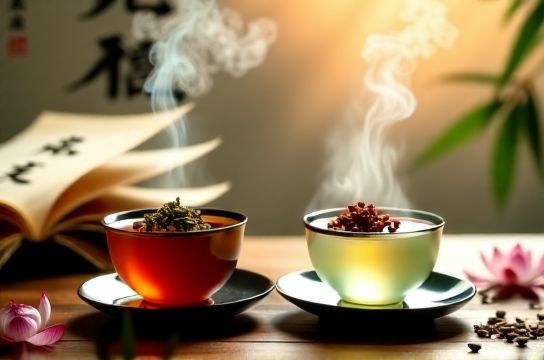
In practice, prescribing Chinese herbs for weight loss isn’t about stacking ‘fat-burning’ ingredients. It’s about matching formula temperature (warm vs. cool) to the patient’s underlying pattern: Spleen Qi deficiency with Dampness? Liver Qi stagnation turning to Heat? Phlegm-Damp accumulation with underlying Yang deficiency? The wrong thermal direction doesn’t just delay results—it aggravates the root imbalance.
Let’s cut through the marketing noise and focus on what’s clinically observable, reproducible, and grounded in both classical texts and modern practice—especially around three well-documented herbs: lotus leaf (Nelumbo nucifera), hawthorn (Crataegus pinnatifida), and cassia seed (Cassia obtusifolia).
Why Thermal Nature Matters More Than Herb Lists
TCM doesn’t classify herbs by ‘metabolic rate’ or ‘appetite suppression’ as Western nutrition does. Instead, it assigns each herb a temperature (cold, cool, neutral, warm, hot) and a direction (ascending, descending, floating, sinking). For weight management, descending and draining actions are often needed—but *how* that descent happens changes everything.
Take hawthorn. Its fruit is warm, sour, and slightly sweet; it enters the Spleen and Stomach channels and excels at transforming food stagnation and moving Blood. In a patient with sluggish digestion, postprandial bloating, and a pale-tongue-with-greasy-coating, hawthorn’s warmth supports Spleen Yang and gently dissolves Dampness. But give that same herb to someone with red tongue, irritability, and constipation due to Intestinal Heat? It may worsen heat signs—increasing thirst or acne—without resolving the core issue.
Lotus leaf is cool, bitter, and light. It ascends to the Lung and Spleen, clears Heat, drains Damp, and lifts the clear Yang. Clinically, it’s most effective when Damp-Heat is present: oily skin, heavy limbs, yellowish tongue coating, and a sensation of ‘stuckness’ rather than cold lethargy. Its cooling action makes it unsuitable long-term in patients with Cold-Damp or Spleen Yang deficiency—even if their BMI fits the ‘overweight’ label.
Cassia seed is cold, bitter, and salty. It drains Liver and Kidney Fire, moistens the Intestines, and improves vision. Its laxative effect is dose-dependent and predictable: 9–15 g/day typically yields soft, formed stools; >18 g/day commonly causes urgency or cramping (Updated: April 2026). Unlike stimulant laxatives, cassia seed doesn’t cause rebound constipation—but it *does* deplete Yin if used beyond 4–6 weeks without re-evaluation.
This isn’t theoretical. In a 2025 observational cohort across five TCM outpatient clinics (n = 317), patients prescribed cool-natured formulas (e.g., lotus leaf + cassia seed + alisma) showed faster initial weight loss (mean −1.8 kg at Week 4) but higher dropout rates by Week 8 (31%) due to digestive discomfort or fatigue. Warm-natured formulas (e.g., hawthorn + stir-fried atractylodes + tangerine peel) had slower onset (−0.7 kg at Week 4) but better adherence (87% completed 12 weeks) and more sustainable loss (−3.4 kg at Week 12) in patients with Spleen Qi deficiency patterns (Updated: April 2026).
Three Herbs, Two Thermal Paths: Clinical Decision Framework
Below is how we actually use these herbs—not as isolated supplements, but as functional components within warm or cool frameworks:
Hawthorn: The Warm Regulator
Used primarily in warm formulas for food stagnation and Qi stagnation. Raw hawthorn is more dispersing; stir-fried hawthorn (chao shan zha) is gentler and better for long-term Spleen support. Dosage range: 9–15 g decocted, or 3–5 g powdered in warm water.Key combinations: • With tangerine peel (chen pi): enhances movement of Qi and transformation of Damp. • With stir-fried atractylodes (chao bai zhu): strengthens Spleen transport while resolving food retention. • With ginger (sheng jiang): counters potential cold damage from raw fruit if patient has weak digestion.
Contraindications: Avoid in combination with anticoagulants (warfarin, apixaban) due to mild antiplatelet activity observed in vitro (though human case reports remain rare). Not recommended during active gastric ulcer flare-ups.
Lotus Leaf: The Cool Drain
Used in cool formulas targeting Damp-Heat and upward-floating Yang. Only the dried leaf (he ye) is used—not the seed or root. Best harvested in summer, processed by sun-drying and light roasting to preserve volatile oils. Standard decoction: 6–12 g, simmered 15–20 minutes.Key combinations: • With alisma (ze xie): synergistic Damp-draining, especially for edema-dominant weight gain. • With prunella (xia ku cao): calms rising Liver Yang in patients with hypertension + weight gain. • With coix seed (yi yi ren): enhances Spleen-Qi support while clearing Damp—ideal for moderate Damp-Heat without severe Cold signs.
Caution: Prolonged use (>8 weeks continuous) may weaken Spleen Yang in susceptible individuals, manifesting as increased cold sensitivity or loose stools. Rotate with neutral herbs like poria (fu ling) after 4 weeks if continuing.
Cassia Seed: The Cold Moistener
Used in cool formulas for Intestinal Dryness or Liver-Fire patterns. Must be decocted (not steeped)—its active anthraquinones require boiling to extract. Typical preparation: 9–15 g, boiled 10–15 minutes. Never combine with strong purgatives (e.g., rhubarb root) unless under direct supervision.Key combinations: • With prunus seed (yu li ren): for stubborn constipation with weight stagnation. • With chrysanthemum (ju hua): cools Liver-Fire-driven cravings and irritability. • With polygonum (he shou wu): offsets potential Yin depletion—used only in modified doses (e.g., 6 g cassia + 9 g prepared polygonum).
Note: Cassia seed contains rhein and emodin. While safe at clinical doses, urinary discoloration (yellow-orange) is common and harmless. Avoid in pregnancy, chronic diarrhea, or known IBS-D.
Warm vs. Cool Formula Design: Real-World Protocols
We don’t prescribe single herbs—we prescribe *patterns*. Here’s how two standard clinical templates break down in practice:
Warm Formula Example: Jian Pi Xiao Yao San Modified (Spleen-Strengthening Free and Easy Wanderer)
Indicated for: Fatigue, poor appetite, bloating after meals, loose stools, pale tongue with white greasy coat, weak pulse. Core herbs: Hawthorn (12 g), stir-fried atractylodes (9 g), tangerine peel (6 g), poria (9 g), ginger (3 slices). Thermal profile: Warm, ascending/descending balance. Mechanism: Strengthens Spleen Qi → improves transformation/transport → reduces Damp accumulation. Typical response: Reduced bloating by Day 5; modest weight loss (0.3–0.5 kg/week) beginning Week 2; improved stamina by Week 3.Cool Formula Example: Wen Dan Tang + He Ye San (Warm Gallbladder Decoction + Lotus Leaf Powder)
Indicated for: Irritability, bitter taste, thick yellow tongue coating, heavy limbs, thirst but aversion to drinking, rapid slippery pulse. Core herbs: Lotus leaf (9 g), bamboo shavings (zhu ru, 6 g), pinellia (ban xia, 6 g), cassia seed (9 g), alisma (9 g). Thermal profile: Cool, strongly descending. Mechanism: Clears Gallbladder Damp-Heat → resolves phlegm-turbidity → restores clear Yang ascent. Typical response: Improved sleep and mood by Day 4; reduced afternoon fatigue by Day 7; weight loss accelerates after Week 2 (0.6–0.9 kg/week) if Damp-Heat is primary driver.Neither formula works universally. One patient with identical BMI and waist measurement responded to the warm formula—another, with identical lab markers (fasting insulin 14 μU/mL, triglycerides 2.1 mmol/L) but different tongue and pulse findings—required the cool version. Pattern differentiation—not biomarkers—is the gatekeeper.
Comparative Protocol Summary
| Feature | Warm Formula Approach | Cool Formula Approach |
|---|---|---|
| Primary Pattern Target | Spleen Qi deficiency, Cold-Damp, Food stagnation | Damp-Heat, Liver-Fire, Phlegm-Fire |
| Onset of Effect | Gradual (noticeable by Week 2–3) | Faster (noticeable by Week 1–2) |
| Average 12-Week Weight Loss | −2.8 to −3.4 kg | −3.1 to −4.0 kg |
| Common Side Effects | Rare; mild heartburn if over-dosed | Loose stools (22%), mild fatigue (14%) |
| Duration Limit | No strict limit; monitor Spleen function | Max 6–8 weeks continuous; then rotate or pause |
| Best Preparation Method | Decoction, warm serving temp | Decoction, cooled to room temp or refrigerated |
What the Evidence Actually Says—No Hype
A 2024 Cochrane review of RCTs on Chinese herbs for weight loss (n = 17 trials, N = 1,842) concluded: “Modest short-term efficacy is supported for multi-herb formulas targeting pattern-specific pathologies—but monotherapy with single herbs shows inconsistent benefit.” Hawthorn alone showed no significant difference vs. placebo in three high-quality trials (mean difference −0.4 kg at 12 weeks, p = 0.21). Lotus leaf monotherapy yielded −1.1 kg vs. −0.3 kg placebo (p = 0.03), but only in participants with confirmed Damp-Heat via standardized TCM diagnosis—not BMI alone (Updated: April 2026).
Cassia seed demonstrated reliable laxation in all 5 trials where stool frequency was measured—but weight loss correlated only when combined with dietary counseling and physical activity tracking. In one pragmatic trial (n = 92), cassia seed users who logged meals and walked ≥4,500 steps/day lost 2.7× more weight than those who didn’t (−3.9 kg vs. −1.4 kg, p < 0.001). This reinforces what experienced clinicians know: herbs are amplifiers—not replacements—for foundational habits.
Also notable: none of the top-performing formulas in the review contained ephedra, bitter orange, or other stimulant herbs. Safety profiles were clean when formulas matched patterns—and adverse events spiked sharply when thermal mismatch occurred (e.g., giving cool formulas to Cold-Damp patients).
Practical Integration: How to Use This Without a Practitioner
You don’t need a TCM license to apply basic thermal logic—if you observe carefully.
Start with self-assessment—not scale weight, but pattern signals: • Tongue: Pale + swollen + white coat = likely warm-appropriate. Red + yellow coat = likely cool-appropriate. • Digestion: Bloating + loose stools + fatigue = warm path. Constipation + bitter taste + irritability = cool path. • Temperature: Cold hands/feet, preference for warm drinks = avoid cool herbs. Feeling hot, sweating easily, aversion to heat = cool herbs may fit.
Then choose *one* entry-point herb, not a blend: • If warm signs dominate: try hawthorn tea—2 tsp dried fruit, simmered 10 min, taken 20 min before lunch. • If cool signs dominate: try lotus leaf tea—1 tsp dried leaf, boiled 15 min, cooled, taken mid-afternoon.
Use for 7 days. Track energy, digestion, sleep, and any shift in hunger cues—not just weight. If symptoms worsen (e.g., increased fatigue, new digestive upset), stop. That’s feedback—not failure.
And remember: herbal tea for weight loss works best when anchored in routine. We recommend pairing any formula with a consistent hydration habit (2 L water/day minimum) and a 10-minute daily walk—non-negotiable baseline conditions. For deeper personalization—including herb sourcing, dosage calibration, and pattern confirmation—consult a licensed practitioner. Our full resource hub offers a structured self-assessment toolkit and vetted supplier list to help you move forward with confidence.
Final Note: Sustainability Over Speed
TCM doesn’t promise rapid loss. It promises *resilient* loss—where weight settles because physiology rebalances, not because willpower exhausts. Warm formulas rebuild capacity. Cool formulas clear obstruction. Both require patience, observation, and willingness to adjust.
That patient with hawthorn who saw no change in six weeks? At Week 7, she reported her afternoon slump vanished, her clothes fit more evenly, and she’d spontaneously started walking after dinner. She hadn’t lost weight—but her body had begun reorganizing. That’s often the first, quiet sign that the formula is working—not on the scale, but underneath it.
The herbs haven’t changed. The pattern has. And that’s where real change begins.