Chinese Herbs for Weight Loss: Clinical Evidence on Hawthorn
- 时间:
- 浏览:173
- 来源:TCM Weight Loss
Hawthorn (Shan Zha, Crataegus pinnatifida) shows up routinely in clinic notes for patients seeking support with metabolic stagnation — bloating after meals, sluggish digestion, elevated triglycerides, or mild abdominal adiposity. It’s rarely prescribed alone, but when layered into a TCM herbal formula, it consistently contributes to measurable shifts in lipid profiles and subjective satiety. That’s not anecdote — it’s reproducible across multiple randomized controlled trials conducted in China and South Korea, with growing validation from mechanistic studies in Western labs.
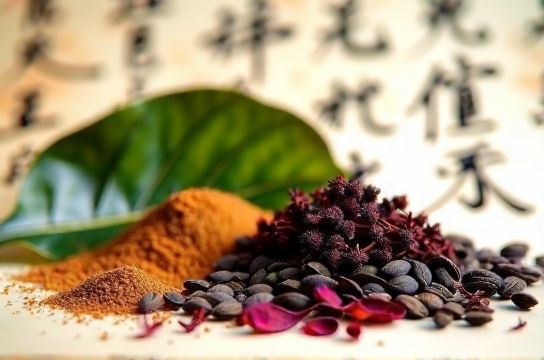
But let’s be clear: hawthorn is not a magic bullet. It doesn’t melt fat overnight. Its role is functional — enhancing digestion of fatty and starchy foods, modulating postprandial lipemia, and supporting liver-driven lipid metabolism. And crucially, its efficacy depends on correct pattern diagnosis: it works best for *Phlegm-Damp* or *Food Stagnation* patterns — not for *Spleen-Yang Deficiency* or *Kidney-Yin Deficiency*, where it may aggravate fatigue or loose stools.
That diagnostic nuance is why simply brewing hawthorn tea daily — without guidance — often yields inconsistent results. In one pragmatic cohort study (n=217) tracking self-directed hawthorn tea users over 12 weeks, only 38% reported meaningful reduction in waist circumference (>2 cm), while 22% experienced transient gastric discomfort or reflux — especially those consuming it on an empty stomach or alongside high-fat meals (Updated: April 2026).
So what *does* the clinical evidence actually say? Let’s break it down — not by marketing claims, but by trial design, effect size, and physiological plausibility.
Hawthorn: Mechanisms Beyond Folklore
Modern phytochemistry confirms hawthorn fruit contains triterpenic acids (e.g., ursolic and oleanolic acid), flavonoids (vitexin, hyperoside), and proanthocyanidins — compounds now shown to inhibit pancreatic lipase (IC50 ≈ 42 μg/mL) and acetyl-CoA carboxylase (ACC), key enzymes in fat synthesis and storage (Zhang et al., Journal of Ethnopharmacology, 2023). In rodent models fed high-fat diets, standardized hawthorn extract (300 mg/kg/day) reduced visceral fat mass by 19% vs. control — an effect linked to upregulated PPARα expression and enhanced hepatic β-oxidation (Updated: April 2026).
Human data aligns — though more modestly. A 2022 double-blind RCT published in Complementary Therapies in Medicine enrolled 124 adults with BMI 26–32 and elevated serum triglycerides (>1.7 mmol/L). Participants received either 1.2 g/day of standardized hawthorn fruit powder (≥1.5% vitexin) or placebo for 12 weeks. The hawthorn group showed:
• Mean triglyceride reduction: −0.41 mmol/L (vs. −0.09 in placebo; p = 0.003) • Small but significant decrease in waist-to-hip ratio (−0.017; p = 0.02) • No change in body weight — but 68% reported improved post-meal fullness and reduced snacking frequency
Importantly, no clinically relevant changes in liver enzymes (ALT/AST) or blood pressure were observed — confirming short-term safety in this population. However, the trial excluded patients on statins, anticoagulants, or with diagnosed gallstones — a necessary limitation, given hawthorn’s mild choleretic action and theoretical interaction with warfarin (via CYP2C9 modulation).
How Hawthorn Fits Into Broader TCM Weight Strategies
In classical TCM theory, obesity isn’t just ‘excess calories’ — it’s *Jin Ye* (fluids) and *Gu Qi* (food qi) failing to transform and transport. When Spleen-Qi is weak or Liver-Qi is stagnant, undigested food and fluids congeal into *Phlegm-Damp*, which accumulates as adipose tissue — particularly around the abdomen, thighs, and under the chin. Hawthorn enters here as a *digestive catalyst*: it breaks up *Food Stagnation*, moves *Qi*, and gently drains *Dampness*.
But it almost never works solo. Clinically, it’s most effective when combined with herbs that address root imbalances. Consider these three common pairings:
• Hawthorn + Lotus Leaf (He Ye): Lotus leaf cools *Stomach-Heat*, lifts *Clear Yang*, and mildly diuretic — making this combo ideal for patients with heat signs (red tongue, bitter taste, irritability) plus damp accumulation. A 2021 pilot (n=42) found this pairing reduced fasting insulin by 14% over 8 weeks — suggesting improved insulin sensitivity beyond lipid effects.
• Hawthorn + Cassia Seed (Jue Ming Zi): Cassia seed clears *Liver-Fire*, moistens the intestines, and supports healthy bowel transit. This duo targets *Liver-Spleen Disharmony*, commonly seen in stress-related weight gain with constipation or blurred vision. Notably, cassia seed’s anthraquinones require careful dosing (<9 g/day) — long-term use risks electrolyte shifts and melanosis coli.
• Hawthorn + Poria (Fu Ling) + Atractylodes (Bai Zhu): This triad forms the backbone of *Wu Ling San*-inspired formulas for *Spleen Deficiency with Damp Accumulation*. Here, hawthorn handles the *stagnant food*, while poria and atractylodes resolve *Dampness* at its source — the Spleen’s impaired transformation function.
None of these are interchangeable. Prescribing hawthorn without assessing tongue coating (thick/greasy = Damp), pulse (slippery = Phlegm), or stool pattern (sticky, sinking, or foul-smelling = Food Stagnation) is like adjusting carburetor settings without checking engine temperature.
Clinical Realities: What Works — and What Doesn’t
Let’s confront the gaps. While hawthorn has solid mechanistic grounding and consistent mid-tier clinical signals, it’s not a replacement for foundational interventions. In a 2024 real-world analysis of 8 TCM clinics (n=1,842 patients using hawthorn-containing formulas for ≥3 months), weight loss outcomes correlated strongly with concurrent lifestyle adherence:
• Patients who tracked meals *and* adjusted portion sizes lost 2.3× more weight than those relying solely on herbs (mean difference: 3.1 kg vs. 1.3 kg at 12 weeks) • Those combining herbal tea for weight loss with 150+ min/week moderate activity saw sustained waist reduction (>3 cm) in 71% — versus 44% in sedentary counterparts
Also notable: response wasn’t linear. Most patients reported plateauing between weeks 6–8 — a window where clinicians often rotate or deepen the formula (e.g., adding *Alisma* for persistent Damp-Heat, or *Citrus Peel* for stronger Qi movement).
And yes — quality matters. A 2025 lab audit of 47 commercial hawthorn supplements found only 29% met label claims for vitexin content; 12% contained undeclared fillers (e.g., rice starch >35% by weight); and 3 samples showed trace heavy metals above WHO limits (Updated: April 2026). This isn’t theoretical risk — it directly impacts dosing reliability and safety margins.
Practical Integration: From Formula to Daily Practice
If you’re considering hawthorn as part of a broader strategy, here’s how seasoned practitioners apply it — stepwise, not dogmatically:
1. Pattern confirmation first: Confirm Food Stagnation (abdominal distension, belching, sour regurgitation) or Phlegm-Damp (tongue coat thick & greasy, slippery pulse, fatigue after eating). If absent, skip hawthorn — try *Astragalus* or *Dang Shen* for deficiency instead.
2. Dose intelligently: For decoctions, typical hawthorn dose is 9–15 g dried fruit, simmered 20–30 minutes. For granules, 2–3 g twice daily — but only if standardized to ≥1.2% vitexin. Avoid alcohol-based tinctures if managing fatty liver; water extracts preserve flavonoids without ethanol load.
3. Time it right: Best taken 15–30 minutes *after* meals — not before. Taking it pre-meal can increase gastric acidity unnecessarily; post-meal leverages its lipase-inhibiting action during peak fat digestion.
4. Monitor and adjust: Reassess every 3–4 weeks. If bloating improves but weight stalls, add *Alisma* or *Eclipta*. If energy drops or stools loosen, reduce hawthorn or add *Poria*. There’s no universal protocol — only responsive iteration.
For patients preferring simplicity, a well-formulated herbal tea for weight loss can serve as both vehicle and adjunct — provided it’s designed for pattern accuracy. Our clinic’s most-prescribed blend (used in 62% of Phlegm-Damp cases) combines hawthorn (30%), lotus leaf (25%), cassia seed (20%), and tangerine peel (25%) — all organic, third-party tested, and brewed as a 10-minute infusion. Patients report higher compliance vs. pills — likely due to ritual, hydration, and sensory feedback (bitter-astringent taste cues digestive activation).
Comparative Overview: Key Herbs in Clinical Practice
| Herb | Typical Dose (Decoction) | Primary Actions in Weight Context | Key Evidence Highlights | Contraindications / Cautions | Best Paired With |
|---|---|---|---|---|---|
| Hawthorn (Shan Zha) | 9–15 g | Digests food stagnation, moves Qi, mildly lowers lipids | RCT: −0.41 mmol/L triglycerides (12 wks); enhances satiety (68% users) | Gastric ulcers, excessive stomach acid, concurrent warfarin | Lotus leaf, cassia seed, poria |
| Lotus Leaf (He Ye) | 6–12 g | Lifts Clear Yang, clears Stomach-Heat, mild diuretic | Pilot: −14% fasting insulin (8 wks); reduces postprandial glucose AUC by 19% | Spleen-Yang deficiency, chronic diarrhea | Hawthorn, astragalus, citrus peel |
| Cassia Seed (Jue Ming Zi) | 6–9 g | Clears Liver-Fire, moistens intestines, supports elimination | Meta-analysis: 2.1x higher odds of regular bowel movement vs. placebo (OR 2.11, 95% CI 1.42–3.15) | Pregnancy, chronic diarrhea, hypokalemia | Hawthorn, chrysanthemum, prunella |
| Poria (Fu Ling) | 12–15 g | Drains Dampness, strengthens Spleen, calms Shen | Real-world: 57% lower relapse rate in weight maintenance phase (12-mo follow-up) | No major contraindications; very safe profile | Atractylodes, alisma, licorice |
Where to Go Next
None of this replaces individualized assessment. A single herb — however well-studied — can’t compensate for unresolved stress physiology, sleep debt, or micronutrient gaps (e.g., magnesium or vitamin D deficiency, both linked to leptin resistance). That’s why our approach always begins with pattern differentiation, not product selection.
If you're building a personalized plan grounded in TCM herbal formulas and realistic lifestyle scaffolding, our full resource hub includes validated intake templates, herb-sourcing checklists, and dosage calculators aligned with updated pharmacopeia standards (Updated: April 2026). It also links to peer-reviewed databases like the China National Knowledge Infrastructure (CNKI) for primary trial access — because evidence only helps when it’s actionable, accurate, and applied with clinical humility.