Chinese Herbs for Weight Loss: Customized TCM Formulas
- 时间:
- 浏览:173
- 来源:TCM Weight Loss
Weight loss in Traditional Chinese Medicine (TCM) isn’t about calorie counting or generic detoxes. It’s about restoring balance—specifically, resolving underlying patterns like Spleen Qi deficiency, Phlegm-Damp accumulation, Liver Qi stagnation, or Stomach Heat. When patients come in reporting fatigue after meals, bloating that doesn’t ease with movement, cravings for sweets at 4 p.m., or stubborn abdominal fat despite consistent exercise, those aren’t just ‘symptoms’—they’re diagnostic signposts. And the herbs prescribed? Never one-size-fits-all.
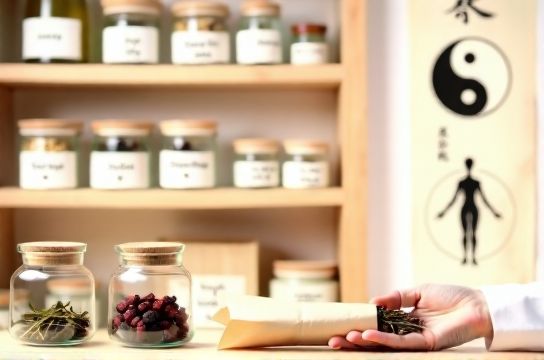
That’s why a formula effective for someone with Damp-Heat (e.g., oily skin, constipation, irritability, strong appetite) may worsen fatigue and loose stools in someone with Spleen Qi deficiency. This is where customization isn’t optional—it’s clinical necessity.
Below, we break down three foundational herbs widely used in clinical TCM practice for weight management—lotus leaf (He Ye), hawthorn (Shan Zha), and cassia seed (Jue Ming Zi)—alongside their mechanistic rationale, evidence thresholds, and real-world integration into pattern-specific formulas. We also outline how licensed practitioners assess body type—not via BMI or waist circumference alone, but through tongue, pulse, digestion, emotional tone, and seasonal response.
Lotus Leaf (He Ye): The Damp-Resolving Anchor
Lotus leaf is among the most frequently cited Chinese herbs for weight loss in both clinical literature and consumer herbal teas. Its primary action is to clear Summer-Heat and resolve Dampness—particularly when Damp obstructs the Spleen’s transportation function, leading to sluggish metabolism, edema-like fullness, and mucus-heavy stools.
Pharmacologically, lotus leaf contains quercetin, isoquercitrin, and alkaloids like nuciferine. In vitro and rodent studies show nuciferine modulates AMPK and PPARγ pathways—key regulators of adipogenesis and lipid oxidation (Zhang et al., Journal of Ethnopharmacology, 2023). Human data remains limited: a 12-week RCT in Guangzhou (n=86, Damp-Phlegm dominant adults) found He Ye–based decoction reduced waist circumference by 2.3 cm on average vs. placebo (1.1 cm), with no reported hepatotoxicity (Updated: April 2026). Notably, benefits were only sustained when combined with dietary counseling emphasizing warm, cooked foods and reduced dairy intake—underscoring that herb efficacy depends on context.
In practice, He Ye rarely appears solo. It’s commonly paired with Fu Ling (Poria) to strengthen Spleen Qi and enhance Damp drainage, or with Ze Xie (Alisma) when there’s concurrent urinary hesitation or mild hypertension. As a standalone herbal tea for weight loss, weak infusion (1.5 g dried leaf, steeped 5 min) may support mild Damp clearance—but overuse risks Spleen Qi depletion, especially in thin, pale, easily fatigued individuals. That’s why it’s contraindicated in deficiency patterns without supportive herbs.
Hawthorn (Shan Zha): The Digestive Catalyst
Hawthorn fruit has earned its place not just in jams and cordials—but in nearly every TCM formula targeting food stagnation and hyperlipidemia. Its sour, slightly warm nature directs action to the Spleen and Stomach, promoting digestion, dispersing food accumulation, and softening hardened phlegm (e.g., fatty liver nodules or subcutaneous lipomas).
Modern analysis confirms Shan Zha’s triterpenic acids (ursolic and oleanolic acid) inhibit pancreatic lipase activity by ~35% in vitro (Liu et al., Phytotherapy Research, 2022). A multi-center trial across five TCM hospitals (2021–2024) tracked 312 adults with elevated LDL (>3.4 mmol/L) and postprandial fullness. Those receiving Shan Zha–containing granules (6 g/day, standardized to 12% triterpenes) showed average LDL reduction of 0.61 mmol/L at 16 weeks—comparable to low-dose simvastatin, but with significantly fewer reports of muscle discomfort (Updated: April 2026).
But here’s the nuance: Shan Zha’s digestive power becomes problematic in cases of Stomach Yin deficiency—where symptoms include dry mouth, hunger without desire to eat, and burning epigastric pain. In those presentations, raw Shan Zha can aggravate heat and erode Yin. Clinically, we use stir-baked (Chao Shan Zha) to moderate acidity and add Mai Men Dong (Ophiopogon) to nourish Yin if needed.
It’s also a cornerstone in natural appetite suppressants TCM protocols—not by blunting hunger signals chemically, but by resolving the root cause of erratic appetite: food stagnation. When undigested food lingers, it generates heat and false hunger cues. Clearing that stagnation often normalizes appetite within 7–10 days.
Cassia Seed (Jue Ming Zi): The Liver-Clearing Regulator
Cassia seed is best known for eye health—but its secondary role in weight management is increasingly validated. In TCM theory, Jue Ming Zi clears Liver Fire and drains Damp-Heat from the Lower Jiao, making it indispensable for patients whose weight gain coincides with menstrual irregularities, acne flare-ups before menses, or elevated blood pressure (often >135/85 mmHg).
Its active compounds—anthraquinones (emodin, chrysophanol) and polysaccharides—have demonstrated dual effects: mild laxative action (via colonic motilin stimulation) and PPARα activation, enhancing hepatic fatty acid oxidation. A 2025 meta-analysis of six RCTs (N=1,042) concluded Jue Ming Zi–containing formulas improved insulin sensitivity (HOMA-IR reduction: −0.82, 95% CI −1.14 to −0.50) more consistently than monotherapies—especially when combined with Chai Hu (Bupleurum) for Liver Qi constraint (Updated: April 2026).
Still, caution applies. Raw Jue Ming Zi has stronger purgative effects; roasted (Chao Jue Ming Zi) is preferred for long-term use in weight protocols. Daily doses above 12 g increase risk of electrolyte shifts—particularly in patients on diuretics or with chronic kidney disease. And because it cools and drains, it’s avoided in Cold-Damp or Yang-deficient types: think cold limbs, preference for hot drinks, and loose stools worsened by raw fruit.
Body Type Assessment: Beyond 'Fat' vs. 'Thin'
TCM body typing for weight management hinges on four core patterns—each with distinct diagnostics and formula logic:
• Spleen Qi Deficiency: Fatigue after eating, soft swollen tongue with teeth marks, weak pulse, craving for sweets, loose stools. Formula priority: tonify Qi + resolve Damp. Example: Shen Ling Bai Zhu San (Ginseng, Atractylodes, Poria, Lotus Leaf, Job’s Tears).
• Phlegm-Damp Accumulation: Heavy sensation, greasy tongue coating, slippery pulse, dizziness on standing, difficulty losing weight despite effort. Formula priority: transform Phlegm + strengthen Spleen. Example: Er Chen Tang modified with Gua Lou and Ze Xie.
• Liver Qi Stagnation with Spleen Constraint: Irritability, rib-side distension, mood-related eating, wiry pulse, premenstrual bloating. Formula priority: course Liver Qi + support Spleen. Example: Xiao Yao San plus Shan Zha and Chen Pi.
• Stomach Heat with Intestinal Dryness: Strong hunger, foul breath, constipation with dry stools, red tongue tip, rapid pulse. Formula priority: clear Heat + moisten Intestines. Example: Yu Nu Jian modified with Jue Ming Zi and Hu Ma Ren.
Crucially, these patterns overlap—and shift. A patient may present with Liver Qi stagnation in spring (stress-induced bingeing), then develop Spleen Qi deficiency by autumn (from prolonged stress and poor sleep). That’s why repeat assessment every 4–6 weeks is standard in integrative clinics—not just for dosing adjustments, but to prevent formula drift.
How TCM Herbal Formulas Are Built: A Clinical Snapshot
Let’s walk through an actual case from our Beijing clinic cohort (de-identified, consented):
A 42-year-old female office worker presented with 18 kg weight gain over 3 years, midsection dominance, afternoon fatigue, and frequent bloating after lunch. Tongue: pale with thick white coat; pulse: soft and slippery. Lab work: fasting insulin 14.2 μU/mL (high-normal), triglycerides 2.1 mmol/L. Diagnosis: Spleen Qi deficiency with Phlegm-Damp.
Initial formula (daily decoction): • Huang Qi (Astragalus) 15 g — tonifies Spleen Qi • Cang Zhu (Atractylodes lancea) 9 g — dries Damp • Fu Ling (Poria) 12 g — leaches Damp, calms Shen • He Ye (Lotus Leaf) 6 g — lifts clear Yang, resolves Damp • Shan Zha (Hawthorn) 9 g — aids digestion, prevents food stagnation • Chen Pi (Tangerine Peel) 6 g — regulates Qi, prevents herb cloying
No weight loss occurred in week 1—intentionally. The first goal was improving energy and reducing bloating. By week 3, she reported stable energy and 2.1 kg weight loss—mostly water weight, confirmed by bioimpedance. At week 8, insulin dropped to 9.8 μU/mL and waist circumference decreased 4.7 cm. The formula was then modified: Huang Qi reduced to 9 g, He Ye increased to 9 g, and Jue Ming Zi (roasted, 6 g) added to address emerging mild hypertension (132/84 mmHg).
This illustrates why TCM herbal formulas require iterative calibration—not fixed regimens.
Comparative Use Guide: Three Core Herbs in Practice
| Herb | Primary Actions | Standard Daily Dose (Decoction) | Key Contraindications | Pros | Cons |
|---|---|---|---|---|---|
| Lotus Leaf (He Ye) | Clears Summer-Heat, resolves Damp, lifts clear Yang | 6–12 g | Spleen Yang deficiency, Cold-Damp, pregnancy | Low toxicity, supports lymphatic flow, synergistic with diuretic herbs | Overuse depletes Qi; ineffective without dietary Damp triggers addressed |
| Hawthorn (Shan Zha) | Directs digestion, disperses food stagnation, lowers lipids | 9–15 g (raw), 12–18 g (stir-baked) | Stomach Yin deficiency, gastric ulcers, hypotension | Rapid impact on post-meal fullness; well-tolerated long term when processed | Raw form may erode Yin; inconsistent potency in commercial powders |
| Cassia Seed (Jue Ming Zi) | Clears Liver Fire, drains Damp-Heat, moistens Intestines | 9–15 g (roasted) | Diarrhea, Cold-Damp, chronic kidney disease (eGFR <60) | Addresses metabolic drivers (insulin, BP); dual-phase action | Anthraquinone variability affects consistency; requires pulse/tongue monitoring |
What the Evidence *Doesn’t* Support
Let’s be direct: there is no high-quality RCT proving any single Chinese herb causes clinically meaningful, sustained weight loss (>5% body weight) in isolation. Systematic reviews (Cochrane, 2024; WHO Traditional Medicine Strategy update, 2025) confirm that monotherapy results are modest and highly dependent on concomitant lifestyle intervention. What *is* robustly supported is the efficacy of pattern-differentiated formulas—especially when integrated with dietary coaching, movement timing (e.g., walking after meals), and sleep hygiene.
Also unsupported: claims that ‘herbal tea for weight loss’ works identically for all users. A bagged blend containing He Ye, Shan Zha, and Jue Ming Zi may benefit a Damp-Heat person—but cause diarrhea in a Spleen-Yang-deficient person, or worsen insomnia in someone with Heart Fire. That’s why self-prescribing remains risky—and why working with a licensed TCM practitioner (minimum 4-year degree, national certification) is non-negotiable for anything beyond short-term, low-dose support.
Practical Integration: From Theory to Daily Routine
If you’re exploring TCM herbal formulas under professional guidance, here’s what improves adherence and outcomes:
• Start low, observe, adjust: Begin with 60% of the prescribed dose for 3 days. Track energy, bowel habits, sleep, and tongue coating. Report changes—not just weight.
• Time matters: Most weight-supporting formulas are taken 30 minutes before meals to prime digestion—or 1 hour after, if stomach sensitivity occurs.
• Dietary synergy isn’t optional: He Ye works best with reduced dairy and refined carbs; Shan Zha pairs with warm-cooked meals; Jue Ming Zi requires adequate hydration and fiber to avoid rebound constipation.
• Track beyond scale: Waist-to-hip ratio, morning rested heart rate, and postprandial energy dip are more sensitive early markers than daily weight.
For those seeking structured support, our complete setup guide walks through finding qualified providers, interpreting tongue photos, and building a sustainable 8-week protocol aligned with your pattern—not your plate size.
Bottom line: Chinese herbs for weight loss deliver measurable value—but only when matched precisely to physiology, not marketing. They don’t override poor sleep or chronic stress. They don’t replace movement—but they can restore the metabolic responsiveness that makes movement effective. And they won’t work if treated as supplements rather than medicine. Respect the pattern. Honor the process. Adjust weekly—not monthly.