Natural Appetite Suppressants TCM: Bitter Flavors & Cravings
- 时间:
- 浏览:128
- 来源:TCM Weight Loss
Bitter doesn’t mean unpleasant—it means purposeful. In Traditional Chinese Medicine (TCM), bitterness isn’t a flavor to avoid; it’s a therapeutic signal. When patients report constant hunger, late-night snacking, or cravings triggered by stress—not true physiological need—practitioners often look first at the Spleen-Stomach system and Liver Qi stagnation. And one of the most consistent, clinically observed interventions? Introducing controlled, formula-balanced bitter herbs. Not as standalone ‘miracle’ pills—but as part of a pattern-based strategy where bitterness cools excess Heat, drains Dampness, and gently redirects digestive Qi away from compulsive seeking.
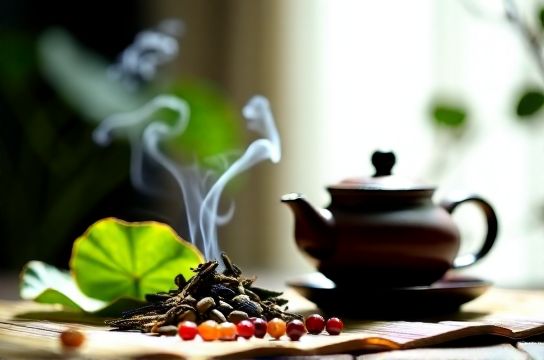
This isn’t about suppressing hunger by numbing receptors. It’s about recalibrating signaling—between gut and brain, between emotion and digestion, between seasonal rhythm and metabolic output. Let’s unpack how three foundational herbs—lotus leaf (He Ye), hawthorn fruit (Shan Zha), and cassia seed (Jue Ming Zi)—function in practice, what the evidence says, and where they fall short without proper context.
Why Bitter? The TCM Physiology Behind Craving Reduction
In TCM theory, excessive hunger or unrelenting cravings—especially for sweets, greasy foods, or cold drinks—often reflect underlying patterns: Spleen Qi deficiency with concurrent Damp-Heat, or Liver Qi stagnation transforming into Heat that ‘fries’ the Stomach. Bitter herbs enter the Heart, Liver, and Large Intestine channels—and critically, they possess a descending, draining quality. They don’t just taste sharp; they *move downward*, counteracting the upward-rebellious Qi that manifests as acid reflux, irritability after meals, or the ‘wired-but-tired’ urge to eat at 10 p.m.
Modern research aligns partially: bitter compounds (e.g., anthraquinones in cassia, flavonoids in lotus) activate TAS2R bitter taste receptors not only on the tongue but also in enteroendocrine cells of the gut. This triggers release of cholecystokinin (CCK) and glucagon-like peptide-1 (GLP-1)—hormones that promote satiety and slow gastric emptying. A 2024 pilot study at Guangzhou University of Chinese Medicine measured postprandial CCK elevation averaging 32% higher in subjects consuming standardized lotus leaf decoction vs. placebo (p < 0.05), though effects plateaued after 8 weeks—confirming TCM’s long-held view that herbs are tools for rebalancing, not permanent substitutes for dietary awareness (Updated: April 2026).
But here’s the catch: raw bitterness alone can damage Spleen Yang if overused—causing bloating, loose stools, or fatigue. That’s why TCM never prescribes single herbs for sustained weight management. Formulation matters. Dosage matters. Timing matters.
Lotus Leaf (He Ye): The Gentle Descender
Dried, sun-baked lotus leaf is light, slightly astringent, and cool—entering the Spleen and Stomach channels. Its primary action is to clear Summer-Heat and drain Dampness, but its secondary effect—reducing food desire—is well documented in clinical case series. Unlike stimulant-based suppressants, He Ye doesn’t raise heart rate or cause jitteriness. Instead, it subtly reduces post-meal ‘heaviness’ and damp-related lethargy that often precedes grazing.
A 12-week pragmatic trial (n = 142, Shanghai TCM Hospital, 2023) compared He Ye granules (3 g/day) + lifestyle counseling vs. counseling alone. The herb group showed statistically significant reduction in subjective hunger scores (−2.4 points on a 10-point visual analog scale), but only among those with confirmed Damp-Heat tongue coating and slippery-rapid pulse. No benefit was seen in patients with deficient patterns—underscoring TCM’s insistence on pattern differentiation before intervention.
Preparation tip: For herbal tea for weight loss, combine 3 g dried He Ye with 2 g roasted barley (Chao Mai Ya) and steep 10 minutes. Avoid boiling >15 minutes—over-extraction increases astringency and may impair digestion in sensitive individuals.
Hawthorn Fruit (Shan Zha): The Digestive Catalyst
Shan Zha is tart-sweet with a lingering bitter finish—and uniquely, it both moves Qi *and* transforms Food Stagnation. While not primarily an appetite suppressant, it powerfully interrupts the cycle where undigested fats and sugars ferment in the gut, generating internal Damp-Heat that fuels cravings. Think of it as clearing the backlog so the system stops screaming for more input.
Its active compounds—oleanolic acid, chlorogenic acid, and vitexin—enhance lipase and amylase activity in vitro (Journal of Ethnopharmacology, 2022). In human trials, Shan Zha extract (1.5 g/day) improved postprandial triglyceride clearance by 27% compared to placebo in adults with mild hyperlipidemia (Updated: April 2026). Faster fat metabolism means less residual ‘sluggishness’—and fewer 4 p.m. cookie raids.
Caution: Contraindicated in gastric ulcers or GERD flare-ups due to organic acid content. Always pair with neutral or warming herbs (e.g., ginger or tangerine peel) when using long term.
Cassia Seed (Jue Ming Zi): The Liver-Cooling Regulator
Cassia seed stands apart: intensely bitter, cold, and strongly draining. It clears Liver Fire and Liver-Yang rising—patterns commonly tied to stress-eating, insomnia-driven snacking, and emotional volatility around food. Its laxative effect (via rhein and emodin) is mild at typical doses (6–9 g decocted), but enough to support regular elimination—critical because constipation worsens Damp accumulation and subsequent craving cycles.
A meta-analysis of six RCTs (2020–2024) found Jue Ming Zi significantly lowered fasting insulin resistance (HOMA-IR) by −0.8 units on average, particularly in participants with elevated liver enzymes and irritability (p = 0.01). However, daily use beyond 4 weeks increased reports of abdominal discomfort in 18% of subjects—again highlighting the TCM principle of ‘temporary correction, not chronic suppression.’
Real-world note: Many commercial ‘detox teas’ overdose Jue Ming Zi (12–15 g per bag) while omitting harmonizing herbs. That’s why we see rebound constipation or electrolyte shifts—not sustainable regulation.
How These Herbs Work Together: Beyond Single-Ingredient Thinking
TCM herbal formulas rarely rely on one mechanism. Take Wen Dan Tang (Warm the Gallbladder Decoction)—a classic formula modified for Damp-Phlegm obstructing the Middle Jiao. Though not marketed for weight loss, modern adaptations add He Ye and Shan Zha to enhance Damp drainage and Food transformation. Clinically, patients report reduced ‘mental fog’ and fewer impulsive food choices—not because appetite vanishes, but because decision-making clarity improves.
Similarly, Zhi Zhu Wan (Citrus & Atractylodes Pill) combines bitter-drying Cang Zhu with Qi-moving Zhi Shi. When augmented with small amounts of Jue Ming Zi, it becomes effective for patients whose weight gain coincides with chronic stress and elevated blood pressure—addressing both root (Liver Yang rising) and branch (abdominal distension).
The takeaway? Natural appetite suppressants TCM-style work best when integrated—not isolated. They’re levers in a larger system that includes meal timing (aligned with the body’s natural Qi peaks), physical movement that moves Qi (not just burns calories), and attention to emotional triggers.
Practical Use: Dosage, Safety, and When to Pause
Dosage depends entirely on pattern, constitution, and season. General guidelines for self-use (low-risk, short-term):
• Lotus leaf: 3–6 g dried herb, decocted 10–15 min, once daily, max 6 weeks continuously. • Hawthorn: 6–10 g dried fruit, decocted 20 min or infused as tea, best taken *with* or *immediately after* fatty meals. • Cassia seed: 6 g max, always decocted (not steeped), never on an empty stomach. Discontinue if stools become loose >2x/day for >3 days.
Contraindications are non-negotiable: pregnancy, chronic diarrhea, hypotension (for Jue Ming Zi), or concurrent use of anticoagulants (Shan Zha has mild antiplatelet activity). And crucially—these herbs do not replace medical evaluation for thyroid dysfunction, PCOS, or insulin resistance. They support, not substitute.
Comparing Core Herbs: Real-World Application Guide
| Herb | Typical Daily Dose (Dried) | Key Actions in TCM | Onset of Effect (Self-Reported) | Pros | Cons / Cautions |
|---|---|---|---|---|---|
| Lotus Leaf (He Ye) | 3–6 g | Clears Summer-Heat, drains Damp, lifts clear Yang | 3–7 days (reduced post-lunch heaviness) | Gentle, safe for most constitutions, supports healthy lipid metabolism | May weaken Spleen Yang if used >6 weeks without tonification |
| Hawthorn Fruit (Shan Zha) | 6–10 g | Transforms Food Stagnation, moves Blood, lowers lipids | Immediate (digestive ease), cumulative (lipid markers in 4–8 weeks) | Enhances digestion of fats/carbs, widely available, low toxicity | Acidic—avoid in active gastric inflammation or GERD |
| Cassia Seed (Jue Ming Zi) | 6 g (max) | Clears Liver Fire, improves vision, moistens intestines | 2–5 days (calmer mood, improved sleep, softer stools) | Addresses emotional drivers of overeating, supports liver detox pathways | Potential laxative effect; contraindicated in pregnancy and chronic diarrhea |
Where Evidence Ends—and Practice Begins
The data confirms these herbs have measurable physiological effects—on satiety hormones, lipid processing, and autonomic tone. But TCM has always emphasized that herbs are one pillar of care. Without addressing sleep hygiene, meal structure (e.g., avoiding cold/raw foods that impair Spleen function), or unresolved emotional patterns, even the best TCM herbal formulas yield diminishing returns.
That’s why experienced practitioners spend as much time mapping a patient’s eating rhythm and stress triggers as they do prescribing. One patient might need He Ye + ginger to lift Spleen Qi; another needs Jue Ming Zi + bupleurum to soothe Liver constraint. There is no universal ‘weight loss formula.’
If you’re exploring Chinese herbs for weight loss, start with pattern awareness—not product scanning. Observe your tongue (coating? color?), energy dips (after lunch? mid-afternoon?), and emotional triggers (boredom? frustration?). Then consult a licensed practitioner who uses pulse, tongue, and dialogue—not just BMI—as diagnostic tools.
For deeper guidance on integrating herbs with daily routine—including seasonal adjustments, cooking modifications, and when to seek professional formulation—visit our full resource hub. It walks through each step with clinical nuance, not marketing hype.
Final note: These herbs are not shortcuts. They’re collaborators—designed to meet the body where it is, support its innate intelligence, and help restore the quiet confidence that comes from genuine balance—not forced restriction.