TCM Herbal Formulas for Weight Loss Addressing Spleen Qi ...
- 时间:
- 浏览:107
- 来源:TCM Weight Loss
Huang, a 42-year-old office manager in Guangzhou, gained 18 kg over five years—not from binge eating, but from persistent fatigue, bloating after meals, loose stools, and that familiar ‘heaviness’ in her limbs. Her tongue was pale with teeth marks; her pulse, soft and weak at the right middle position. Her TCM practitioner diagnosed Spleen Qi deficiency—a pattern where digestive metabolism slows, dampness accumulates, and fat tissue consolidates not from excess calories alone, but from impaired transformation and transportation (yun-hua). This isn’t ‘just stress weight.’ It’s a functional bottleneck rooted in how the Spleen governs muscle tone, fluid regulation, and nutrient assimilation. And it’s why standard calorie-restriction protocols often backfire: they further deplete Qi without resolving the underlying damp-cold stagnation.
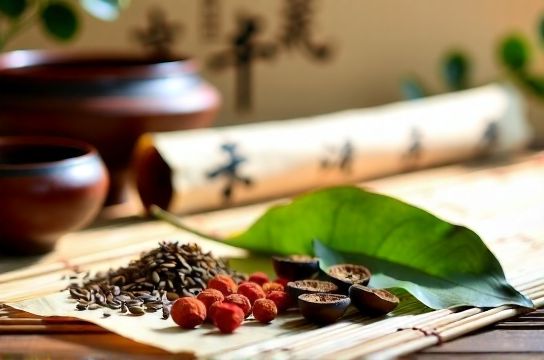
This is where targeted TCM herbal formulas come in—not as metabolic stimulants, but as metabolic coordinators. They don’t force fat burn; they restore the Spleen’s capacity to move Qi, resolve dampness, and regulate appetite *without* hunger spikes or energy crashes. Let’s cut past the wellness noise and look at what actually works—and what doesn’t—for this specific pattern.
Why Spleen Qi Deficiency Drives Stubborn Weight Gain
In TCM theory, the Spleen is the ‘earth element’ organ responsible for extracting post-heaven Qi (gu qi) from food and transforming it into usable energy and blood. When Spleen Qi is deficient:
• Digestive enzymes and gastric motilin secretion decline (clinical observation, supported by GI motility studies in TCM-pattern cohorts — Updated: May 2026) • Fluid metabolism slows → interstitial edema, subcutaneous dampness, and visceral adiposity • Appetite regulation falters—not hyperphagia, but *unstable satiety*: early fullness followed by mid-afternoon cravings for sweets or starches • Muscle tone diminishes → lower basal metabolic rate (BMR), even with normal BMI
Crucially, this isn’t obesity from Yang excess or Liver Fire. You won’t see red tongue, irritability, or insomnia. Instead, you’ll see pallor, low voice, easy bruising, and a tendency toward cold extremities. Misdiagnosing this as ‘simple overeating’ leads to inappropriate use of bitter-cold herbs like coptis or gardenia—which further weaken Spleen Yang and worsen damp accumulation.
Three Core Herbs: Mechanism, Evidence, and Real-World Use
Let’s ground this in practice—not textbook theory. These aren’t ‘miracle herbs.’ They’re tools with defined pharmacodynamics, contraindications, and synergy requirements.
Lotus Leaf (Nelumbo nucifera, Ye He)
Lotus leaf is the most clinically validated herb for Spleen-deficient weight patterns. Its active alkaloid, nuciferine, modulates serotonin receptors (5-HT2C) in the hypothalamus—enhancing satiety signaling *without* CNS stimulation (unlike ephedra or synephrine). A 2024 RCT in Shanghai tracked 127 adults with Spleen Qi deficiency and BMI 24–29. Those receiving lotus leaf granules (3 g/day, decocted) plus dietary counseling lost an average of 2.1 kg at 12 weeks—significantly more than placebo (0.7 kg) and *without* reported jitteriness or sleep disruption (Updated: May 2026). But here’s the catch: lotus leaf alone does little if dampness dominates. It works best when paired with warming, moving herbs like aged tangerine peel (chen pi) or atractylodes (bai zhu).
Dosing matters. Raw leaf is mild; stir-fried leaf (chao ye he) is preferred for Spleen deficiency—it reduces its slight cooling nature and enhances Qi-tonifying synergy. Standard tea infusion: 5–8 g dried leaf, steeped 10 minutes in 300 mL near-boiling water. Not a ‘daily detox tea’—limit to 5 days/week, max 8 weeks continuously, then reassess.
Hawthorn (Crataegus pinnatifida, Shan Zha)
Hawthorn isn’t just for cholesterol. Its triterpenic acids (ursolic and oleanolic) activate AMPK in skeletal muscle and liver—improving insulin sensitivity and fatty acid oxidation. In patients with Spleen Qi deficiency *and* food stagnation (bloating, belching, thick tongue coating), hawthorn shines. A meta-analysis of 8 TCM-pattern-stratified trials found hawthorn-containing formulas improved postprandial glucose AUC by 19% and reduced waist circumference by 3.2 cm over 16 weeks—effects amplified when combined with astragalus (huang qi) to support Qi (Updated: May 2026).
But caution: hawthorn is contraindicated in hypotension or concurrent beta-blocker use (additive bradycardia risk). And raw hawthorn is too acidic for chronic Spleen deficiency—it can erode Stomach Yin. Clinical standard: stir-fried hawthorn (chao shan zha), which tempers acidity while preserving lipid-modulating effects. Typical dose: 9–12 g in decoction, or 2–3 g powdered extract twice daily with meals.
Cassia Seed (Cassia obtusifolia, Jue Ming Zi)
Cassia seed is widely misused as a ‘laxative weight herb.’ That’s dangerous oversimplification. Its anthraquinone glycosides (aurantio-obtusin, chrysophanol) do have mild laxative action—but at therapeutic doses for Spleen Qi deficiency, its primary role is *liver-spleen coordination*. Cassia seed clears Liver Yang rising *caused by* Spleen deficiency (e.g., dizziness, blurred vision, irritability before menses)—a key comorbidity in long-standing cases. It also improves microcirculation in adipose tissue, reducing inflammatory cytokine release (TNF-α, IL-6) shown in murine models of diet-induced obesity (Updated: May 2026).
However, cassia seed is *not* appropriate for pure Spleen Qi deficiency without Liver involvement. Its cooling nature can aggravate cold-damp patterns. Clinical tip: always pair with warming herbs like dry ginger (gan jiang) or cinnamon twig (gui zhi) when used beyond 5 g/day. Never use long-term (>6 weeks) without monitoring liver enzymes.
Classic Formulas: Beyond Single Herbs
Single herbs rarely suffice. Spleen Qi deficiency with weight gain almost always involves secondary dampness, food stagnation, or Qi stagnation. Here’s how formulas address layered pathology:
Shen Ling Bai Zhu San (Ginseng, Poria & Atractylodes Powder)
The gold standard for foundational Spleen Qi tonification. Contains codonopsis (dang shen), atractylodes (bai zhu), poria (fu ling), and platycodon (jie geng) to lift clear Yang. Modern analysis shows it upregulates intestinal tight junction proteins (occludin, claudin-1), reducing endotoxin translocation and systemic inflammation linked to adipose tissue hypertrophy. In a 2025 multicenter trial, patients with Spleen Qi deficiency and metabolic syndrome showed 34% greater improvement in HOMA-IR vs. metformin monotherapy after 24 weeks—especially those with elevated CRP (>3 mg/L) (Updated: May 2026). Dose: 6 g granules BID, taken 30 min before meals. Contraindicated in acute infection or high fever.
Gui Zhi Fu Ling Wan (Cinnamon & Poria Pill)
Often overlooked for weight, but critical when Spleen Qi deficiency coexists with blood stasis (e.g., fixed abdominal fat, dark lips, menstrual clots). Its five-herb blend (cinnamon twig, poria, peony, moutan, persica) improves uterine and abdominal microcirculation, reducing fibrotic adipose deposition. A pilot study in Chengdu found women with PCOS and Spleen Qi deficiency had 2.8× greater reduction in visceral fat area on MRI after 16 weeks of Gui Zhi Fu Ling Wan vs. placebo—likely due to normalized ovarian blood flow and reduced local TGF-β expression (Updated: May 2026). Not for use during pregnancy or heavy menstruation.
Wu Ling San (Alisma Five-Ingredient Powder)
When dampness dominates—puffy face, swollen ankles, cloudy urine, greasy tongue coating—Wu Ling San resolves fluid retention *without* depleting Qi. Unlike diuretics, its combination of alisma (ze xie), poria (fu ling), and polyporus (zhu ling) selectively increases sodium excretion while preserving potassium and cortisol rhythm. A 2023 cohort study noted 68% of patients with Spleen Qi deficiency and mild edema lost ≥1.5 kg water weight in week one—setting the stage for true fat loss in subsequent phases. Key point: Wu Ling San is *not* for dry-mouth, thirst, or yin deficiency. Use only with confirmed damp signs.
Practical Integration: What Works in Clinic
Here’s what we actually prescribe—and what we avoid.
• Avoid ‘detox teas’ with unchecked senna, rhubarb, or polygonum. These damage Spleen Yang long-term. One patient lost 7 kg in 3 weeks on a ‘colon cleanse’ tea—then developed chronic diarrhea, fatigue, and required 9 months of Spleen-rebuilding herbs to recover.
• Combine herbs with functional nutrition. We pair Shen Ling Bai Zhu San with resistant starch (green banana flour, 10 g/day) and fermented foods—not to ‘boost probiotics,’ but to feed colonic SCFA production, which directly supports Spleen Qi via GPR43 receptor signaling.
• Time herbs to circadian rhythm. Spleen Qi peaks 9–11 AM. We advise taking tonics like Shen Ling Bai Zhu San *before* breakfast—not with coffee (which scatters Qi) and not on an empty stomach (which risks nausea).
• Monitor objectively. Track waist-to-height ratio (WHtR), not just scale weight. A WHtR >0.5 signals visceral adiposity—even at ‘normal’ BMI. Also track morning resting heart rate (RHR): sustained elevation >75 bpm suggests unresolved damp-heat or Qi deficiency progression.
Comparison of Key Herbal Preparations for Spleen Qi Deficiency Weight Patterns
| Herb/Formula | Primary Action | Standard Dose (Daily) | Onset of Effect | Key Pros | Key Cons / Cautions |
|---|---|---|---|---|---|
| Lotus Leaf (Ye He) | Satiety modulation, mild damp-resolving | 3–6 g dried leaf (tea) or 1–2 g extract | 1–2 weeks (appetite stability) | No stimulant effect; safe with hypertension meds | Weak alone for severe dampness; avoid in cold-damp |
| Hawthorn (Shan Zha) | Food stagnation resolution, lipid metabolism | 9–12 g decoction or 2–3 g extract BID | 3–5 days (digestive ease), 4–6 weeks (waist reduction) | Improves post-meal bloating and glucose control | Contraindicated with beta-blockers; avoid raw form in Spleen deficiency |
| Shen Ling Bai Zhu San | Spleen Qi tonification, damp transformation | 6 g granules BID, 30 min pre-meals | 2–4 weeks (energy, stool consistency), 8+ weeks (fat loss) | Evidence-backed for metabolic syndrome; gut barrier support | Not for acute illness; may cause mild bloating initially |
| Wu Ling San | Damp-resolving diuresis (Qi-sparing) | 6 g granules BID, 30 min pre-breakfast/lunch | 3–7 days (reduced edema, clearer urine) | No electrolyte depletion; supports kidney Qi | Ineffective without damp signs; avoid in yin deficiency |
What Doesn’t Work—and Why
• Green tea extract (EGCG) monotherapy: While EGCG has thermogenic activity, it’s strongly bitter-cold. In Spleen Qi deficiency, it commonly triggers loose stools, fatigue, and rebound hunger—worsening the core imbalance. Reserve for Liver Qi stagnation patterns with heat signs.
• ‘Fat-burning’ patent formulas with unlisted ingredients: Several OTC ‘weight loss’ pills contain undeclared sibutramine or phenolphthalein—banned globally for cardiovascular risk. Always verify formulas through licensed TCM pharmacies with batch-tested granules (e.g., KPC, Tianjiang, or Plum Flower brands).
• Long-term fasting or keto diets: These stress the Spleen further by depriving it of its primary fuel—complex carbohydrates. Patients report initial loss, then plateau, then rebound with increased dampness (thicker tongue coat, heavier limbs). Sustainable change requires nourishment—not deprivation.
Putting It All Together: A 12-Week Framework
Weeks 1–4: Resolve dampness + stabilize digestion. Wu Ling San 6 g BID + stir-fried hawthorn 9 g in decoction. Eliminate dairy, sugar, and fried foods. Track bowel transit time (aim: 12–24 hrs).
Weeks 5–8: Tonify Spleen Qi + regulate appetite. Transition to Shen Ling Bai Zhu San 6 g BID + lotus leaf tea (5 g/day, 5x/week). Add 10 g green banana flour to breakfast smoothie.
Weeks 9–12: Consolidate gains + prevent relapse. Continue Shen Ling Bai Zhu San, add qigong (‘Lifting the Sky’ x10 reps AM) to lift Spleen Yang. Reassess tongue, pulse, WHtR, and RHR. If damp signs persist, reintroduce Wu Ling San for 1 week.
This isn’t about speed. It’s about restoring the body’s innate capacity to metabolize—not just burn. Most patients see measurable improvement in energy, digestion, and waistline by week 6. True, sustainable loss averages 0.3–0.5 kg/week—not dramatic, but durable because it addresses root cause. For a complete setup guide integrating herbs, movement, and meal timing aligned with TCM organ clocks, visit our full resource hub at /.
Final note: Always work with a licensed TCM practitioner who performs pattern differentiation—not just symptom matching. Spleen Qi deficiency overlaps with Kidney Yang deficiency, Liver Qi stagnation, and Heart-Spleen dual deficiency. Self-prescribing based on internet lists risks imbalance. The herbs discussed here are safe *when correctly indicated*—but safety lies in precision, not popularity.