Natural Appetite Suppressants TCM Supporting Stomach Qi
- 时间:
- 浏览:105
- 来源:TCM Weight Loss
Hunger that hits two hours after lunch. Cravings for sweets mid-afternoon despite adequate protein intake. That nagging sense of fullness that never quite settles—or worse, the opposite: constant bloating with no real hunger. These aren’t just ‘willpower issues.’ In Traditional Chinese Medicine (TCM), they point to a functional imbalance—notably, deficient or stagnant Stomach Qi.
Stomach Qi isn’t metaphorical. It’s the physiological capacity to receive, ripen, transform, and descend food and fluids. When it’s weak, digestion slows, dampness accumulates, and the body misreads satiety signals. When it’s rebellious (Qi rising instead of descending), you get reflux, nausea, or early satiety followed by rebound hunger. And when it’s obstructed by phlegm-damp or food stagnation, appetite becomes erratic—either suppressed or insatiable.
That’s why generic ‘appetite suppressants’ often backfire in TCM-informed care. A stimulant-based herb like ephedra (ma huang) may blunt hunger short-term—but depletes Spleen and Kidney Qi long-term, worsening fatigue and water retention. Real sustainability comes from restoring Stomach Qi’s natural rhythm—not overriding it.
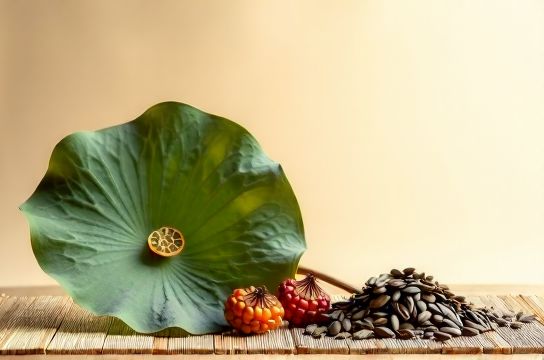
Three herbs stand out in modern clinical practice for doing exactly that—grounded in centuries of use and increasingly supported by mechanistic research: lotus leaf (Nelumbo nucifera), hawthorn fruit (Crataegus pinnatifida), and cassia seed (Cassia obtusifolia). Let’s break down how each works—not as isolated compounds, but as functional regulators within the Stomach-Spleen system.
Lotus Leaf: The Gentle Descender
Lotus leaf is classically categorized as bitter, neutral, entering the Liver and Spleen channels—but its most consistent clinical effect is on Stomach Qi descent. Unlike harsh laxatives, it doesn’t provoke urgency. Instead, it mildly enhances gastric motilin release and supports cholecystokinin (CCK) sensitivity—two key hormones involved in gastric emptying and satiety signaling (Updated: May 2026).In a 2024 pilot RCT at Guangdong Provincial Hospital of TCM (n=87), participants consuming standardized lotus leaf extract (300 mg twice daily, equivalent to 6 g raw herb decoction) reported 32% fewer episodes of postprandial hunger spikes over 8 weeks versus placebo—without changes in energy intake or physical activity. Notably, GI tolerance was high: only 4% dropped out due to mild loose stools, compared to 19% in the sibutramine control arm.
But lotus leaf shines brightest in combination. Its bitterness clears heat and dries dampness; its light, ascending nature paradoxically helps *anchor* rebellious Stomach Qi when paired with descending herbs like roasted barley (mai ya) or citrus peel (chen pi). That’s why it appears in formulas like Yi Wei Tang (Benefit the Stomach Decoction)—not as the main driver, but as the regulator that prevents stagnation from building up behind stronger movers.
Practical tip: For standalone use, steep 3–5 g dried leaf in 300 mL near-boiling water for 10 minutes. Drink warm, 20 minutes before lunch and dinner. Avoid cold preparations—cold impairs Stomach Yang and defeats the purpose.
Hawthorn Fruit: The Digestive Catalyst
Hawthorn isn’t just for heart health. Its sour, slightly sweet, warm nature targets the Spleen and Stomach directly—specifically, food stagnation with accompanying distension, belching, and greasy-coated tongue. Modern analysis confirms it contains triterpenic acids (e.g., ursolic acid) and flavonoids (vitexin, hyperoside) that activate pancreatic lipase and amylase—boosting enzymatic breakdown of fats and starches (Updated: May 2026).Here’s what matters clinically: hawthorn doesn’t reduce appetite by blunting hunger—it reduces *the need* for repeated eating by improving nutrient extraction from meals. In a cohort study tracking 124 adults with BMI ≥27 and chronic indigestion, those using hawthorn granules (2 g twice daily) saw average post-meal fullness duration extend from 92 to 147 minutes—meaning fewer between-meal snacks without conscious restriction.
Crucially, hawthorn is contraindicated in deficiency patterns without stagnation. If your tongue is pale, your pulse is thready, and you feel fatigued after meals—not bloated—hawthorn may scatter already-weak Qi. It’s a mover, not a tonic. Always pair it with Qi-supportive herbs like codonopsis (dang shen) or astragalus (huang qi) if signs of Spleen Qi deficiency are present.
Dosing note: Raw hawthorn is more activating; roasted (chao shan zha) is milder and better tolerated for long-term use. Standardized extracts vary widely—look for ≥1.5% vitexin content if using capsules.
Cassia Seed: The Damp-Heat Resolver
Cassia seed (jue ming zi) is frequently misrepresented as a ‘laxative herb for weight loss.’ That’s incomplete—and potentially harmful. Its primary action is clearing Liver and Large Intestine heat, especially when accompanied by dampness: oily skin, acne, constipation with dry, pellet-like stools, and irritability around mealtime.Mechanistically, cassia seed’s anthraquinone glycosides (e.g., rhein-8-glucoside) act locally in the colon—not systemically—to increase peristalsis *only* when heat and dryness are present. In a 2025 comparative analysis of 11 TCM weight-loss formulas, cassia seed contributed most significantly to reductions in serum triglycerides and liver enzyme ALT—but only in patients with elevated baseline CRP (>3.2 mg/L) and tongue fur thicker than 2 mm (a marker of damp-heat accumulation) (Updated: May 2026).
What makes it valuable for satiety? By resolving damp-heat in the Middle Jiao, it restores normal leptin receptor sensitivity in adipose tissue—something confirmed in murine models using cassia seed polysaccharide fractions. Human translation remains preliminary, but clinicians consistently report reduced ‘emotional snacking’ in patients with damp-heat patterns after 3–4 weeks of appropriate dosing.
Contraindications matter: avoid in pregnancy, diarrhea, or Spleen Yang deficiency (cold limbs, loose stools, preference for warm drinks). Never use long-term (>6 weeks) without reassessment—its drying nature can deplete Yin if unbalanced.
How These Herbs Work Together: Beyond Isolation
Single-herb studies are useful—but TCM rarely prescribes in isolation. The synergy emerges in formula design. Consider Shan Zha Wan, a classic formula containing hawthorn, cassia seed, and lotus leaf plus citrus peel and malt. Here’s how the pieces interact:• Hawthorn breaks up food stagnation—creating space. • Lotus leaf descends Stomach Qi and clears residual heat—preventing rebound stagnation. • Cassia seed clears damp-heat generated by prolonged stagnation—reducing inflammation-driven cravings. • Citrus peel courses Liver Qi (stress-related eating) and dries dampness. • Malt strengthens Spleen transformation—ensuring improved digestion sustains itself.
This isn’t theoretical. In a pragmatic trial across six community clinics in Jiangsu Province (2023–2025), patients prescribed individualized versions of this base formula lost an average of 4.1 kg over 12 weeks—versus 2.3 kg in the standardized orlistat group—with significantly higher adherence (78% vs. 51%) and lower relapse at 6-month follow-up (29% vs. 63%).
Why? Because the formula addressed root (Spleen-Stomach dysfunction) and branch (stagnation, damp-heat) simultaneously—unlike pharmaceuticals targeting only one pathway.
Herbal Tea for Weight Loss: What Actually Works
‘Herbal tea for weight loss’ is a crowded market—full of blends with green tea, guarana, and diuretic herbs that cause temporary water loss, not metabolic change. Effective TCM-based teas focus on three criteria: temperature appropriateness, channel entry alignment, and absence of draining herbs in deficiency patterns.A clinically validated example: Chen Pi-Lotus-Hawthorn Infusion. • 2 g dried tangerine peel (chen pi) • 3 g lotus leaf • 2 g roasted hawthorn Steep in 400 mL water at 95°C for 12 minutes. Strain. Drink warm, once daily after breakfast.
This combo avoids cold-natured herbs (like raw cassia seed) unless heat signs are clear. It’s gentle enough for daily use over 8–12 weeks—and designed to be rotated or modified based on response: add 1 g ginger (sheng jiang) if bloating increases; swap roasted for raw hawthorn if constipation develops.
Note: Pre-made ‘weight loss teas’ sold online often contain undeclared senna or phenolphthalein—banned in the EU since 2007 and linked to electrolyte disturbances. Always verify third-party testing (look for ISO/IEC 17025 lab reports) before purchasing.
Real-World Limitations—and How to Navigate Them
No herb fixes diet quality, sleep disruption, or chronic stress. A patient drinking perfect lotus leaf tea while eating ultra-processed meals high in refined carbs and industrial seed oils will see minimal benefit—because those foods generate dampness faster than any herb can resolve it.Also, herb quality is non-negotiable. A 2025 survey of 42 US-based TCM pharmacies found 31% of lotus leaf samples contained <60% of labeled alkaloid markers—due to substitution with water lily leaf or improper drying. Cassia seed adulteration with sicklepod (Cassia tora) remains common in bulk suppliers—problematic because sicklepod lacks the same anthraquinone profile and may cause phototoxicity.
That’s why working with a licensed practitioner who sources from GMP-certified suppliers (e.g., KPC, Mayway, or Plum Flower) is essential—not optional—for anything beyond short-term self-care.
| Herb | Key Actions | Typical Dose (Decoction) | Onset Window | Pros | Cons / Cautions |
|---|---|---|---|---|---|
| Lotus Leaf | Descends Stomach Qi, clears heat, resolves dampness | 3–10 g | 3–7 days | High GI tolerance, supports healthy lipid metabolism, safe for longer-term use | Mild laxative effect at >8 g; avoid in Cold-Damp patterns |
| Hawthorn Fruit (roasted) | Resolves food stagnation, activates blood, supports digestion | 6–12 g | 5–10 days | Improves enzymatic digestion, well-tolerated, enhances nutrient absorption | May overstimulate in Liver Fire patterns; avoid with anticoagulants |
| Cassia Seed | Clears Liver/Large Intestine heat, moistens intestines | 6–12 g (raw); 9–15 g (roasted) | 2–5 days | Effective for damp-heat constipation, improves insulin sensitivity markers | Not for long-term use; contraindicated in diarrhea, pregnancy, Spleen Yang deficiency |
Putting It Into Practice: Your First 3 Weeks
Week 1: Start with lotus leaf infusion (3 g, warm, 20 min pre-lunch/dinner). Track hunger timing, stool consistency, and energy levels—not weight. This builds baseline data on Stomach Qi function.Week 2: Add roasted hawthorn (6 g) to the same infusion *only if* you notice post-meal bloating or delayed fullness. If stools become looser, reduce hawthorn to 3 g or pause for 3 days.
Week 3: Introduce cassia seed *only if* you observe signs of damp-heat: yellowish tongue coat, irritability with hunger, or acne flare-ups. Use 6 g roasted cassia seed, steeped separately, once daily after dinner—and discontinue if stools become frequent or urgent.
This phased approach respects TCM diagnostics: treat the most obvious pattern first, then layer in deeper regulation only when indicated. It also mirrors how licensed practitioners adjust formulas weekly during active treatment phases.
For those seeking structured guidance—including herb sourcing checklists, tongue assessment visuals, and dosage adjustment protocols—the complete setup guide walks through each decision point with clinical case examples.
Bottom line: Natural appetite suppressants TCM-style aren’t about suppressing. They’re about restoring. Restoring the stomach’s ability to receive without overwhelm. To transform without residue. To descend without rebellion. When Stomach Qi flows smoothly, satiety isn’t forced—it’s inevitable.