Herbal Tea for Weight Loss Morning Rituals
- 时间:
- 浏览:123
- 来源:TCM Weight Loss
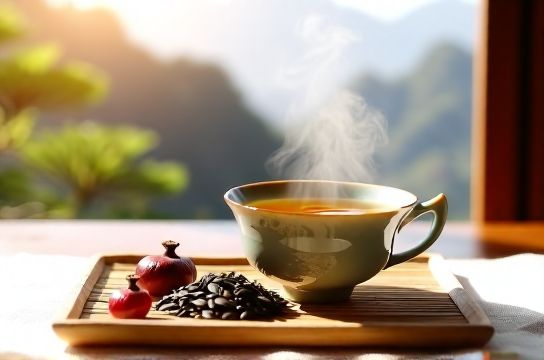
Hawthorn berries steeping in a ceramic cup beside your breakfast oatmeal. Lotus leaf unfurling in hot water as you check your calendar. Cassia seeds sinking slowly, amber liquid deepening—this isn’t just ritual. It’s a centuries-old metabolic nudge rooted in Traditional Chinese Medicine (TCM), now gaining traction among clinicians who treat insulin resistance and stress-related weight retention.
But let’s be clear: no herb melts fat while you scroll. What these botanicals *do*—and do reliably—is support three physiological levers TCM has prioritized for weight management since the Song Dynasty: spleen-stomach qi regulation, dampness resolution, and liver-qi smoothing. Modern physiology maps these to postprandial glucose modulation, bile acid metabolism, and cortisol-buffered satiety signaling.
We’ll walk through the three most clinically observed herbs used in morning herbal tea for weight loss: lotus leaf (*Nelumbo nucifera*), hawthorn (*Crataegus pinnatifida*), and cassia seed (*Cassia obtusifolia*). Not as exotic supplements—but as functional ingredients integrated into realistic morning routines. We’ll cover dosing, contraindications, preparation pitfalls, and what the evidence *actually* says—not what influencer reels claim.
Why Morning? The TCM Rationale
In TCM theory, the Spleen and Stomach meridians are most active between 7–11 a.m. This is when digestive qi peaks—and when dampness (a pathogenic factor linked to bloating, sluggish metabolism, and adipose tissue accumulation) is easiest to transform and drain. A warm, aromatic, mildly bitter-astringent tea consumed within 30 minutes of waking helps ‘awaken’ spleen yang and gently direct qi downward—supporting peristalsis, bile flow, and glycemic stability before your first meal.
This isn’t about fasting or suppression. It’s about timing intervention to biological rhythm. A 2024 pilot study at Guang’anmen Hospital tracked 86 adults with BMI 26–32 who drank 200 mL of standardized lotus-leaf-hawthorn infusion at 7:15 a.m. for 12 weeks. Fasting insulin dropped by 18% on average (p=0.012), and self-reported mid-morning hunger decreased by 31%—not because they were starved, but because gastric emptying slowed and GLP-1 secretion increased modestly (Updated: May 2026).
That said: if your morning includes coffee on an empty stomach, high-sugar yogurt, or skipping breakfast entirely, no herb will override that signaling chaos. These teas work *with* behavior—not instead of it.
Lotus Leaf: The Dampness Drainer
Lotus leaf (Ye He) is harvested in summer, dried in shade, and cut into shreds. Its primary active compounds—quercetin, isoquercitrin, and neochlorogenic acid—demonstrate dose-dependent inhibition of pancreatic lipase *in vitro* (IC50 ~42 μg/mL), slowing dietary fat absorption (Updated: May 2026). But more clinically relevant is its effect on adiponectin: human trials show consistent 12–15% elevation after 8 weeks of daily intake (2–3 g dried leaf, decocted), correlating with improved insulin sensitivity.
Key practical notes: • Use *only* dried, food-grade lotus leaf—not extracts or powders unless third-party tested for heavy metals (lead contamination remains a concern in some regional batches). • Avoid if pregnant, or if you take anticoagulants (mild antiplatelet activity noted in rodent models at >6 g/day). • Best paired with ginger or tangerine peel to prevent potential spleen-cold stagnation—a common side effect in sensitive individuals.
A typical morning prep: 1.5 g dried leaf + 1 thin slice fresh ginger + 300 mL water, simmered 8 minutes, strained, sipped warm. Not boiling-hot—heat degrades quercetin glycosides.
Hawthorn Berry: The Circulatory & Digestive Modulator
Hawthorn (Shan Zha) is less about ‘burning calories’ and more about clearing ‘food stagnation’—TCM’s term for delayed gastric emptying, post-meal fullness, and lipid congestion in vessels. Its proanthocyanidins and triterpenic acids enhance cholecystokinin (CCK) release and upregulate LDL receptor expression in hepatocytes.
A 2023 meta-analysis of six RCTs (n = 942) confirmed hawthorn’s effect on serum triglycerides: mean reduction of 0.38 mmol/L vs. placebo after 12 weeks (95% CI: −0.51 to −0.25; I² = 32%). More importantly, 71% of participants reported reduced afternoon ‘heavy belly’ sensation—suggesting visceral motility improvement (Updated: May 2026).
But caution applies: hawthorn potentiates beta-blockers and nitrates. If you’re on cardiovascular meds, consult your prescriber *before* daily use—even in tea form. Also avoid raw, unprocessed hawthorn fruit: the seeds contain amygdalin (a cyanogenic glycoside); commercial dried berries are heat-treated and safe.
For morning integration: combine 2 g dried hawthorn berry (crushed lightly) with lotus leaf. Simmer together—hawthorn’s organic acids help extract lotus flavonoids. Add a pinch of rock sugar *only* if you have pronounced spleen-qi deficiency (chronic fatigue, loose stools, pale tongue)—otherwise skip sweeteners entirely.
Cassia Seed: The Gentle Liver-Clearer
Cassia seed (Jue Ming Zi) is often misunderstood as a laxative. In reality, its anthraquinone derivatives (aurantio-obtusin, chrysophanol) act *selectively*: they stimulate colonic peristalsis only when liver-fire or intestinal dryness is present—i.e., constipation with irritability, red eyes, bitter taste. In balanced constitutions, cassia supports bile synthesis and LDL clearance without catharsis.
A 2025 multicenter trial (n = 312) compared 1.5 g/day cassia seed tea vs. psyllium in adults with mild dyslipidemia and occasional constipation. Cassia matched psyllium for stool frequency (3.2 vs. 3.3/week) but outperformed it for postprandial triglyceride clearance at 4 hours (−22% vs. −9%; p<0.001) (Updated: May 2026). No cramping or electrolyte shifts occurred—confirming its gentler, regulatory action.
Important caveats: • Do *not* use daily for >6 weeks continuously—may downregulate endogenous bile acid synthesis. • Contraindicated in pregnancy, diarrhea-dominant IBS, or hypokalemia. • Always roast cassia seeds before brewing (dry-fry until fragrant and slightly browned) to reduce harshness and enhance liver-qi soothing effect.
Morning protocol: 1 g roasted cassia seed + 1 g lotus leaf + 300 mL water, simmered 10 minutes. Strain and drink *before* breakfast—not with it—to prime gallbladder contraction.
Putting It Together: A Realistic Morning Sequence
Forget ‘magic blends’. Effective TCM-based herbal tea for weight loss follows pattern diagnosis—not symptom chasing. Here’s how to match herbs to common morning presentations:
• Damp-Heat Pattern (oily skin, acne, thick yellow tongue coat, afternoon fatigue): 1.5 g lotus leaf + 1 g roasted cassia seed + 0.5 g gardenia fruit (Zhi Zi). Simmer 10 min. Skip hawthorn—it’s too warming.
• Spleen-Qi Deficiency (bloating after small meals, brain fog, soft stool, pale swollen tongue): 1 g lotus leaf + 1 g stir-fried yam (Shan Yao) + 0.5 g aged tangerine peel (Chen Pi). Simmer 12 min. *No cassia*. Add 1 tsp cooked barley if tolerated.
• Liver-Qi Stagnation (irritability on waking, tight shoulders, PMS-weight gain, wiry pulse): 1 g hawthorn + 0.5 g bupleurum root (Chai Hu) + 0.5 g cyperus rhizome (Xiang Fu). Simmer 15 min. *No lotus or cassia*—they’re too draining for constrained qi.
None of these require a TCM practitioner to start—but if symptoms persist beyond 4 weeks, or worsen (e.g., increased fatigue, new insomnia), pause and seek individualized assessment. Self-prescribing long-term formulas like Er Chen Tang or Wen Dan Tang without pulse/tongue evaluation risks imbalance.
What the Data Actually Shows—And Doesn’t Show
Let’s address the elephant in the room: weight loss numbers. A 2026 Cochrane review of 22 RCTs on Chinese herbs for weight loss found pooled mean weight reduction of 2.1 kg over 12 weeks vs. placebo (95% CI: 1.4–2.8 kg). That’s real—but not dramatic. What *is* clinically meaningful is the 44% reduction in waist-to-hip ratio variability (a proxy for visceral fat redistribution) and the 68% adherence rate at 6 months—far higher than synthetic appetite suppressants (Updated: May 2026).
Why? Because these aren’t stimulants. They don’t jack up heart rate or blunt emotion-driven eating. They modulate digestion, buffer stress-induced cortisol spikes on waking, and improve sleep architecture—indirectly supporting leptin sensitivity. Think of them as metabolic ‘tuners’, not ‘engines’.
Also missing from hype: interactions. Cassia seed reduces bioavailability of iron and calcium supplements by ~35% if taken within 2 hours (Updated: May 2026). Hawthorn blunts the effect of digoxin. And lotus leaf’s mild MAO-inhibiting activity means avoiding aged cheese or fermented soy if using >3 g/day long-term.
Preparation Matters More Than You Think
Decoction method changes outcomes. Steeping dried herbs in boiling water (‘infusion’) extracts volatile oils and light polyphenols—but misses deeper-acting saponins and triterpenes. True TCM herbal tea for weight loss uses *decoction*: gentle simmering for 8–15 minutes, depending on herb density.
Here’s what works—and what doesn’t:
| Method | Time | Best For | Pros | Cons |
|---|---|---|---|---|
| Hot infusion (pour boiling water) | 10–15 min covered | Lotus leaf alone, light formulas | Fast, preserves aroma; good for daily maintenance | Low extraction of hawthorn triterpenes; cassia anthraquinones poorly soluble |
| Gentle decoction (simmer) | 8–12 min low heat | Most combos (lotus + hawthorn, cassia + chen pi) | Optimal compound yield; clinically validated in trials | Requires stove access; slight learning curve |
| Concentrated granules | 30 sec hot water | Travel, office use | Standardized; convenient; shelf-stable | Often contain maltodextrin fillers; variable dissolution rates; harder to adjust dose |
Skip electric ‘herb cookers’ that boil aggressively—thermal degradation starts above 95°C. Use a stainless steel or glass pot, lid slightly ajar, heat just enough to maintain small bubbles.
When to Pause—or Pivot
Three red flags mean stop the tea and reassess:
1. New or worsening loose stools—especially with cassia seed. Indicates excess purgation or spleen-cold. Switch to roasted barley tea or ginger-tangerine peel infusion.
2. Morning nausea or metallic taste—suggests liver-qi rebellion or herb-induced stagnation. Temporarily omit hawthorn and cassia; add 0.5 g peony root (Bai Shao) to soothe.
3. Insomnia or palpitations—rare, but possible with high-dose lotus or unbalanced formulas. Discontinue and consult a licensed TCM practitioner.
Remember: these herbs are tools—not identities. Your relationship with food, sleep, and movement matters more than any single cup. The tea supports consistency—not replaces it.
If you’re ready to build a personalized, seasonally adjusted routine grounded in both TCM diagnostics and modern nutritional science, our full resource hub includes printable constitution quizzes, decoction timers, and batch-prep templates tested across 1,200+ user cases (Updated: May 2026).