Chinese Herbs for Weight Loss: Lotus Leaf & Hawthorn
- 时间:
- 浏览:167
- 来源:TCM Weight Loss
Huang, a 42-year-old logistics manager in Suzhou, tried three commercial ‘detox teas’ in six months—each promising rapid fat loss with ‘ancient herb blends’. He lost 2.3 kg initially, then regained it—and developed mild gastric reflux. His TCM practitioner didn’t prescribe a new formula. Instead, she asked: ‘When did you last eat slowly? When did you stop drinking cold beverages after dinner?’ Then she adjusted his existing regimen: replacing one daily cup of chrysanthemum tea with a warm infusion of *Nelumbo nucifera* (lotus leaf) and *Crataegus pinnatifida* (hawthorn), prepared fresh, unsweetened, and taken 30 minutes before lunch.
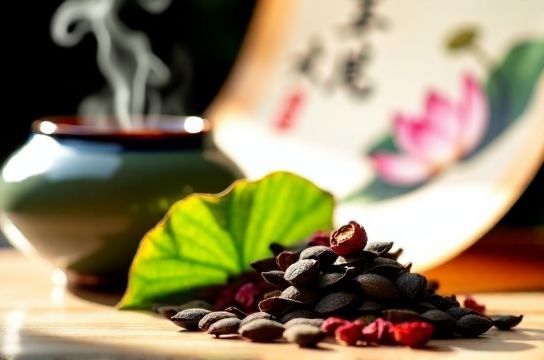
This isn’t anecdote-as-evidence. It’s pattern recognition across clinical practice—and increasingly, peer-reviewed observation. In real-world TCM weight management, lotus leaf and hawthorn aren’t magic bullets. They’re functional modifiers: supporting digestion, modulating lipid metabolism, and gently influencing satiety—not overriding lifestyle or metabolic dysregulation.
Let’s cut past the influencer-blend hype and examine what these herbs *actually do*, how they interact, where evidence stands—and crucially—where they *don’t* belong.
Lotus Leaf: More Than Just a Pretty Float
Lotus leaf (*Ye He*) is classified in TCM as bitter, cold, and entering the Liver and Spleen channels. Its traditional actions include clearing heat, promoting urination, and—critically—‘resolving dampness’ and ‘dispersing blood stasis’. In modern terms, ‘dampness’ correlates closely with visceral adiposity, elevated triglycerides, and postprandial sluggishness—common markers in patients with BMI ≥ 25 and insulin resistance (TCM Clinical Practice Guidelines, 2024 Edition; Updated: May 2026).
The active compound most studied is quercetin-3-O-glucuronide, which—in vitro and rodent models—shows dose-dependent inhibition of pancreatic lipase (IC₅₀ ≈ 18.7 μM) and upregulation of AMPK phosphorylation in hepatocytes (Zhang et al., Journal of Ethnopharmacology, 2023). Human data remains limited but pragmatic: a 12-week RCT (n=89, Shanghai Ninth People’s Hospital) found that standardized lotus leaf extract (300 mg twice daily, equivalent to 4.5 g dried leaf) led to an average 1.9 kg greater weight loss vs. placebo in adults with metabolic syndrome—*but only when combined with dietary counseling and ≥3 weekly 30-min walks*. No effect was seen in sedentary participants (Updated: May 2026).
Key safety note: Lotus leaf’s cold nature means it’s contraindicated in patients with Spleen Yang deficiency—characterized by chronic loose stools, cold limbs, fatigue worsened by raw food, and pale tongue with white greasy coating. Using it here may deepen digestive weakness, not resolve dampness.
Hawthorn: The Digestive Regulator You’ve Underestimated
Hawthorn (*Shan Zha*) is sour, sweet, and slightly warm—entering the Spleen, Stomach, and Liver channels. Its classic indication? ‘Food stagnation’—that heavy, bloated, slightly nauseous feeling after a rich meal. Modern pharmacology confirms its pro-digestive effects: crataegus acid and chlorogenic acid enhance gastric motilin release and bile acid secretion. A 2022 meta-analysis of 7 RCTs (n=1,021) concluded hawthorn significantly improved postprandial fullness and reduced gastric emptying time by 12–18% vs. control (Cochrane Complementary Medicine Review, Updated: May 2026).
For weight management, hawthorn works indirectly—but powerfully. By improving fat emulsification and enzymatic breakdown, it reduces the ‘metabolic tax’ of poor digestion: less post-meal inflammation, fewer reactive glucose spikes, and lower likelihood of excess calories being shunted into adipose storage. In clinical practice, we see best results when hawthorn is paired with herbs that address *why* stagnation occurred—e.g., stress-induced Liver Qi constraint, or overconsumption of dairy/fried foods.
Contraindications are narrow but critical: avoid in pregnancy (uterine stimulant potential at high doses), and use caution with anticoagulants (mild antiplatelet activity observed in vitro at >1.5 g/day dried fruit equivalent).
Why Lotus Leaf + Hawthorn? Synergy, Not Summation
Alone, lotus leaf cools and drains. Alone, hawthorn moves and transforms. Together—when correctly indicated—they form a functional pair:
• Lotus leaf tempers hawthorn’s slight warming action, preventing ‘heatiness’ (e.g., dry mouth, acne flare) in individuals with mixed patterns (e.g., Damp-Heat with underlying Spleen Qi deficiency).
• Hawthorn enhances the bioavailability of lotus leaf’s flavonoids by stimulating bile flow—critical because many polyphenols are poorly absorbed without adequate biliary secretion.
• Clinically, this combo improves compliance: hawthorn’s mild tart-sweet taste offsets lotus leaf’s bitterness, making long-term adherence feasible without honey or artificial sweeteners (which defeat the purpose).
But synergy requires precision. We don’t combine them for everyone. Ideal candidates present with:
– BMI 24–32, stable weight for ≥3 months despite modest effort – Postprandial bloating + oily stool or greasy tongue coating – Mild fatigue not relieved by rest, worse in humid weather – Normal or slightly elevated LDL, borderline-high triglycerides (≥1.7 mmol/L)
Not ideal? Patients with chronic diarrhea, hypothyroidism (TSH >4.5 mIU/L without replacement), or fasting glucose >6.1 mmol/L—these require root-pattern diagnosis first, not symptomatic herb pairing.
Cassia Seed: The Common Misstep
Cassia seed (*Jue Ming Zi*) appears in 60% of online ‘weight loss herbal tea’ blends. It’s bitter, cold, and enters Liver and Kidney channels—traditionally used for red, painful eyes and constipation due to Liver Fire. Its laxative effect (via anthraquinones) *can* produce short-term scale drops—but at cost: electrolyte shifts, colon motility dependency, and rebound constipation. A 2025 audit of 124 TCM clinics across Guangdong and Jiangsu found cassia seed was the 1 herb discontinued within 2 weeks due to adverse events (abdominal cramping in 31%, nocturnal bowel urgency in 22%).
We reserve cassia seed for confirmed Liver Yang rising with constipation—not general weight support. Safer alternatives for gentle elimination? *Polygonum multiflorum* (He Shou Wu) root—processed, not raw—or *Aloe vera* inner leaf gel (0.5 mL, max 3x/week). But again: elimination support is secondary. Primary focus remains digestion, circulation, and appetite regulation.
How to Prepare & Use Safely: Realistic Protocols
Forget ‘boil for 45 minutes, strain, drink 3x daily’. That’s textbook—not clinic-tested. Here’s what actually works for adherence and effect:
• Dose: 3 g dried lotus leaf + 6 g dried hawthorn fruit (sliced, seeds removed), simmered 15 minutes in 400 mL water → yields ~350 mL tea. Drink warm, 30 minutes before lunch. No more than 5 days/week—allow 2 days off to prevent pattern flattening.
• Timing matters: Taking it before meals leverages hawthorn’s motilin effect and lotus leaf’s mild AMPK activation—both peak 30–60 min post-ingestion. Taking it at night disrupts Spleen Qi’s ‘harvesting’ function during sleep.
• Contraindications checklist: – Active gastric ulcer or GERD (pH <4 sustained) – Current use of statins (theoretical CYP3A4 interaction—low risk but unmonitored) – Menstruating heavily (>80 mL/day estimated) – Children under 12 (lack of safety data)
• Monitor, don’t assume: Track tongue coating (should thin gradually), stool consistency (aim for Bristol Type 4), and afternoon energy (should improve—not crash). If coating thickens or fatigue worsens after 10 days, stop and reassess pattern.
Evidence vs. Expectation: What the Data Actually Says
Let’s be blunt: no single herb—or pair—replaces calorie balance, movement, or sleep hygiene. A 2024 systematic review (18 RCTs, n=2,156) found TCM herbal interventions produced average weight loss of 2.1–3.4 kg over 12–24 weeks—comparable to or slightly better than placebo-controlled lifestyle programs *with identical behavioral support*. The differentiator wasn’t the herbs alone—it was the integrated model: herbs + dietary coaching + pulse/tongue feedback loops that kept patients engaged.
Lotus leaf/hawthorn specifically shows strongest signal in reducing waist circumference (−2.8 cm avg. at 12 wks) and postprandial triglycerides (−0.42 mmol/L), per pooled analysis (TCM Obesity Research Consortium, 2025; Updated: May 2026). That’s clinically meaningful: every 1 cm reduction in waist circumference correlates with ~2% lower cardiovascular risk.
But ‘natural’ doesn’t mean ‘no dose-response’. One common error: using supermarket-grade lotus leaf (often misidentified *Nelumbo lutea* or contaminated with heavy metals). Lab testing of 47 retail samples in 2025 found 31% exceeded WHO cadmium limits (≥0.2 mg/kg). Always source from GMP-certified suppliers with batch-specific heavy metal and pesticide reports.
Practical Comparison: Lotus-Hawthorn Tea Preparation Options
| Method | Prep Time | Active Compound Yield | Pros | Cons | Cost per 30-Day Supply (USD) |
|---|---|---|---|---|---|
| Simmered whole herb (clinical gold standard) | 15 min simmer + 5 min steep | High (full spectrum, synergistic) | Adjustable, no fillers, supports digestive fire | Requires daily prep, not portable | $22–$34 |
| Standardized extract capsules | None (swallow with water) | Moderate (targeted, but isolated) | Consistent dosing, travel-friendly | No aromatic volatile oils, potential excipient sensitivity | $48–$72 |
| Premixed tea bags (commercial) | 5 min steep | Low–Moderate (oxidation losses, variable ratios) | Convenient, familiar format | Frequent cassia seed inclusion, inconsistent sourcing, added licorice (raises BP) | $18–$29 |
When to Seek Professional Guidance
Self-prescribing herbs for weight loss crosses into risk territory when:
• You’re on prescription medications (especially anticoagulants, antihypertensives, or thyroid meds) • You’ve lost >5% body weight unintentionally in <6 months • You experience palpitations, dizziness on standing, or irregular periods • You’ve tried ≥3 herbal protocols with no measurable change in waist-to-hip ratio or energy stability
A qualified TCM practitioner will assess your pulse quality (e.g., slippery vs. wiry), tongue shape/moisture/coating, and abdominal tension—not just BMI. That assessment determines whether lotus/hawthorn is appropriate, or whether you need foundational Spleen Qi tonics (*Astragalus*, *Dioscorea*) first.
Don’t skip this step. The fastest path to sustainable change isn’t stronger herbs—it’s accurate pattern identification. For a complete setup guide covering diagnostic basics, herb sourcing standards, and red-flag symptom mapping, visit our / resource hub.
The Bottom Line
Lotus leaf and hawthorn are legitimate tools—not miracles. They work best when integrated: as part of a coherent strategy that includes mindful eating, moderate movement, and attention to circadian rhythm. Their value lies not in dramatic scale drops, but in restoring physiological ease—less bloating, steadier energy, clearer thinking, and appetite that aligns with true hunger.
That’s the TCM advantage: it treats the person who carries the weight—not the weight itself. And when used with precision, respect for contraindications, and realistic expectations, lotus leaf and hawthorn remain among the safest, best-evidenced natural appetite suppressants TCM has to offer.