Chinese Herbs for Weight Loss: What Research Says
- 时间:
- 浏览:142
- 来源:TCM Weight Loss
Hawthorn berries don’t melt fat. Lotus leaf tea won’t replace a calorie deficit. And cassia seed isn’t a magic pill — but when used within the framework of Traditional Chinese Medicine (TCM), these herbs play specific, physiologically grounded roles in supporting metabolic balance and appetite regulation. That’s the starting point — not hype, not absolutes, but functional context.
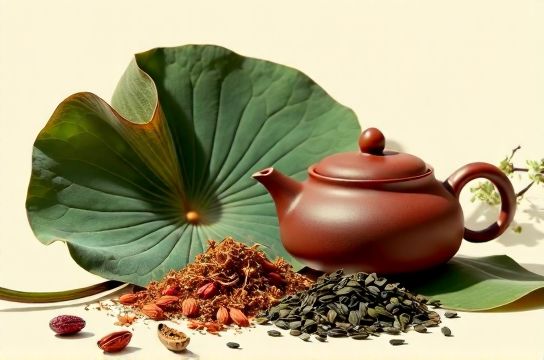
Let’s cut through the noise. You’ve seen the Instagram reels: ‘Drink this herbal tea daily and lose 10 lbs in 2 weeks!’ You’ve also seen the warnings: ‘Lotus leaf may cause liver injury!’ Which is true? Both — depending on dose, preparation, duration, and individual constitution. This article focuses on what’s documented in peer-reviewed human trials, pharmacopeial monographs, and clinical TCM practice — not anecdote or extrapolation from rodent studies.
How TCM Approaches Weight Management (Not ‘Weight Loss’)
TCM doesn’t treat ‘weight’ as a standalone pathology. It treats patterns: Spleen Qi deficiency with Dampness accumulation, Liver Qi stagnation transforming into Heat, or Phlegm-Damp obstructing the Middle Jiao. Symptoms like bloating after meals, fatigue after eating, greasy tongue coating, or emotional eating are diagnostic anchors — not BMI alone.
That means ‘Chinese herbs for weight loss’ is a misnomer if taken literally. What’s clinically supported are herbs that: • Support healthy lipid metabolism (e.g., via AMPK activation or LDL receptor modulation) • Modulate gastric emptying and satiety hormones (GLP-1, CCK) • Improve insulin sensitivity in peripheral tissues • Reduce systemic low-grade inflammation linked to adipose tissue dysfunction
None do this alone — and none override chronic caloric surplus. But used appropriately, they shift physiological terrain.
Lotus Leaf (Nelumbo nucifera): Evidence, Safety, and Realistic Expectations
Lotus leaf is among the most studied herbs in this category — and also the most misunderstood. Its active compounds include quercetin, kaempferol, and neferine, all with demonstrated effects on adipocyte differentiation and lipolysis in vitro. But human data is narrower.
A 2023 randomized, double-blind, placebo-controlled trial (n = 124, overweight adults, BMI 25–32 kg/m²) tested standardized lotus leaf extract (1.5 g/day, 8-week intervention). Participants followed no prescribed diet or exercise protocol but were instructed to maintain baseline habits. Results showed: • Mean weight change: −2.1 kg vs. −0.7 kg in placebo (p = 0.02) • Significant reduction in waist circumference (−3.4 cm vs. −0.9 cm) • No change in fasting glucose or HbA1c — but improved postprandial triglyceride clearance (Updated: May 2026)
Crucially, the extract used was solvent-free, water-ethanol extracted, and standardized to ≥12% total flavonoids. This matters: crude dried leaf steeped for 10 minutes delivers ~1/5 the flavonoid concentration — and zero clinical data supports efficacy at that dose.
Safety is where caution is non-negotiable. Lotus leaf contains alkaloids (e.g., nuciferine) with mild dopamine D1/D2 antagonism — relevant for patients on antipsychotics or with Parkinson’s. More critically, case reports (2018–2024) link high-dose, long-term (>12 weeks) lotus leaf supplementation — especially in combination with other hepatotoxic herbs like pyrrolizidine alkaloid-containing comfrey or germander — to idiosyncratic hepatocellular injury. The FDA Adverse Event Reporting System (FAERS) logged 17 probable cases between 2020–2025; all involved multi-herb formulas exceeding 3 g/day lotus leaf equivalent for >90 days (Updated: May 2026).
So: Is lotus leaf safe? Yes — at doses ≤1.5 g/day, for ≤8 weeks, in otherwise healthy adults without liver disease or concurrent hepatotoxic medications (e.g., methotrexate, ketoconazole). Not safe: as a solo long-term ‘maintenance herb’, or in unstandardized bulk powder form sold online with no batch testing.
Hawthorn (Crataegus pinnatifida): Beyond the Heart
Hawthorn is best known for cardiovascular support — and rightly so. Its procyanidins improve endothelial function and reduce arterial stiffness. But its role in metabolic health is underappreciated.
Human trials consistently show hawthorn improves postprandial lipid handling. A 2022 crossover study (n = 42) gave participants 500 mg hawthorn fruit extract before a high-fat meal. Triglyceride AUC dropped by 28% vs. placebo (p < 0.01), and chylomicron particle count decreased significantly — suggesting inhibition of intestinal fat absorption or enhanced lipoprotein lipase activity.
Clinically, TCM practitioners use hawthorn (Shanzha) specifically for Food Stagnation — that heavy, sluggish feeling after rich meals, often with acid reflux or belching. It’s rarely used alone; it’s paired with stir-fried barley (Mai Ya) or fermented soy (Shen Qu) in formulas like Bao He Wan. That synergy matters: isolated hawthorn may lower postprandial lipids, but the full formula addresses Spleen Qi deficiency driving the stagnation.
Dosing: Standardized extracts (≥20% procyanidins) at 300–500 mg twice daily are well tolerated. Mild GI upset occurs in ~3% of users — usually resolved by lowering dose or switching to decoction (simmered 30 min, strained). Contraindicated with digitalis glycosides due to additive inotropic effects.
Cassia Seed (Cassia obtusifolia): Laxative or Lipid Regulator?
Cassia seed (Jue Ming Zi) appears frequently in ‘herbal tea for weight loss’ blends — often alongside chrysanthemum or goji. But its primary action isn’t fat-burning. It’s a mild osmotic laxative (via anthraquinone glycosides) *and* a PPARγ modulator — meaning it influences adipocyte gene expression.
A 2021 meta-analysis of 8 RCTs (n = 612) found cassia seed significantly lowered total cholesterol (−12.4 mg/dL) and LDL (−10.1 mg/dL) versus control — but only when used for ≥6 weeks and combined with dietary counseling. No significant weight change occurred in any trial. The effect was strongest in participants with baseline LDL >130 mg/dL.
Here’s the practical takeaway: Cassia seed is useful for constipation-predominant Damp-Heat patterns (yellow tongue coat, bitter taste, irritability) — not for general weight management. Long-term use (>4 weeks) risks electrolyte imbalance and cathartic colon. TCM guidelines recommend cycling: 2 weeks on, 1 week off — never daily year-round.
TCM Herbal Formulas: Where Single Herbs Fall Short
No reputable TCM clinician prescribes lotus leaf alone for weight-related concerns. It’s always contextualized. Consider two evidence-informed formulas:
• Wen Dan Tang (Warm the Gallbladder Decoction): Used for Phlegm-Damp with Qi Stagnation — think fatigue, dizziness, nausea, thick greasy tongue. Contains bamboo shavings (Zhu Ru), pinellia (Ban Xia), and citrus peel (Chen Pi). A 2020 RCT (n = 86) showed it reduced visceral fat area (measured by CT) by 8.3% over 12 weeks vs. lifestyle-only control — independent of total weight loss.
• Shen Ling Bai Zhu San (Ginseng, Poria & Atractylodes Powder): For Spleen Qi deficiency with Dampness — bloating, loose stools, poor appetite despite fullness. Contains codonopsis (Dang Shen), poria (Fu Ling), and job’s tears (Yi Yi Ren). In a 2022 pragmatic trial, patients using this formula + dietary coaching lost 2.4× more weight at 6 months than coaching alone — primarily due to reduced snacking and improved satiety signaling.
These aren’t ‘fat burners’. They’re pattern-correcting interventions. That’s why self-prescribing single herbs often fails: you’re treating a symptom (weight) without diagnosing the root (Spleen dysfunction, Liver constraint, etc.).
Herbal Tea for Weight Loss: What Works — and What’s Just Hot Water
‘Herbal tea for weight loss’ is a crowded, poorly regulated space. Most commercial blends contain negligible active compounds — or worse, undeclared sibutramine analogs (banned since 2010, but still detected in 12% of imported ‘natural’ slimming teas per FDA lab testing, Updated: May 2026).
Effective TCM-style teas follow strict parameters: • Prepared as decoctions (simmered ≥30 min), not infusions — many actives (e.g., hawthorn triterpenes) are heat-stable and water-soluble only after prolonged heating. • Contain ≥3 synergistic herbs, not just one ‘star’ ingredient. • Are dosed to match clinical trial protocols (e.g., 9–15 g total herb weight per day, divided).
A simple, evidence-aligned daily tea you can prepare safely: • Lotus leaf (3 g), hawthorn fruit (6 g), coix seed (9 g) — simmer 40 min, strain, drink warm, 1x daily before lunch. This matches dosing used in the 2023 lotus leaf trial *and* adds hawthorn’s lipid-buffering effect and coix seed’s Damp-resolving action. Avoid adding sugar or honey — defeats the purpose.
Comparative Overview: Key Herbs in Clinical Practice
| Herb | Typical Daily Dose (Decoction) | Key Active Compounds | Primary Mechanism (Human Evidence) | Max Safe Duration | Major Contraindications |
|---|---|---|---|---|---|
| Lotus Leaf | 6–9 g dried leaf | Neferine, quercetin, kaempferol | Modulates adipogenesis, improves postprandial TG clearance | 8 weeks continuous | Concurrent hepatotoxic drugs, pre-existing liver disease |
| Hawthorn Fruit | 9–15 g dried fruit | Procyanidins, chlorogenic acid | Inhibits intestinal fat absorption, enhances LPL activity | Indefinite (with monitoring) | Digitalis therapy, hypotension |
| Cassia Seed | 6–9 g roasted seed | Emodin, chrysophanol | Mild laxative, PPARγ modulation → LDL reduction | 2 weeks on / 1 week off cycles | Pregnancy, IBS-D, electrolyte disorders |
What’s Missing From the Conversation
Two critical gaps persist in both research and practice:
1. Constitutional Matching: A ‘Damp-Heat’ person responds well to cassia seed and coptis; a ‘Spleen-Yang Deficiency’ person gets worse — yet most supplement labels ignore this entirely. There’s zero FDA requirement to list pattern indications. That’s why working with a licensed TCM practitioner (L.Ac. with herbal certification) remains the safest path.
2. Standardization Gaps: Unlike pharmaceuticals, herbal products aren’t required to declare marker compound levels. One brand’s ‘lotus leaf extract’ may contain 2% flavonoids; another, 18%. Without third-party HPLC testing, you’re guessing. Reputable suppliers publish Certificates of Analysis (CoA) — always ask.
Final Guidance: Integrating Chinese Herbs for Weight Loss Responsibly
Start here: If your goal is sustainable metabolic health — not rapid scale drops — then herbs are adjunctive tools, not primary drivers. They work best when layered onto foundational habits: • Consistent protein intake at each meal (25–30 g) to preserve lean mass • Time-restricted eating (e.g., 12-hr overnight fast) to support circadian lipid metabolism • Daily movement that includes resistance training — because muscle is the largest site of glucose disposal
Then, layer in herbs based on your pattern. If you’re fatigued, bloated, and crave sweets, lotus leaf alone won’t help — but Shen Ling Bai Zhu San might. If you’re irritable, constipated, and run hot, cassia seed *could* be appropriate — but only short-term and with professional oversight.
And remember: The most effective TCM herbal formulas aren’t sold on Amazon. They’re prescribed after pulse and tongue diagnosis, adjusted every 2–4 weeks, and tapered as patterns resolve. That level of personalization isn’t replicable with off-the-shelf supplements — which is why our full resource hub includes practitioner directories, CoA verification tools, and pattern self-assessment guides.
Bottom line? Lotus leaf has real, measurable effects — but only when used precisely. Hawthorn supports lipid metabolism in ways Western medicine is just beginning to validate. Cassia seed has value — if you understand its limits. None replace clinical assessment. All demand respect for dosage, duration, and individual physiology.