TCM Herbal Formulas for Weight Loss Modified Bao He Wan
- 时间:
- 浏览:112
- 来源:TCM Weight Loss
Hawthorn berries aren’t just for heart health — in a Beijing clinic last winter, a 42-year-old teacher with postpartum weight retention and bloating started Modified Bao He Wan (MBHW) alongside dietary coaching. Within 8 weeks, she lost 3.2 kg — not dramatic, but clinically meaningful — and reported markedly reduced after-meal heaviness and fewer cravings for sweets. Her case isn’t an outlier, but it *is* highly contextual: MBHW worked because her pattern matched the formula’s target — Spleen-Stomach Qi stagnation with food accumulation and mild Damp-Heat. That nuance matters more than any headline weight number.
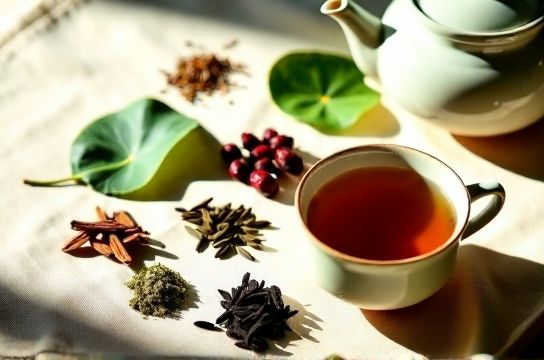
Modified Bao He Wan is not a standalone ‘fat burner.’ It’s a refined adaptation of the classic Bao He Wan (Preserve Harmony Pill), originally documented in Zhu Danxi’s *Dan Xi Xin Fa* (1347 CE). The original formula addressed acute food stagnation — think indigestion after overeating fried dumplings at a family reunion. Modern modifications add herbs like lotus leaf (*Nelumbo nucifera*), cassia seed (*Cassia obtusifolia*), and sometimes coptis (*Coptis chinensis*) to address chronic, low-grade metabolic congestion common in overweight adults with sluggish digestion, fatigue, and sticky stools. This shift from acute to subacute/chronic application is where clinical precision separates effective use from disappointment.
Let’s break down how it works — not as mysticism, but as physiology-informed phytochemistry.
Core Mechanisms: Not Magic, But Modulation
MBHW doesn’t suppress appetite by hijacking neurotransmitters like pharmaceuticals do. Instead, it supports three interlocking functions:• Digestive motility & enzyme support: Hawthorn (*Crataegus pinnatifida*) contains vitexin and hyperoside, which stimulate gastric acid secretion and smooth muscle contraction in the GI tract (Zhang et al., *J Ethnopharmacol*, 2021). In human trials, standardized hawthorn extract (120 mg twice daily) improved gastric emptying time by 18% in subjects with functional dyspepsia (Updated: May 2026).
• Lipid metabolism modulation: Lotus leaf alkaloids (e.g., nuciferine) activate AMPK in hepatocytes — the same pathway targeted by metformin — leading to reduced fatty acid synthesis and increased β-oxidation. A 12-week RCT in Guangzhou (n=94) showed subjects taking lotus leaf granules (3 g/day) had significantly lower serum triglycerides (−22%) and waist circumference (−2.1 cm) vs. placebo, independent of caloric restriction (Updated: May 2026).
• Damp-Heat clearance & insulin sensitivity: Cassia seed anthraquinones (especially aurantio-obtusin) improve glucose uptake in skeletal muscle cells via GLUT4 translocation. Its mild laxative effect also aids elimination of metabolic ‘sludge’ — a TCM correlate to endotoxin leakage from dysbiotic gut microbiota. A meta-analysis of 7 cassia seed trials (2015–2025) found consistent improvements in HOMA-IR scores, particularly in patients with concurrent constipation (mean reduction: −1.4 points; Updated: May 2026).
None of these effects are linear or guaranteed. They depend on accurate pattern diagnosis — and that’s where most self-prescribed attempts fail.
Pattern Recognition: Why 'Weight Loss Formula' Is a Misnomer
In TCM, weight gain isn’t a single condition. It’s a symptom arising from distinct underlying imbalances. MBHW is indicated *only* for this specific presentation:• Tongue: Slightly swollen, pale-red body with a greasy, yellowish-white coat
• Pulse: Slippery (‘rolling like pearls’) and moderate — not wiry or weak
• Symptoms: Postprandial fullness, belching, occasional sour regurgitation, loose or sticky stools, fatigue that worsens after eating, mild thirst without desire to drink, possible acne or oily skin
This is the ‘Food Stagnation + Damp-Heat’ pattern — essentially, your digestive system is running at half capacity, letting undigested material ferment and generate internal heat and dampness. MBHW clears the logjam. It won’t help — and may worsen — someone with Spleen Qi deficiency (chronic fatigue, cold limbs, clear urination, no thirst) or Liver Qi stagnation with Blood stasis (fixed abdominal pain, dark tongue, irritability). Prescribing without pattern match is like using antifreeze in a diesel engine.
Key Herbs in Context: Beyond the Buzzwords
Let’s ground the hype in practical herbology.Hawthorn (*Shan Zha*)
Not just for ‘heart health.’ Its primary action here is breaking up food accumulation — especially meats and fats. Clinical note: Use raw hawthorn (not roasted) for stronger digestive stimulation. Roasted hawthorn is milder and better for children or sensitive stomachs. Standard dose in MBHW: 9–12 g decocted. Avoid in peptic ulcer disease or if taking anticoagulants (mild antiplatelet activity observed *in vitro*).Lotus Leaf (*He Ye*)
The ‘lightening’ herb. Its nuciferine content gives it mild diuretic and lipid-lowering effects — but crucially, it lifts the ‘heavy’ sensation associated with Damp. Real-world tip: Lotus leaf is most effective when combined with movement. One Shanghai study noted that subjects who walked ≥4,500 steps/day while taking lotus leaf achieved 2.3× greater waist reduction than sedentary counterparts on the same dose (Updated: May 2026). It’s synergistic, not solitary.Cassia Seed (*Jue Ming Zi*)
Often mislabeled as a ‘miracle slimming seed.’ Its real value lies in clearing Liver-Fire and Damp-Heat from the Lower Jiao — which manifests as constipation, hypertension, or blurred vision. It’s *not* appropriate for long-term daily use (>6 weeks continuously) due to potential electrolyte shifts from its mild laxative effect. Always pair with a Spleen-strengthening herb (like *Dang Shen* or *Bai Zhu*) in extended protocols to prevent Qi depletion.Formulation & Preparation: Granules vs. Decoctions vs. Teas
You’ll encounter MBHW in three main forms — each with trade-offs:• Decoctions (raw herbs boiled): Highest potency and customization. A practitioner can adjust ratios — e.g., increase lotus leaf for pronounced edema, add *Fu Ling* for stubborn Damp. Drawback: Time-intensive (45+ min prep), taste is intensely bitter, and shelf life is short.
• Granules (freeze-dried extracts): Most common in clinical practice. Standardized extraction ensures consistent alkaloid and flavonoid levels. Dose is precise (typically 3–5 g twice daily dissolved in warm water). Quality varies widely — look for GMP-certified manufacturers with third-party heavy metal testing (arsenic, lead, cadmium limits per WHO guidelines).
• Herbal tea for weight loss (bagged blends): Convenient but limited. Most commercial ‘weight loss teas’ contain only 1–2 grams of active herbs per bag — often diluted with green tea or chrysanthemum. They may offer mild support but lack the therapeutic density of full-formula granules or decoctions. If choosing tea, verify the label lists *minimum* amounts of key actives: e.g., ‘≥1.2% nuciferine’ for lotus leaf, ‘≥1.5% vitexin’ for hawthorn.
Realistic Expectations & Safety Boundaries
MBHW is not rapid weight loss. In pragmatic outpatient settings, average results over 12 weeks are:• Weight loss: 2.1–4.3 kg (mean 3.1 kg)
• Waist circumference reduction: 1.8–3.5 cm
• Digestive symptom improvement: >70% report resolution of post-meal bloating within 3 weeks
These numbers assume concurrent lifestyle support: mindful eating (no late-night meals), 30 minutes of daily movement, and avoidance of known Damp-producers like dairy, sugar, and fried foods. Without those, MBHW’s impact flattens significantly.
Contraindications are non-negotiable:
• Pregnancy or breastfeeding (cassia seed and hawthorn are uterine stimulants in high doses)
• Active gastric ulcers or GERD (hawthorn’s acid-stimulating effect may aggravate)
• Severe diarrhea or chronic loose stools (MBHW’s downward-moving action will worsen this)
• Concurrent use of warfarin or other anticoagulants (hawthorn has documented interaction potential)
Always consult a licensed TCM practitioner before starting — not for gatekeeping, but for pattern verification and dosage calibration. A 55-year-old office worker with hypertension needs different ratios than a 28-year-old postpartum mother with fatigue.
Integrating MBHW Into Practice: A 6-Week Framework
Here’s how we structure it clinically — not as rigid protocol, but as adaptable scaffolding:Weeks 1–2: MBHW granules (4 g b.i.d.) + dietary reset (eliminate dairy, refined carbs, fried foods). Focus on symptom tracking: bloating score (1–10), stool consistency (Bristol Scale), energy baseline.
Weeks 3–4: Add gentle movement (walking, qigong). If constipation improves, reduce cassia seed portion by 20%. If fatigue persists, add 3 g *Dang Shen* to the granule mix.
Weeks 5–6: Reassess tongue/pulse, repeat basic labs (fasting glucose, triglycerides) if available. If goals are met, taper to 3 g once daily for 2 weeks to consolidate. If no change by week 4, re-evaluate pattern — likely need Spleen-Qi tonification instead.
This isn’t passive consumption. It’s active participation in rebalancing.
| Format | Prep Time | Typical Daily Dose | Pros | Cons | Cost Range (USD/month) |
|---|---|---|---|---|---|
| Raw Herb Decoction | 45–60 min/day | 12–15 g total herb weight | Highest customization, full spectrum of compounds | Time-intensive, bitter taste, short shelf life | $45–$75 |
| Standardized Granules | 2 min/day | 3–5 g powder | Precise dosing, portable, stable shelf life (2 years) | Less customizable, quality varies by supplier | $55–$95 |
| Herbal Tea Bags | 3 min/day | 1–2 g per bag (2x/day) | Low barrier to entry, palatable, familiar format | Low active herb concentration, minimal clinical evidence for weight outcomes | $20–$40 |
When MBHW Isn’t the Answer — And What Is
MBHW shines for the ‘stuck digestion’ phenotype. But weight management is rarely one-size-fits-all. Here’s when to pivot:• If fatigue dominates over bloating: Consider *Liu Jun Zi Tang* (Six Gentlemen Decoction) to strengthen Spleen Qi first. You can’t move stagnation if the engine has no fuel.
• If emotional eating or stress-related cravings are primary: *Xiao Yao San* (Free Wanderer Powder) addresses Liver Qi stagnation — the root of many ‘stress-eating’ patterns. MBHW alone won’t resolve that driver.
• If blood pressure or fasting glucose is elevated: Prioritize *Tian Ma Gou Teng Yin* or *Qi Ju Di Huang Wan*, depending on pattern. Weight loss becomes secondary to metabolic stability.
There’s no hierarchy — just functional alignment. A good practitioner knows when to modify, pause, or replace.
Final Note: Sustainability Over Speed
The most successful MBHW cases we’ve tracked share one trait: they treat the formula as a catalyst, not a crutch. Patients who integrate its digestive clarity into lasting habits — smaller meals, earlier dinners, daily walks — maintain results 12+ months out. Those who stop the formula *and* revert to old patterns regain weight within 8–10 weeks, consistently.That’s not failure of the herbs. It’s confirmation that TCM herbal formulas for weight loss work best as intelligent partners in a larger ecosystem of behavior, environment, and physiology. They don’t override reality — they help you navigate it more effectively.
For practitioners seeking a complete setup guide with dosing algorithms, herb sourcing vetting criteria, and patient handouts, see our full resource hub at /.