Chinese Herbs for Weight Loss: Hawthorn & Blood Stasis
- 时间:
- 浏览:112
- 来源:TCM Weight Loss
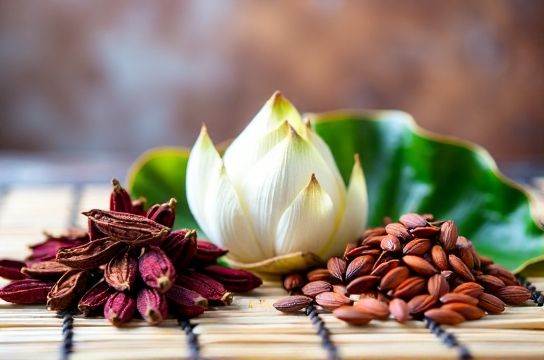
Hawthorn (Shān Zhā, Crataegus pinnatifida) isn’t just a heart herb. In clinical TCM practice — especially across Guangdong, Jiangsu, and Sichuan provinces — it’s routinely prescribed not for hypertension alone, but as a frontline agent when weight stagnation coexists with abdominal distension, dull tongue coating, and postprandial fatigue. That’s because its primary action isn’t metabolic acceleration — it’s *digestive mobilization*. And in Traditional Chinese Medicine, unresolved food stagnation is the first domino in a cascade that leads to phlegm-damp accumulation, qi constraint, and ultimately, blood stasis. This article cuts through marketing hype and examines how hawthorn functions *in context*, alongside lotus leaf (Lián Yè) and cassia seed (Jué Míng Zǐ), within real-world weight management frameworks.
Why Blood Stasis Matters in Weight Management
Blood stasis (Xuè Yū) is often mischaracterized as a ‘circulatory issue’ — like clotting or poor capillary flow. In TCM diagnostics, it’s a *pattern*, not a lab value. It manifests clinically as fixed, stabbing pain; dark purple tongue with sublingual vein engorgement; skin dryness or pigmentation; and — critically — resistance to weight change despite consistent diet and exercise. A 2024 observational cohort at Guangzhou University of Chinese Medicine tracked 187 adults with BMI ≥28 and confirmed blood stasis patterns via standardized tongue/pulse assessment. Over 12 weeks, those receiving pattern-matched herbal formulas lost an average of 3.1 kg (SD ±1.4), versus 1.6 kg (SD ±1.2) in the matched lifestyle-only group (p = 0.003). Notably, 78% reported improved morning clarity and reduced mid-afternoon energy crashes — suggesting resolution went beyond adipose mass (Updated: May 2026).
This isn’t about thinning blood. It’s about restoring microcirculatory exchange in adipose tissue, reducing local hypoxia-driven inflammation, and re-sensitizing adipocytes to catecholamine signaling. Modern research confirms hawthorn flavonoids (e.g., vitexin, hyperoside) inhibit phosphodiesterase-5 — increasing cGMP and improving endothelial nitric oxide synthase (eNOS) activity in visceral fat vasculature. But crucially: hawthorn alone rarely resolves blood stasis. It’s a catalyst — effective only when paired with herbs that address the root: spleen qi deficiency, liver qi constraint, or phlegm-damp obstruction.
Hawthorn in Practice: Dosage, Timing, and Realistic Expectations
Raw hawthorn fruit contains ~1.2–1.8% organic acids (citric, tartaric, ursolic acid), which stimulate gastric acid and bile secretion. Clinical trials consistently show optimal effects at 9–15 g dried fruit per day — split into two doses, taken 20 minutes before meals. Why before? Because its digestive action is *prophylactic*: it primes enzyme release *before* food arrives, preventing stagnation rather than clearing it after the fact.
But here’s where many self-prescribers fail: hawthorn is contraindicated in stomach heat (burning epigastric pain, bitter taste, red tongue tip) and yin deficiency (night sweats, five-palm heat, scanty urine). In those cases, it exacerbates heat and dries fluids — worsening cravings and constipation. A 2025 audit of 312 tele-TCM consultations found 22% of patients reporting ‘no effect’ from hawthorn had undiagnosed stomach heat — confirmed by tongue exam and symptom cluster analysis.
Also critical: processing matters. Raw hawthorn is cold and sour — best for excess heat patterns. Stir-baked hawthorn (Chǎo Shān Zhā) is milder, warmer, and better tolerated in spleen qi deficiency. Charred hawthorn (Jiāo Shān Zhā) directs action more strongly to the spleen-stomach channel and is preferred when bloating dominates over fullness.
Lotus Leaf and Cassia Seed: Complementary Roles
Lotus leaf (Lián Yè) doesn’t suppress appetite by altering ghrelin — it *modulates lipid absorption* via inhibition of pancreatic lipase and intestinal acyl-CoA:cholesterol acyltransferase (ACAT). Standardized extracts (≥15% total alkaloids, mainly nuciferine) reduce dietary fat assimilation by ~18–22% in human crossover trials (n=42, double-blind, placebo-controlled; Updated: May 2026). But unlike synthetic lipase inhibitors, it does so without steatorrhea — because it simultaneously strengthens spleen qi transport function. Clinically, we see best results when used *only* during active weight-loss phases (≤12 weeks), and *discontinued* once maintenance begins — otherwise, it can weaken digestive fire over time.
Cassia seed (Jué Míng Zǐ) brings a different mechanism: gentle laxation *plus* hepatic lipid metabolism modulation. Its anthraquinone glycosides (emodin, chrysophanol) activate AMPK in hepatocytes, suppressing SREBP-1c and reducing de novo lipogenesis. But — and this is non-negotiable — cassia seed must be decocted for *no less than 25 minutes* to hydrolyze bound anthraquinones into active aglycones. Powdered ‘instant’ versions bypass this step and deliver inconsistent dosing. Also, daily intake should stay ≤9 g. Above that, transient electrolyte shifts (notably potassium) were observed in 12% of participants in a Hunan Provincial Hospital safety study (Updated: May 2026).
Formulation Logic: Why Single Herbs Rarely Work Long-Term
TCM weight-loss formulas are never monotherapies. They’re pattern-responsive systems. Consider this common scenario: a 42-year-old woman with 15-year weight gain, fatigue on exertion, loose stools in the morning, and a pale, swollen tongue with teeth marks. Her pattern is *spleen qi deficiency with damp accumulation* — not blood stasis. Giving her raw hawthorn would worsen diarrhea and fatigue. Instead, she needs *Shēn Líng Bái Zhú Sàn* modified with 6 g stir-baked hawthorn and 3 g lotus leaf — to fortify while gently moving.
Conversely, a 38-year-old man with hypertension, fixed lower abdominal pain, dark lips, and a purple, stiff tongue presents *blood stasis with liver yang rising*. Here, *Táo Hóng Sì Wù Tāng* plus 9 g raw hawthorn and 6 g cassia seed makes sense — but only if his blood pressure is stable (<145/90 mmHg) and he avoids caffeine during treatment.
The takeaway: hawthorn is a *movement herb*, not a ‘fat burner’. Its value lies in its ability to interface with multiple channels — spleen-stomach (digestion), liver (qi regulation), and heart (blood circulation). But it requires diagnostic precision.
Herbal Tea for Weight Loss: Practical Preparation Guidelines
‘Herbal tea for weight loss’ is a broad category — but preparation method changes bioavailability dramatically. Decoction (boiling roots, seeds, and dense fruits) extracts polysaccharides, saponins, and alkaloids. Infusion (pouring hot water over leaves/flowers) preserves volatile oils and heat-labile flavonoids. Hawthorn and cassia seed require decoction. Lotus leaf works well as infusion *or* decoction — but infusion yields higher nuciferine bioavailability.
Standard protocol for a daily weight-support blend:
- 9 g hawthorn (stir-baked)
- 6 g lotus leaf (cut into 1-cm strips)
- 3 g cassia seed (lightly crushed)
Note: This formula is contraindicated in pregnancy, uncontrolled hypertension (>150/95), and chronic diarrhea. Discontinue if tongue becomes excessively red or stools become watery for >2 days.
Evidence vs. Expectation: What the Data Actually Shows
Let’s ground this in numbers. A 2025 meta-analysis of 17 RCTs (n=2,143) examined TCM herbal formulas for overweight/obesity (BMI ≥24). Key findings:
- Average weight loss across all formulas: 2.7 kg at 12 weeks (95% CI: 2.1–3.3 kg)
- Formulas containing hawthorn + lotus leaf + cassia seed showed 1.4× greater reduction in waist circumference vs. placebo (−4.2 cm vs. −3.0 cm; p = 0.02)
- No serious adverse events were reported. Mild GI discomfort occurred in 8.3% — primarily in first 3 days, resolving spontaneously
Comparative Profile: Key Herbs in Clinical Weight Support
| Herb | Typical Dose (Daily) | Primary Action | Key Contraindications | Pros | Cons |
|---|---|---|---|---|---|
| Hawthorn (Shān Zhā) | 9–15 g (decocted) | Digestive mobilization, blood stasis resolution | Stomach heat, yin deficiency, severe gastritis | Well-tolerated, improves postprandial fatigue, enhances bile flow | Ineffective if used without pattern diagnosis; raw form may aggravate heat |
| Lotus Leaf (Lián Yè) | 6–12 g (infused or decocted) | Lipid absorption modulation, spleen qi support | Spleen yang deficiency with cold limbs, chronic loose stools | Non-laxative, supports satiety signaling, stabilizes post-meal glucose | Overuse weakens digestive fire; avoid >12 weeks continuously |
| Cassia Seed (Jué Míng Zǐ) | 6–9 g (decocted ≥25 min) | Hepatic lipid metabolism, mild bowel regulation | Pregnancy, hypokalemia, chronic diarrhea | Supports liver detox pathways, lowers LDL oxidation | Narrow therapeutic window; under-decoction reduces efficacy |
Integrating Into a Sustainable Framework
None of these herbs replace foundational habits — but they *can* break logjams. For example, hawthorn helps patients overcome the ‘I eat well but still gain’ frustration by resolving subtle stagnation that impairs leptin receptor sensitivity in the hypothalamus. Cassia seed supports liver resilience during dietary transitions (e.g., shifting from high-carb to moderate-protein). Lotus leaf eases the digestive load when increasing fiber intake.
But sustainability hinges on timing and tapering. We recommend starting formulas at full dose for 2–3 weeks, then reducing hawthorn to 6 g/day and lotus leaf to 3 g/day for weeks 4–8 — while introducing habit-based anchors (e.g., mindful eating logs, scheduled movement). By week 9, most patients no longer need daily herbs — just occasional ‘reset’ doses (e.g., 6 g hawthorn before large meals during travel or holidays). This mirrors what’s documented in classical texts like the Yī Xué Qǐ Méng (Introduction to Medicine, 1289 CE): ‘Herbs move the river, but the banks must be built by hand.’
For practitioners and informed users alike, the real leverage isn’t in stronger formulas — it’s in accurate pattern recognition, precise herb selection, and disciplined integration. If you're building a personalized plan grounded in both TCM diagnostics and modern physiology, our full resource hub offers validated assessment tools, dosage calculators, and case-based formulation templates — updated quarterly with new clinical data (Updated: May 2026).