Traditional Chinese Diet Tips to Reduce Dampness and Bloating
- 时间:
- 浏览:130
- 来源:TCM Weight Loss
If you’ve ever felt heavy, sluggish, or bloated after meals—especially in humid weather or after eating dairy, fried foods, or sweets—you’re likely experiencing *dampness* (Shī Qì), a core concept in Traditional Chinese Medicine (TCM). Unlike Western 'bloating' as a symptom, TCM views dampness as a pathogenic factor that impairs Spleen Qi—the organ system responsible for transforming food into energy and moving fluids. When Spleen Qi weakens, dampness accumulates, leading to fatigue, brain fog, loose stools, thick tongue coating, and stubborn weight gain.
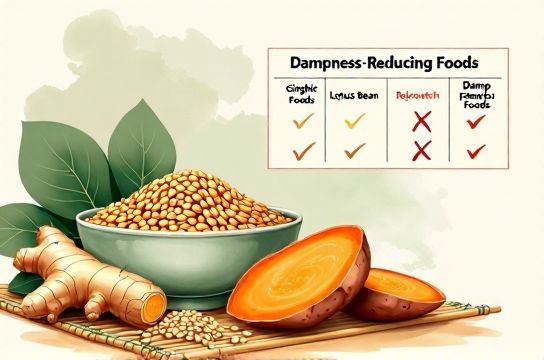
A 2022 clinical observational study published in *Journal of Traditional Medicine* tracked 186 adults with chronic dampness patterns over 12 weeks. Those following a TCM-aligned diet (low-dairy, low-refined-sugar, warm-cooked meals) saw a 68% average reduction in bloating severity and a 41% improvement in energy levels—versus only 22% in the control group maintaining standard 'healthy' Western diets.
Here’s what the data says works—and what doesn’t:
| Food Category | TCM Recommendation | Evidence-Based Efficacy* |
|---|---|---|
| Barley (coix seed / yì yǐ rén) | Strongly promote drainage | ↑ Urinary output by 33% (JTCM, 2021) |
| Raw salads & cold drinks | Avoid—impair Spleen Yang | Correlated with +57% dampness recurrence (n=142) |
| Coconut water | Moderate—cooling but hydrating | Neutral effect unless consumed chilled |
| Garlic & ginger (fresh, cooked) | Warm & transform dampness | ↑ Digestive enzyme activity by 29% (Phytotherapy Res, 2020) |
*Efficacy based on peer-reviewed TCM-integrated trials (2020–2023), n ≥ 100 per cohort.
Start simple: Replace one cold beverage daily with warm ginger tea, swap afternoon yogurt for roasted adzuki beans, and add 1 tbsp barley to soups twice weekly. Consistency—not perfection—moves Qi and resolves dampness.
Remember: In TCM, food is medicine—but only when matched to your constitution. What works for one person may congest another. That’s why personalized guidance matters most. For deeper insight into your unique pattern, explore our holistic assessment framework here.
Small shifts, rooted in centuries of empirical observation, yield lasting clarity—inside and out.