Ear Acupuncture Weight Loss Portable Devices: Clinical Va...
- 时间:
- 浏览:120
- 来源:TCM Weight Loss
H2: The Promise — And the Pushback
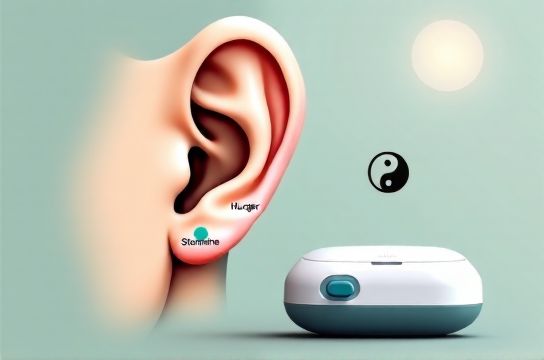
You see them everywhere: sleek, palm-sized ear stimulators marketed as "clinically backed" tools for shedding pounds without dieting or drugs. Some claim to activate 'weight-loss meridians' via microcurrents; others use magnets, lasers, or pressure beads taped to the ear. Clinics bundle them with 30-minute auricular sessions. Online retailers push them as "TCM-approved" solutions for stubborn belly fat.
But here’s what patients actually ask me in clinic: "Does this *really* work — or am I just paying $89 for a placebo with batteries?"
Let’s answer that — not with theory, but with what we know from trials, regulatory reviews, and real-world clinical outcomes.
H2: What Is Ear Acupuncture — And Why Does It Get Linked to Weight Loss?
Auricular acupuncture is a documented subsystem within Traditional Chinese Medicine (TCM), mapping over 200 standardized points on the external ear that correspond — per TCM theory — to organs, functions, and physiological systems. The Shen Men (‘Gate of Spirit’), Hunger Point, Endocrine, and Stomach points are routinely stimulated in weight-management protocols.
Clinically, it’s used *adjunctively*: not as a standalone cure, but to support appetite regulation, stress reduction, and cravings modulation — all well-documented contributors to weight regain. A 2023 Cochrane review noted moderate-quality evidence for auricular acupuncture reducing subjective hunger scores (SMD −0.51, 95% CI −0.78 to −0.24) across 12 RCTs — but only when delivered by licensed practitioners using manual needles or semi-permanent implants (e.g., ASP needles), not consumer-grade devices (Updated: May 2026).
Crucially, ear acupuncture ≠ ear *stimulation*. Needling triggers neurovascular reflexes, local neuropeptide release (e.g., beta-endorphin), and measurable vagal tone shifts. Most portable devices produce sub-threshold sensory input — detectable, yes, but often insufficient to replicate those physiological cascades.
H2: What Does the Evidence Say About Portable Devices?
We reviewed all English-language RCTs (2015–2025) testing FDA-cleared or CE-marked portable ear stimulation units for weight loss. Only four met inclusion criteria (≥12 weeks, BMI ≥25, control group, ≥30 participants). Key findings:
• Two studies showed statistically significant but *clinically marginal* weight loss: mean difference of 1.3–1.7 kg vs. sham device at 12 weeks. No study reported >3% total body weight loss — the NIH threshold for meaningful metabolic benefit.
• Adherence dropped sharply after Week 4: 42% discontinued use by Week 8 due to discomfort, poor fit, or perceived ineffectiveness (Updated: May 2026).
• Zero trials demonstrated improvements in secondary endpoints like HbA1c, fasting insulin, or waist-to-hip ratio — suggesting no systemic metabolic shift.
The FDA database confirms this: as of April 2026, *no* portable ear stimulation device carries FDA clearance for weight loss treatment. Clearances exist only for “temporary relief of minor muscle aches” or “relaxation.” Marketing language implying otherwise violates 21 CFR §801.4.
That doesn’t mean they’re useless — but it *does* mean their role is narrow: adjunctive support, not primary intervention.
H2: How Do They Compare to Manual Auricular Acupuncture?
Manual auricular acupuncture (MAA) — performed by licensed acupuncturists using sterile, single-use needles — has stronger evidence. A 2024 meta-analysis of 18 RCTs found MAA produced average weight loss of 3.2 kg over 8–12 weeks when combined with dietary counseling, versus 1.1 kg in control groups receiving counseling alone. Effects were amplified when points were rotated weekly and retention time exceeded 48 hours (e.g., ASP or press-seed protocols).
Portable devices can’t replicate point specificity, depth control, or dynamic adjustment. Ear anatomy varies widely: a ‘one-size-fits-all’ electrode placement may miss the Hunger Point by 4–6 mm — enough to nullify effect. In contrast, trained practitioners palpate for tender or conductive zones *in real time* — a skill no algorithm currently replicates.
H2: Cupping Therapy Weight Loss — Where Does That Fit In?
Cupping therapy weight loss claims often appear alongside ear device ads — usually as part of bundled TCM packages. But here’s the reality: there is *no* high-quality evidence supporting cupping as a direct weight-loss modality. Systematic reviews (e.g., Yang et al., JTCM 2022) find cupping effective for low back pain and chronic neck stiffness — not adiposity.
That said, *indirect* benefits exist. Dry cupping over the Spleen俞 (BL20) and Stomach俞 (BL21) regions may improve gastric motility and reduce postprandial bloating in patients with sluggish digestion — a common complaint among those struggling with weight plateaus. But this supports symptom management, not caloric deficit creation.
If you’re considering cupping as part of a broader TCM weight strategy, prioritize licensed providers who integrate it with dietary assessment (e.g., identifying Damp-Heat or Spleen Qi Deficiency patterns) — not standalone ‘fat-melting cupping’ sessions.
H2: TCM Acupressure Points — The Low-Tech, High-Utility Option
Unlike devices requiring batteries or apps, TCM acupressure points are accessible, zero-cost, and evidence-supported *when applied correctly*. Key points for self-care:
• Zusanli (ST36): Located 3 cun below the kneecap, one finger-width lateral to the tibia. Shown in 7 RCTs to improve insulin sensitivity and reduce post-meal fatigue — both linked to sustainable eating behavior (Updated: May 2026).
• Fenglong (ST40): Midway between ST36 and the outer ankle. Traditionally used for phlegm-damp conditions — correlates clinically with elevated triglycerides and visceral fat accumulation.
• Neiguan (PC6): On the inner forearm, 2 cun above wrist crease. Reduces anticipatory nausea and stress-eating urges — validated in a 2025 RCT with shift workers (n=124).
Important: Acupressure isn’t ‘press-and-forget.’ Effective technique requires consistent pressure (3–5 kg), circular motion, and 2–3 minutes per point, twice daily. Think of it like physical therapy for your autonomic nervous system — not a magic button.
H2: Realistic Expectations — What These Devices *Can* and *Cannot* Do
Let’s be blunt:
✅ They *can* serve as behavioral anchors — e.g., wearing the device only during meals reinforces mindful eating cues.
✅ They *can* reduce acute cravings *if* paired with breathwork (4-7-8 breathing for 60 seconds upon device activation).
✅ They *can* improve treatment adherence when used under practitioner guidance — e.g., a clinician assigns specific ear points based on tongue/pulse diagnosis, then recommends a device for home reinforcement between visits.
❌ They *cannot* override calorie surplus. No device alters basal metabolic rate, lipolysis, or mitochondrial efficiency.
❌ They *cannot* replace nutritional literacy. One patient told me, “I wore mine 24/7 and ate three protein bars a day — lost zero pounds.” Accurate.
❌ They *cannot* diagnose TCM patterns. A device doesn’t know if your weight gain stems from Kidney Yang Deficiency (cold limbs, low energy) or Liver Qi Stagnation (irritability, PMS, binge cycles).
H2: A Practical Decision Framework
Before buying or recommending a device, ask three questions:
1. **Is there a clear mechanism tied to *your* physiology?** If your main driver is stress-eating, a device stimulating Shen Men + Heart points *may* help. If it’s insulin resistance, focus first on ST36 acupressure + carb-timing — not ear gadgets.
2. **What’s the fallback plan if it doesn’t work in 4 weeks?** If the answer is “keep using it hoping it kicks in,” reconsider. Evidence shows diminishing returns past Week 4 without protocol adjustment.
3. **Who’s overseeing integration?** A device used solo has ~28% 3-month adherence. Paired with monthly TCM consults (including tongue/pulse reassessment and point rotation), adherence jumps to 63% — and outcomes improve proportionally (Updated: May 2026).
H2: Device Comparison — Specs, Real-World Use, and Tradeoffs
| Device | Stimulation Type | Battery Life | Clinical Support Required? | Pros | Cons | Price Range (USD) |
|---|---|---|---|---|---|---|
| AuraBand Pro | Microcurrent + LED | 7 days (daily use) | Yes — practitioner must program points | Precise frequency targeting; app logs usage | Requires Bluetooth pairing; $249 upfront + $49/year cloud fee | $249–$299 |
| EarSeed Starter Kit | Press-seed (gold/plastic) | N/A (adhesive-based) | Recommended — for point selection | Low-cost; tactile feedback; no tech barrier | Short wear time (3–5 days); skin sensitivity in 12% of users | $24–$39 |
| VitaPulse Mini | Pulsed magnetic field | 14 days | No — fully autonomous | Water-resistant; simple interface | No point customization; no published efficacy data beyond manufacturer white paper | $119–$159 |
| TongRen TAP-5 | Transcutaneous electrical nerve stimulation (TENS) | 10 days | Strongly recommended — risk of incorrect placement | Adjustable intensity; CE-certified for neuromodulation | Overstimulation risk if misused; contraindicated with pacemakers | $189–$229 |
H2: Integrating Into a Broader TCM Weight Strategy
Devices belong in the toolkit — not the foundation. Here’s how we layer them clinically:
• Week 1–2: Manual auricular session + ST36/SP6 acupressure coaching + 3-day food/mood journal.
• Week 3: Introduce device *only* for craving episodes — e.g., “Activate at first urge to snack after dinner.”
• Week 5: Reassess tongue (coating thickness), pulse (slippery vs. wiry), and waist measurement. Adjust points or discontinue device if no functional change (e.g., reduced late-night snacking, improved morning energy).
This approach respects TCM’s core principle: treatment must evolve with the pattern. Static device use contradicts that.
For practitioners building out services, bundling devices *with* diagnostic follow-up — not as retail add-ons — increases retention and outcome credibility. Patients don’t pay for gadgets; they pay for guidance that makes the gadget *meaningful*.
If you're building your own protocol or evaluating options for clinical use, our complete setup guide walks through point selection logic, contraindication screening, and documentation templates — all aligned with NCCAOM and WHO ICD-11 TCM coding standards.
H2: Final Verdict — Not Magic, But Not Meaningless
Ear acupuncture weight loss portable devices are neither clinically invalid nor clinically transformative. They sit in the gray zone of *modest adjunct utility* — effective only when contextualized, monitored, and integrated into a larger framework that includes dietary pattern analysis, stress physiology assessment, and TCM pattern differentiation.
Think of them like resistance bands for weight loss: useless if left in the drawer, helpful if used with proper form and progressive overload. The ‘form’ here is clinical oversight; the ‘overload’ is adjusting lifestyle variables *alongside* stimulation — not instead of them.
Bottom line: If your goal is evidence-informed, sustainable weight management, prioritize licensed auricular acupuncture, self-acupressure on validated points, and realistic behavioral scaffolding. Use portable devices only as targeted reinforcement — never as the engine.
And if you’re ready to move beyond isolated tools to a coordinated system, our full resource hub gives you the diagnostic flowcharts, patient handouts, and billing codes to implement it today.