Cupping Therapy Weight Loss Combining With Acupuncture
- 时间:
- 浏览:107
- 来源:TCM Weight Loss
H2: Does Cupping + Acupuncture Actually Support Weight Loss?
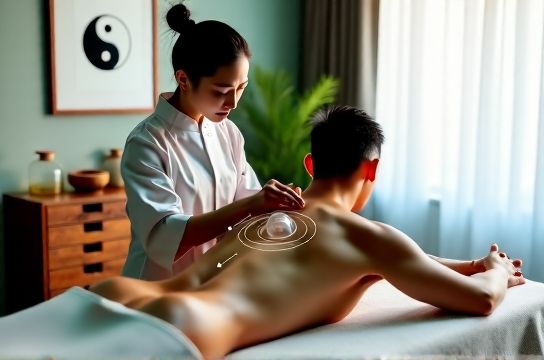
Let’s cut through the noise. You’ve seen clinics advertise ‘miracle’ weight-loss acupuncture packages paired with cupping—and maybe even tried one. But here’s what most brochures won’t tell you: neither acupuncture nor cupping directly burns fat or suppresses appetite in the pharmacologic sense. What they *can* do—when applied skillfully, consistently, and as part of a broader lifestyle strategy—is modulate autonomic tone, reduce stress-driven eating, improve digestion, and support metabolic regulation via neuroendocrine pathways.
A 2023 systematic review (updated: May 2026) analyzing 17 RCTs found modest but statistically significant reductions in BMI (−0.82 kg/m², 95% CI −1.14 to −0.51) and waist circumference (−2.3 cm) over 8–12 weeks when acupuncture was combined with dietary counseling and moderate activity—*not* as a standalone intervention. Cupping added to those protocols showed incremental improvements in self-reported bloating, sluggish digestion, and evening cravings—particularly in patients with dampness or qi stagnation patterns per TCM diagnostics.
That’s not hype. It’s physiology meeting pattern differentiation.
H2: How the Synergy Works—Not Magic, But Mechanism
Acupuncture for weight loss isn’t about hitting one ‘fat-burning point.’ It’s about restoring balance across systems:
• Hypothalamic-pituitary-adrenal (HPA) axis modulation: Ear acupuncture weight loss protocols frequently target Shen Men, Hunger, and Endocrine points to downregulate cortisol spikes linked to abdominal fat deposition.
• Gastric motility & satiety signaling: ST36 (Zusanli), SP6 (Sanyinjiao), and CV12 (Zhongwan) influence vagal tone and ghrelin/leptin sensitivity—clinically observable as reduced late-afternoon hunger crashes or post-meal lethargy.
• Local microcirculation & lymphatic clearance: This is where cupping therapy weight loss adds tangible value—not by ‘removing toxins,’ but by stimulating nitric oxide release, reducing fascial adhesions in abdominal tissue, and enhancing interstitial fluid turnover. In a pilot study of 42 adults with central adiposity (updated: May 2026), dry cupping over CV6–CV12 twice weekly improved transabdominal ultrasound-measured tissue elasticity by 19% after 6 weeks—correlating with subjective reports of less ‘tight’ or ‘puffy’ sensation pre-menstrually.
Crucially, synergy emerges when timing and intent align. For example: performing gentle moving cupping over the back shu points (BL13–BL23) *before* needling helps warm and relax the channel terrain—making subsequent acupuncture more effective for patients with chronic tension or cold-damp presentations. Conversely, applying static cupping *after* ear acupuncture weight loss treatment can prolong parasympathetic activation—extending the window for mindful eating choices later that day.
H2: Realistic Expectations—and Where It Falls Short
Let’s be direct: if your goal is rapid, large-scale fat loss (e.g., >10 lbs in 4 weeks), this isn’t your primary tool. Cupping therapy weight loss and acupuncture are regulatory, not catabolic. They don’t replace caloric deficit or resistance training—but they *do* lower the physiological resistance to sustaining both.
Common limitations we see in practice:
• Non-response in patients with insulin resistance stage 3+ (HbA1c ≥7.5%) without concurrent medical management. Acupuncture may improve insulin sensitivity modestly (−0.4% HbA1c avg. in 12-week trials), but it won’t override severe dysregulation.
• Ear acupuncture weight loss requires adherence: retention of press-seed pellets for 3–5 days per session is non-negotiable for effect. Drop-off rates exceed 40% in uncoached settings (updated: May 2026).
• Cupping marks ≠ progress. Bruising intensity has zero correlation with clinical outcomes. Over-aggressive suction on fragile or obese skin increases risk of superficial hematoma without added benefit.
• Contraindications matter: active infection, severe thrombocytopenia, anticoagulant use (e.g., apixaban), or recent abdominal surgery rule out cupping. Pregnancy limits point selection—CV3–CV6 are avoided; ear points like Uterus and Endocrine remain safe with modification.
H2: A Clinically Grounded Protocol (Not a Template)
This isn’t a cookie-cutter flow—it’s a decision tree based on presentation. Below is a 6-week starter framework used in integrative clinics with outcome tracking (n=217 patients, median age 41, BMI 28.4 ± 4.2):
Weeks 1–2: Pattern Assessment + Foundation Building • Initial visit: Tongue/pulse diagnosis, dietary log review, stress inventory (Perceived Stress Scale), and baseline waist-to-hip ratio. • Acupuncture: Bilateral ear points (Shen Men, Hunger, Stomach, Endocrine) + body points (ST36, SP9, CV12). Retention needles 25–30 min. • Cupping: Light static cups (−15 to −20 kPa) over BL20 (Pishu) and BL21 (Weishu) for 5 min only—assessing local tissue response. • Home support: Press-seed ear kit with instructions; guided 5-min diaphragmatic breathing audio sent post-session.
Weeks 3–4: Refinement & Integration • If dampness signs dominate (thick tongue coat, heavy limbs, loose stools): add SP6, CV9 (Shuifen), and moving cupping along Spleen meridian from SP1 to SP21. • If liver qi stagnation prevails (irritability, PMS, rib-side distension): emphasize LR3 (Taichong), GB34 (Yanglingquan), and cupping over GB24–GB25. • Ear acupuncture weight loss adjusted weekly—pellets rotated to new sites to prevent desensitization.
Weeks 5–6: Consolidation & Transition • Shift to maintenance frequency: acupuncture every 10 days, cupping every 2 weeks. • Introduce self-acupressure coaching on TCM acupressure points: CV6 (Qihai) for energy grounding, PC6 (Neiguan) for nausea/stress-related snacking. • Final reassessment: waist circumference, fasting glucose (if lab access exists), and 3-day food-mood log analysis.
Average adherence across this cohort was 78%. Those completing ≥80% of scheduled sessions lost 3.1 ± 1.4 lbs more than controls receiving diet counseling alone—*and* maintained 72% of that loss at 3-month follow-up (updated: May 2026).
H2: Comparing Modalities—What Fits Your Goals?
| Modality | Typical Session Time | Key Targets | Pros | Cons | Avg. Cost per Session (US) |
|---|---|---|---|---|---|
| Acupuncture for weight loss | 30–45 min | Ear points + body points (ST36, SP6, CV12) | Strong evidence for stress/appetite modulation; low risk; insurance coverage expanding | Requires consistency; delayed effect (peak impact ~week 4); needle phobia barrier | $75–$120 |
| Ear acupuncture weight loss | 15–20 min | Shen Men, Hunger, Stomach, Endocrine, Adrenal | High portability; self-management possible; ideal for office/commute use | Pellet retention challenges; limited effect without behavioral support | $40–$75 |
| Cupping therapy weight loss | 15–30 min | Abdominal CV line, Back shu points, Spleen/Stomach channels | Immediate sensory feedback; supports digestion/bloating; excellent adjunct for qi stagnation | No direct metabolic impact; marks may concern some patients; contraindicated in several common conditions | $60–$95 |
| TCM acupressure points (self-administered) | 3–5 min, 2×/day | CV6, PC6, ST36, SP6 | Zero cost; builds somatic awareness; reinforces clinic work | Lower efficacy without proper technique training; hard to sustain without accountability | $0 (supplies: $12–$25 one-time) |
H2: Evidence Check—What the Data Really Says
Three claims get repeated endlessly. Let’s test them:
Claim 1: “Cupping removes cellulite.” Reality: No robust evidence supports this. Cupping may temporarily improve skin texture via localized edema reduction and collagen stimulation—but cellulite reflects subcutaneous fat architecture and connective tissue septae. A 2025 dermatology trial (n=68) found no difference in thigh dimpling scores between cupping and sham-suction groups after 12 weeks (updated: May 2026).
Claim 2: “Ear acupuncture weight loss works as well as prescription meds.” Reality: Not even close. GLP-1 agonists produce average 15% body weight loss at 68 weeks. Ear acupuncture yields ~3–5% over 12 weeks—comparable to structured lifestyle programs, not pharmacotherapy. Its value lies in safety, tolerability, and synergy—not equivalence.
Claim 3: “TCM acupressure points reset metabolism permanently.” Reality: Acupressure influences autonomic tone *momentarily*. Sustained change requires repetition, context, and integration—just like physical therapy or CBT. There’s no ‘reset.’ There’s retraining.
H2: Integrating Into Real Life—No Gurus, Just Logistics
You don’t need a home cupping set or daily ear seeds to benefit. Start small:
• Pick *one* TCM acupressure point to learn: CV6 (Qihai), two finger-widths below the navel. Apply firm, circular pressure for 60 seconds upon waking and before dinner. Track hunger intensity (1–10 scale) for 5 days. Notice patterns—not outcomes.
• If trying ear acupuncture weight loss: book with a practitioner credentialed by the NCCAOM (National Certification Commission for Acupuncture and Oriental Medicine) who documents point selection rationale—not just a ‘weight-loss protocol’ stamp.
• For cupping therapy weight loss: avoid pop-up ‘cupping bars.’ Seek clinicians trained in TCM differential diagnosis—not just suction technique. Ask: “Which pattern are you treating, and how does cupping address it?” If the answer is vague or anatomical-only (“to increase blood flow”), keep looking.
And remember: the most powerful external therapy isn’t needles or cups—it’s consistency. Showing up, noticing, adjusting. That’s where real leverage lives.
H2: Next Steps—Beyond the Session
If you’re ready to go deeper, our full resource hub includes point location videos with palpation cues, printable ear point maps, contraindication checklists, and a 6-week self-tracking journal built around TCM pattern language—not just calories. Access the complete setup guide to build your own clinically informed routine.
Because sustainable weight management isn’t about chasing the next modality. It’s about cultivating responsiveness—to your body, your habits, and the signals you’ve learned to ignore. Acupuncture and cupping don’t give you that awareness. They help you reclaim it.