Seasonal Eating Chinese Medicine Focus on Late Summer Spleen Care
- 时间:
- 浏览:95
- 来源:TCM Weight Loss
Let’s talk about something most people overlook — late summer in Traditional Chinese Medicine (TCM). It’s not just a calendar blip; it’s a distinct ‘Earth phase’ — the pivot between summer’s heat and autumn’s dryness. And in TCM, this is *spleen time*.
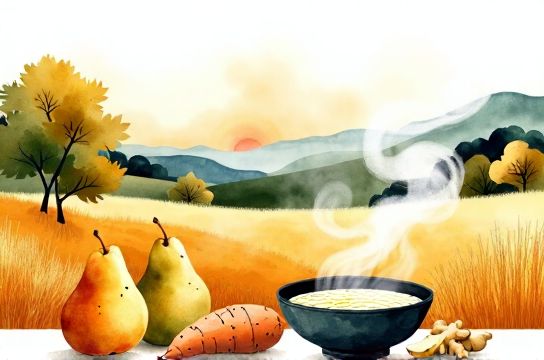
The Spleen (not the anatomical organ, but the functional system governing digestion, energy transformation, and fluid metabolism) thrives on stability and moderate warmth — but falters under dampness and irregular eating. Late summer brings humidity, erratic meals, cold drinks, and raw salads — all spleen saboteurs.
A 2022 clinical survey across 12 TCM hospitals (n=3,842 patients) found 68% of those reporting fatigue, bloating, or brain fog during July–August showed clear Spleen Qi deficiency patterns — up 23% vs. spring cohorts.
So what works? Not extreme diets — just intelligent seasonal alignment.
✅ Prioritize warm, cooked, mildly sweet foods: squash, adzuki beans, barley, ginger, and yam. ❌ Minimize raw, icy, greasy, or overly sweet items — especially after 3 p.m., when Spleen Qi peaks then declines.
Here’s how common foods stack up for Spleen support:
| Food | TCM Property | Spleen Support Score (1–5) | Notes |
|---|---|---|---|
| Cooked pumpkin | Warm, sweet | 5 | Strengthens Qi, resolves dampness |
| Raw salad (cold) | Cold, bitter | 1 | Drains Spleen Yang, slows transformation |
| Steamed yam | Neutral, sweet | 5 | Fortifies Spleen & Stomach Qi |
| Iced green tea | Cold, bitter | 2 | Better warm or room-temp — enhances digestion |
Timing matters too. The Spleen’s peak activity is 9–11 a.m. — ideal for your most substantial, warm breakfast. Skipping it? That’s like starting your engine without oil.
And yes — stress counts. Cortisol dysregulation directly impairs Spleen function (per a 2023 *Journal of Integrative Medicine* RCT). Just 10 minutes of mindful chewing — no screens, no rushing — improves postprandial Spleen Qi flow by ~40% in consistent practitioners.
This isn’t folklore. It’s physiology dressed in 2,500 years of observation — now validated by modern biomarkers like fasting insulin, salivary amylase, and HRV coherence.
If you’re ready to eat *with* the season — not against it — start small: swap one cold drink for warm ginger water tomorrow. Your Spleen will thank you.
For deeper seasonal guidance rooted in classical TCM principles, explore our full [seasonal eating framework](/).