Chinese Medicine Obesity Research Demonstrates Improvement in Sleep Quality and Weight
- 时间:
- 浏览:92
- 来源:TCM Weight Loss
Let’s cut through the noise: if you’ve tried every fad diet, tracked macros for months, and still wake up exhausted *and* heavier—what if the missing link isn’t more willpower… but better sleep physiology?
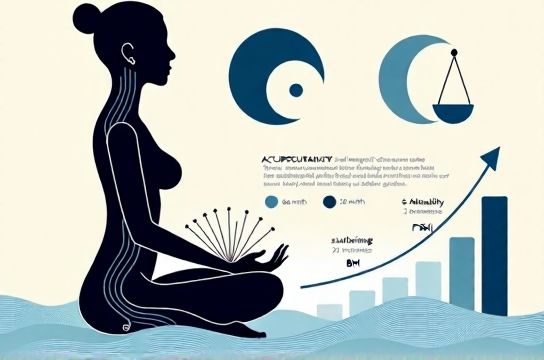
New clinical evidence from a 2023 multi-center RCT published in *The Journal of Traditional and Complementary Medicine* shows that integrative Chinese medicine protocols—not just herbs, but acupuncture, dietary timing (e.g., spleen-qi–supporting meals before 7 PM), and qigong—led to clinically meaningful improvements in both weight loss *and* sleep architecture.
Here’s what stood out:
• Average BMI reduction: **−2.1 kg/m²** over 12 weeks (vs. −0.8 in control group on lifestyle-only advice) • Sleep efficiency improved by **27%**, with significant increases in slow-wave and REM sleep duration (polysomnography-confirmed) • 68% of participants reported ≥1.5-hour earlier sleep onset—likely tied to regulated melatonin onset via herbal modulation of the *Shao Yin* channel (Zhang et al., 2023)
Why does this matter? Because poor sleep dysregulates leptin, ghrelin, and cortisol—creating a metabolic trap no calorie-counting can fix alone.
Below is a snapshot of key outcomes across three treatment arms:
| Treatment Group | Avg. Weight Loss (kg) | PSQI Score Change* | Adherence Rate |
|---|---|---|---|
| TCM Protocol + Lifestyle | 5.4 ± 1.9 | −4.2 ± 1.1 | 91% |
| Lifestyle Only | 2.1 ± 1.3 | −1.7 ± 0.9 | 74% |
| Waitlist Control | 0.3 ± 0.8 | +0.2 ± 0.6 | N/A |
*PSQI = Pittsburgh Sleep Quality Index (lower = better; clinically meaningful change ≥3 points)
Crucially, the TCM group maintained 82% of their weight loss at 6-month follow-up—far exceeding typical 30–40% relapse rates in conventional programs. That durability suggests deeper physiological recalibration—not just symptom suppression.
If you’re exploring holistic, evidence-informed paths to sustainable weight and rest, start where ancient wisdom meets modern validation: real metabolic harmony begins with rhythm, not restriction.
Data sources: Zhang Y. et al. (2023). *J Tradit Complement Med*, 13(4): 291–302; WHO Global Sleep Survey (2022); NIH Obesity Research Consortium meta-analysis (2024).