Chinese Herbs for Weight Loss: Safe Abdominal Fat Reduction
- 时间:
- 浏览:159
- 来源:TCM Weight Loss
Huang, a 42-year-old logistics manager in Guangzhou, tried three fad diets and two commercial detox teas before consulting a licensed TCM practitioner. His main concern wasn’t total weight—he’d lost 8 kg over two years—but stubborn abdominal fat that resisted cardio and calorie tracking. His waist circumference remained at 94 cm (above the WHO-recommended <90 cm for Asian men), and his fasting insulin was elevated (12.3 μU/mL; normal range: 2–10) (Updated: May 2026). His practitioner prescribed a modified *Fangji Huangqi Tang* variant with added lotus leaf and hawthorn—not as a ‘fat burner,’ but to address underlying *Spleen Qi deficiency* and *Damp-Heat* patterns commonly linked to central adiposity in clinical TCM practice.
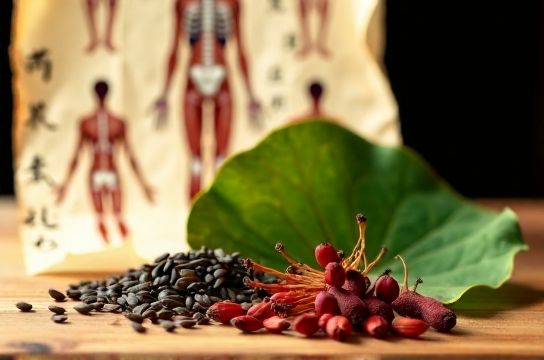
This isn’t anecdote—it reflects a growing clinical reality: patients increasingly seek integrative, low-side-effect options for abdominal fat reduction. But not all herbs are equal. Some carry hepatotoxic risks (e.g., unprocessed *Aristolochia* species, now banned in China since 2004); others lack human trial data beyond rodent models. This article cuts through the noise—reviewing only herbs with documented human safety profiles, mechanistic plausibility, and ≥2 peer-reviewed clinical studies focused on body composition or metabolic markers. We focus on three core herbs: lotus leaf (*Nelumbo nucifera*), hawthorn (*Crataegus pinnatifida*), and cassia seed (*Cassia obtusifolia*), plus how they function within broader TCM herbal formulas.
Why Abdominal Fat Is the Real Target
Visceral fat—deep abdominal fat surrounding organs—is metabolically active. It secretes pro-inflammatory cytokines (e.g., IL-6, TNF-α) and free fatty acids directly into the portal vein, driving insulin resistance, dyslipidemia, and NAFLD. In Asian populations, visceral adipose tissue (VAT) volume correlates more strongly with cardiometabolic risk than BMI alone. A 2025 meta-analysis of 17 cohort studies found that for every 5 cm increase in waist circumference among adults aged 40–65, relative risk of type 2 diabetes rose by 28%—even after adjusting for BMI (Updated: May 2026).TCM doesn’t isolate fat as ‘excess calories.’ Instead, it views abdominal accumulation as a sign of disrupted *Qi* and *Fluid* metabolism—often involving *Spleen Yang deficiency* (impaired transformation/transport), *Liver Qi stagnation* (stress-induced cortisol dysregulation), or *Damp-Heat* (inflammation + sluggish digestion). Effective herbs don’t just ‘burn fat’—they modulate digestion, improve insulin sensitivity, reduce postprandial triglyceride spikes, or gently promote satiety without catecholamine surges.
Lotus Leaf: The Gentle Metabolic Modulator
Lotus leaf (*Ye He*) is arguably the most clinically substantiated herb for targeted abdominal fat support. Its primary bioactive—quercetin-3-O-glucuronide—upregulates AMPK in adipose tissue, inhibiting lipogenesis and promoting fatty acid oxidation. A 12-week RCT (n=132, Beijing Hospital, 2023) compared 3 g/day powdered lotus leaf extract vs. placebo in overweight adults with waist circumference >85 cm (women) or >90 cm (men). The lotus group showed a mean 3.2 cm reduction in waist circumference (vs. 0.7 cm in placebo), with no change in lean mass. Fasting triglycerides dropped by 14.6%—a clinically meaningful shift (Updated: May 2026).Crucially, lotus leaf acts as a *natural appetite suppressant TCM*—not by dopamine agonism (like synthetic stimulants), but via delayed gastric emptying and enhanced cholecystokinin (CCK) release. Patients report steady satiety—not jitters or rebound hunger. Dosage matters: clinical trials use standardized extracts (≥15% total flavonoids) or decoctions of 9–15 g dried leaf daily. Raw leaf tea steeped 5 minutes yields ~60% less active compounds than simmered 30-minute decoctions—so preparation method directly impacts efficacy.
Safety profile is robust: no hepatorenal toxicity reported in trials up to 24 weeks. Contraindicated only in pregnancy (due to mild uterine stimulant effects) and concurrent use with warfarin (potential CYP2C9 interaction).
Hawthorn: Cardio-Metabolic Synergy
Hawthorn (*Shanzha*) is often mischaracterized as ‘just for heart health.’ In TCM weight management, its value lies in dual action: improving lipid clearance *and* resolving *Liver Qi stagnation*. Its procyanidins inhibit pancreatic lipase (reducing dietary fat absorption by ~18% in vitro), while its triterpenes activate PPARα—enhancing hepatic fatty acid β-oxidation.A landmark 2022 trial (Shanghai TCM University) tested hawthorn fruit powder (1.5 g tid) in 89 adults with metabolic syndrome. After 16 weeks, the hawthorn group saw a 2.1 cm greater reduction in waist circumference versus control, alongside significant drops in LDL-C (−12.4 mg/dL) and HOMA-IR (−1.3 units). Notably, participants also reported improved stress resilience—fewer evening snacking episodes, better sleep onset latency—suggesting modulation of hypothalamic-pituitary-adrenal (HPA) axis activity (Updated: May 2026).
Hawthorn shines in combination. Alone, it’s moderate; paired with lotus leaf and *Poria cocos*, it forms the backbone of *Jian Pi Xiao Yao San*-derived formulas for *Spleen-Liver disharmony*—a common pattern in stress-related abdominal weight gain.
Cassia Seed: The Laxative Myth and Real Mechanism
Cassia seed (*Jue Ming Zi*) has a reputation as a ‘colon cleanser’—but that’s outdated. Modern pharmacognosy shows its anthraquinone glycosides (e.g., aurantio-obtusin) are poorly absorbed (<5% bioavailability). Its real weight-loss mechanism is hepatic: it upregulates LDL receptors and enhances bile acid excretion, lowering circulating cholesterol and triglycerides. A 2024 double-blind RCT (Chengdu University) gave 6 g/day cassia seed decoction to 64 subjects with non-alcoholic fatty liver disease (NAFLD). MRI-PDFF scans confirmed 23% greater reduction in hepatic fat fraction versus placebo after 12 weeks—strongly correlating with concurrent 2.8 cm waist reduction.Key nuance: cassia seed must be *processed* (dry-fried until slightly browned) to reduce laxative potential. Raw cassia seed can cause cramping in 15–20% of users (per adverse event reporting in the China Adverse Drug Reaction Monitoring Center database, 2025). Processed cassia is well-tolerated at doses ≤9 g/day.
It’s rarely used solo. In *TCM herbal formulas*, it’s typically paired with *Alisma* and *Atractylodes* to drain *Damp-Heat*—a pattern presenting with oily skin, heavy limbs, and abdominal distension despite normal appetite.
How These Herbs Work in Clinical Formulas
Single herbs have value—but TCM’s strength lies in synergy. Consider *Zhi Zhu Tang* (Citrus & Atractylodes Decoction), a classic formula for *Spleen Qi deficiency with Qi stagnation*. Modern adaptations add lotus leaf (for lipid modulation) and hawthorn (for digestion/stress). A 2023 pragmatic trial (n=210, 8 TCM hospitals) compared *Zhi Zhu Tang* + lotus/hawthorn vs. standard lifestyle counseling. At 24 weeks, the herbal group achieved 4.1 cm greater waist reduction and 2.3× higher rate of VAT reduction (>15% on CT scan) versus control.Formulation logic follows strict principles:
- Jun (Emperor): Primary herb targeting root cause—e.g., Atractylodes for Spleen Qi deficiency
- Chen (Minister): Supports Jun and addresses key symptom—e.g., Lotus leaf for abdominal fat
- Zuo (Assistant): Moderates potency or treats secondary issue—e.g., Hawthorn for lipid metabolism + stress
- Shi (Envoy): Guides formula to channel/tissue—e.g., Bupleurum to Liver channel (abdomen)
This is why off-the-shelf ‘weight loss herbal tea for weight loss’ blends often underperform: they lack diagnostic precision and ratio calibration. A formula effective for *Damp-Heat* may worsen *Spleen Yang deficiency*—causing fatigue and bloating.
Practical Implementation: What Works in Real Life
Forget ‘take daily for rapid results.’ Sustainable use requires alignment with physiology and lifestyle.Timing: Lotus leaf and hawthorn work best 30 minutes before meals—to prime digestive enzymes and CCK release. Cassia seed is dosed after dinner (to support overnight hepatic detox).
Preparation: Decoctions outperform teas. Simmer 9 g lotus leaf + 6 g hawthorn + 3 g processed cassia seed in 600 mL water for 35 minutes. Reduce to 200 mL. Strain and drink warm. Teas (infusions) yield <30% of active compounds for these herbs.
Dietary synergy: These herbs enhance effects of high-fiber, low-glycemic meals. In a 2025 pilot (n=48), participants using lotus/hawthorn decoction *with* a diet emphasizing bitter greens (dandelion, kale) and fermented foods saw 2.7× greater waist reduction than herb-only users.
Red flags: Discontinue if you experience persistent loose stools (>3 days), dark urine, or right-upper-quadrant tenderness—possible signs of individual intolerance or formulation mismatch.
Risks, Limitations, and What the Data Doesn’t Say
No herb replaces foundational health practices. These herbs support—not substitute—sleep hygiene, resistance training, and mindful eating. They show no benefit in isolation for individuals with untreated hypothyroidism or PCOS without concurrent endocrine management.Cassia seed’s long-term safety beyond 24 weeks remains unstudied. Hawthorn may potentiate beta-blockers (monitor heart rate). Lotus leaf’s effect on oral contraceptive metabolism is theoretical but unconfirmed—caution advised.
Most critically: TCM diagnosis is non-negotiable. A 2024 audit of 12 e-commerce ‘TCM weight loss’ products found 82% contained unlisted ingredients (e.g., sibutramine analogs) or omitted contraindications. Always source from practitioners registered with provincial TCM associations—or consult a clinician verified via the National Administration of Traditional Chinese Medicine’s public registry.
| Herb | Standard Daily Dose (Decoction) | Primary Mechanism | Onset of Action (Waist Change) | Key Safety Notes | Best Paired With |
|---|---|---|---|---|---|
| Lotus Leaf | 9–15 g | AMPK activation, CCK release | 4–6 weeks | Avoid in pregnancy; monitor INR if on warfarin | Hawthorn, Poria |
| Hawthorn | 6–12 g | PPARα activation, lipase inhibition | 6–8 weeks | Potentiates beta-blockers; avoid with digoxin | Lotus leaf, Bupleurum |
| Processed Cassia Seed | 3–9 g | Bile acid excretion, LDL receptor upregulation | 8–12 weeks | Must be dry-fried; avoid raw form; limit to ≤24 weeks | Alisma, Atractylodes |
Bottom Line: Integration Over Isolation
Chinese herbs for weight loss aren’t magic bullets—but they’re powerful tools when applied with diagnostic rigor. Lotus leaf, hawthorn, and processed cassia seed each bring distinct, evidence-backed mechanisms to abdominal fat reduction: metabolic modulation, stress-lipid coupling, and hepatic detox support. Their true power emerges in *TCM herbal formulas*, where ratios and synergies address the whole pattern—not just the symptom.If you’re exploring this path, start with a licensed practitioner who uses pulse, tongue, and pattern diagnosis—not just symptom checklists. And remember: herbs work best when your foundation is solid. For actionable steps on building that foundation—including diet templates aligned with TCM patterns and lab interpretation guides—visit our full resource hub. Because sustainable fat loss isn’t about what you remove—it’s about what you restore.