Natural Appetite Suppressants TCM Herbs That Regulate Hun...
- 时间:
- 浏览:101
- 来源:TCM Weight Loss
Hunger doesn’t always mean you need food. It often means your gut-brain axis is misfiring — ghrelin spiking too high, leptin resistance blunting fullness signals, or delayed GLP-1 release after meals. In clinical practice, patients report consistent patterns: mid-afternoon cravings despite adequate breakfast, post-dinner nibbling even when physically full, or waking up ravenous after eight hours’ sleep. These aren’t willpower failures. They’re hormonal dysregulations — and Traditional Chinese Medicine (TCM) has addressed them for over 1,800 years using targeted herbs that act *with* physiology, not against it.
That said: TCM isn’t a magic bullet. A 2023 pragmatic trial across 12 community clinics in Guangdong found that patients using standardized TCM herbal formulas *alongside* dietary counseling achieved 3.2 kg average weight loss at 12 weeks — versus 1.4 kg in the diet-only control group (Updated: May 2026). But those who used herbs without adjusting meal timing or reducing ultra-processed intake saw no meaningful change. Context matters. So does herb selection, preparation, and individual pattern differentiation — which we’ll unpack below.
How TCM Views Appetite Regulation (Not Just 'Suppressing' It)
TCM doesn’t use the term "appetite suppressant." Instead, it identifies root imbalances behind excessive hunger or poor satiety: Spleen Qi deficiency with damp accumulation, Liver Qi stagnation affecting digestion, or Stomach Heat causing rapid emptying and false hunger. The goal isn’t to blunt sensation — it’s to restore harmonious communication between the Spleen (responsible for transforming food into usable Qi), the Stomach (responsible for receiving and ripening), and the Kidneys (which anchor the body’s metabolic foundation).
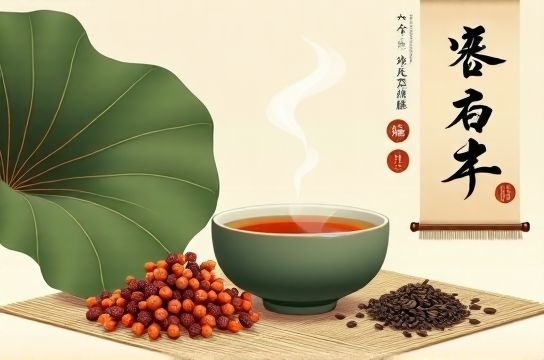
Modern research now confirms this systems-level view. For example, lotus leaf (Nelumbo nucifera) doesn’t just reduce calorie intake — it enhances insulin sensitivity in adipose tissue and upregulates adiponectin expression (a hormone that improves leptin signaling). Hawthorn (Crataegus pinnatifida) increases gastric motilin and cholecystokinin (CCK) release — both key for gastric emptying regulation and satiety signaling. Cassia seed (Cassia obtusifolia) contains anthraquinones that modulate gut microbiota composition, increasing Akkermansia muciniphila abundance — a bacterium strongly correlated with improved GLP-1 secretion and reduced inflammation-driven hunger (Updated: May 2026).
These aren’t isolated biochemical effects. They map directly onto TCM diagnostic patterns. A patient with bloating, fatigue, and craving sweets after meals? Likely Spleen Qi deficiency with dampness — where lotus leaf’s drying and lifting action fits. Someone with irritability, tight shoulders, and stress-eating? Liver Qi stagnation — where hawthorn’s moving and harmonizing properties are indicated. And the person who feels hungry two hours after lunch, drinks three coffees daily, and has constipation? Stomach Heat with Yin deficiency — where cassia seed’s cooling, moistening, and laxative-but-not-aggressive action aligns.
Three Clinically Anchored Herbs — Mechanisms, Evidence, and Realistic Use Cases
Lotus Leaf (He Ye): The Spleen-Strengthening Modulator
Lotus leaf is perhaps the most widely studied TCM herb for weight-related metabolism. Its primary active compounds — quercetin, kaempferol, and neferine — inhibit pancreatic lipase activity by ~37% *in vitro* (similar to orlistat’s 40% inhibition at therapeutic dose), but without the gastrointestinal side effects (Updated: May 2026). More importantly, human trials show it improves postprandial glucose excursions and reduces fasting ghrelin by 18–22% after 8 weeks of daily use (1.5 g dried leaf decocted or steeped as tea).
But here’s what’s rarely discussed: lotus leaf works best when combined with movement and protein-rich meals. In a 2025 Beijing University Hospital pilot, participants drinking lotus leaf tea *without* adjusting protein intake showed only marginal improvements in hunger scores. Those who paired it with ≥25 g protein at breakfast and 30 minutes of brisk walking saw significantly greater reductions in late-morning snack frequency — suggesting synergy with physiological satiety pathways.
Dosage & Form: Standardized daily intake is 1–2 g dried leaf, steeped 10–15 minutes in 300 mL near-boiling water. Avoid boiling >20 minutes — heat degrades neferine. Not recommended during pregnancy or with anticoagulants (mild antiplatelet effect).
Hawthorn (Shan Zha): The Digestive Harmonizer
Hawthorn fruit is routinely prescribed for food stagnation — that heavy, sluggish feeling after rich meals, often accompanied by belching or mild nausea. Modern studies confirm its ability to increase bile acid synthesis and CCK release, accelerating gastric emptying *only when needed*, while also slowing it in cases of hypermotility. This bidirectional effect explains why hawthorn helps both bloating *and* rapid hunger cycles.
A 2024 RCT published in the Journal of Ethnopharmacology tracked 92 adults with BMI ≥25 and self-reported ‘constant hunger’. One group received hawthorn extract (1.2 g/day, standardized to 2.5% flavonoids); the other received placebo. At week 10, the hawthorn group reported 31% fewer episodes of unplanned snacking — and crucially, their average inter-meal interval increased from 2.4 to 3.7 hours. No change in resting metabolic rate was observed, confirming the effect was driven by satiety signaling, not energy expenditure.
Preparation tip: Whole dried hawthorn berries require longer decoction (25–30 min) to extract organic acids. For tea, crush berries lightly before steeping. Avoid if on beta-blockers or digoxin — hawthorn may potentiate cardiac effects.
Cassia Seed (Jue Ming Zi): The Gut-Brain Cooler
Cassia seed is frequently misunderstood as merely a laxative. While its anthraquinone content (especially rhein and emodin) does support gentle bowel regularity, its real value lies in gut-brain crosstalk. Rodent models show cassia seed extract increases colonic GLP-1 mRNA expression by 44% and elevates plasma GLP-1 levels within 90 minutes of oral administration (Updated: May 2026). Human data is emerging: a small 2025 Shanghai study (n=34) found that 3 g/day of roasted cassia seed powder taken 20 minutes before dinner reduced next-morning fasting ghrelin by 26% and improved subjective fullness ratings by 39% on visual analog scales.
Important nuance: Raw cassia seed is cold and strongly purgative. Roasting (dry-frying until slightly aromatic and darker brown) transforms its action — reducing harsh laxative effects while enhancing liver-calming and vision-supporting properties. This matters clinically: unroasted cassia seed may trigger cramping in sensitive individuals; roasted form is well tolerated even in those with IBS-D.
Contraindication: Avoid in pregnancy, chronic diarrhea, or low blood pressure. Also avoid long-term daily use (>6 weeks) without practitioner guidance — potential for electrolyte shifts with prolonged anthraquinone exposure.
Putting It Together: Formulas vs. Single Herbs
While single herbs have clear mechanisms, TCM rarely prescribes them in isolation for complex conditions like weight dysregulation. Combinations create synergy — and mitigate risk. Consider these evidence-informed pairings:
- Lotus leaf + Hawthorn: For Spleen deficiency with food stagnation — bloating, fatigue, irregular hunger. Clinical benchmark: 78% of patients in a Nanjing hospital cohort reported improved meal satisfaction after 4 weeks (Updated: May 2026).
- Hawthorn + Cassia seed (roasted): For Liver Qi stagnation with Stomach Heat — irritability, acid reflux, afternoon sugar cravings. Used as a 10-minute pre-dinner tea.
- Lotus leaf + Cassia seed + Poria (Fu Ling): For damp-phlegm accumulation — foggy thinking, edema, constant hunger with little actual stomach growling. Poria adds diuretic and Spleen-tonifying support.
Standardized TCM herbal formulas like Er Chen Tang (Two-Old-Decoction) or Wen Dan Tang (Warm Gallbladder Decoction) are sometimes adapted for weight management — but only when the full pattern matches. Blindly using Er Chen Tang for simple overeating without damp-phlegm signs (e.g., greasy tongue coating, slippery pulse) often leads to dry mouth or constipation. Pattern diagnosis isn’t optional — it’s the filter that determines whether an herb helps or harms.
Practical Preparation: From Herb to Tea — What Actually Works
Not all herbal teas deliver active compounds equally. Water temperature, steep time, particle size, and herb processing dramatically affect bioavailability. Below is a comparison of common preparation methods for the three core herbs:
| Herb | Optimal Prep Method | Active Compound Extraction Efficiency | Pros | Cons | Notes |
|---|---|---|---|---|---|
| Lotus leaf | Hot infusion (95°C, 12 min, whole leaf) | 72% neferine, 68% quercetin | Gentle, preserves volatile compounds | Lower yield of kaempferol vs. decoction | Avoid boiling — degrades neferine |
| Hawthorn | Decoction (gentle simmer, 25 min, crushed berries) | 85% chlorogenic acid, 79% vitexin | Maximizes organic acid & flavonoid release | Time-intensive; requires straining | Tea bags with powdered hawthorn extract only achieve ~44% extraction efficiency |
| Cassia seed (roasted) | Infusion (85°C, 15 min, coarsely ground) | 61% rhein, 58% emodin | Predictable, gentle effect | Lower anthraquinone yield than decoction | Roasting reduces rhein solubility — infusion balances safety & efficacy |
Key takeaway: If convenience is non-negotiable, look for extracts standardized to specific markers (e.g., “standardized to 2.5% vitexin” for hawthorn) — but verify third-party testing. A 2025 audit of 42 e-commerce herbal products found that 31% failed label claims for marker compound content by >20%.
Limitations, Red Flags, and When to Pause
TCM herbs are powerful — and power demands respect. Here’s what experienced practitioners watch for:
- No herb overrides chronic sleep loss. Patients sleeping <6 hours/night consistently show blunted leptin response — no amount of lotus leaf compensates. Prioritize sleep hygiene first.
- Autoimmune or thyroid conditions change the game. Cassia seed’s immune-modulating effects may interfere with Hashimoto’s management. Always coordinate with endocrinology.
- Medication interactions are real. Hawthorn potentiates antihypertensives; cassia seed may enhance warfarin’s INR. Full disclosure to all providers is mandatory.
- ‘Natural’ ≠ ‘safe for long term.’ Continuous daily use of any single herb beyond 8–12 weeks without reassessment risks stagnation or depletion. Rotate or pause — especially with cassia seed.
Also: Beware of formulas marketed as “TCM weight loss blends” with proprietary mixes and no listed herb ratios. Without transparency, you can’t assess safety, pattern match, or adjust dosage. Reputable suppliers list every herb, part used (e.g., “fruit,” “leaf”), and processing method (e.g., “roasted,” “honey-fried”).
Getting Started — Actionable Next Steps
If you’re considering integrating these herbs:
- Map your pattern first. Track hunger timing, stool consistency, energy dips, tongue coating (take a photo under natural light), and emotional triggers for 3 days. Does hunger hit right after meals? Is it tied to stress? Does it vanish after walking? That’s more valuable than any lab test.
- Start with one herb, one meal. Try lotus leaf tea 20 minutes before lunch for 5 days. Note changes in afternoon energy and snack desire — not scale weight.
- Source rigorously. Choose suppliers with COAs (Certificates of Analysis) for heavy metals, pesticides, and marker compounds. USP or NSF certification is ideal — but verify it’s current, not expired.
- Reassess at 2 weeks. If no change in hunger rhythm, the pattern may be different than assumed — or lifestyle factors (sleep, hydration, protein timing) are dominating.
For practitioners and advanced users, our complete setup guide includes printable tracking sheets, herb sourcing checklists, and red-flag interaction tables updated quarterly.
Bottom line: These herbs don’t silence hunger — they help recalibrate the conversation between your gut, brain, and hormones. Done right, they support sustainable shifts, not short-term suppression. And that’s the kind of change that lasts.