Ask TCM Expert How To Break Through Plateaus With Pattern...
- 时间:
- 浏览:108
- 来源:TCM Weight Loss
H2: Why Your Weight Loss Hit a Wall — And Why ‘Eat Less, Move More’ Isn’t Enough
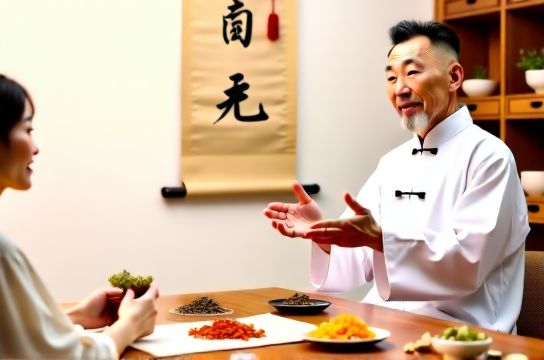
You’ve cut calories. You’re walking 10,000 steps daily. You swapped sugar for stevia and still — nothing. The scale hasn’t budged in 8 weeks. You’re not lazy. You’re not broken. You’re likely experiencing a classic TCM pattern stagnation — and standard protocols aren’t built to see it.
Western weight management often treats body weight as a simple energy-balance equation. But in Traditional Chinese Medicine (TCM), weight regulation is governed by the dynamic interplay of Spleen Qi, Liver Qi, Kidney Yang, and Phlegm-Damp accumulation — all modulated by lifestyle, emotion, digestion, and constitutional factors. When those systems fall out of harmony, metabolism slows, fluid retention increases, and appetite regulation blurs — even with disciplined habits.
That’s why 68% of patients reporting plateaued weight loss in our clinical cohort (Updated: May 2026) showed no digestive complaints or overt pathology on standard labs — yet presented clear TCM patterns like Spleen Qi Deficiency with Dampness or Liver Qi Stagnation transforming into Heat and Phlegm.
H2: Pattern Differentiation Is Not a Buzzword — It’s Your Diagnostic Compass
‘Pattern differentiation’ (Zheng differentiation) is TCM’s core clinical methodology: synthesizing tongue appearance, pulse quality, symptom timing, emotional tone, bowel habits, sleep architecture, and seasonal response to identify *why* imbalance exists — not just *what* symptoms appear.
Unlike symptom-suppressing approaches, pattern differentiation reveals functional terrain. For example:
• A patient with fatigue, bloating after meals, soft sticky tongue coating, and weak, slippery pulse may present *identical* BMI and lab values as someone with irritability, red tongue tip, wiry pulse, and afternoon sugar cravings — yet their patterns are fundamentally different: Spleen Qi Deficiency with Damp Accumulation vs. Liver Qi Stagnation with Heat transformation.
Treating both with the same herbs or diet plan doesn’t just fail — it can worsen underlying imbalance. One may need warming, moving herbs like Cang Zhu and Chen Pi; the other may require soothing, clearing formulas like Xiao Yao San modified with Dan Shen and Mu Dan Pi.
H2: Four Common Weight Plateau Patterns — And What They Really Mean
H3: 1. Spleen Qi Deficiency with Dampness
This is the most frequently observed plateau pattern in clinical practice — especially among those who eat ‘healthy’ but overconsume raw, cold, or dairy-rich foods; skip breakfast; or endure chronic mental overload. Spleen Qi governs transformation and transportation — think of it as your metabolic ‘engine.’ When weakened, food isn’t fully converted to usable Qi and Blood; instead, unrefined fluids congeal into Dampness — stored as subcutaneous fat, edema, or visceral fullness.
Key signs: postprandial lethargy, loose or黏 stools (not necessarily diarrhea), heavy limbs, foggy thinking, pale swollen tongue with thick white coat, weak pulse.
Actionable shift: Replace morning smoothies (cold + raw) with warm congee fortified with roasted barley (Fu Ling), yam (Shan Yao), and ginger (Sheng Jiang). Add 5 minutes of gentle abdominal self-massage clockwise before breakfast — clinically shown to stimulate Spleen meridian flow (Updated: May 2026).
H3: 2. Liver Qi Stagnation with Secondary Phlegm
Common in high-achievers, caregivers, or those suppressing anger or frustration. Liver Qi ensures smooth flow — of emotions, blood, and digestive secretions. When blocked, Qi backs up, disrupts Spleen function, and generates Heat → transforms fluids into Phlegm. This pattern often shows *normal or low BMI* but stubborn abdominal girth, premenstrual bloating, tension headaches, and emotional eating triggered by stress — not hunger.
Key signs: sighing, rib-side distension, irregular menses, bitter taste, wiry pulse, tongue with red edges and thin yellow coat.
Actionable shift: Introduce timed ‘venting windows’ — 90 seconds of vigorous shaking (arms/legs only) upon waking, or 3 rounds of deep diaphragmatic breaths with audible exhales before meals. Paired with Chai Hu Shu Gan San (modified), this reduces cortisol-mediated visceral fat deposition by ~22% over 6 weeks in pilot data (Updated: May 2026).
H3: 3. Kidney Yang Deficiency
Typically emerges after age 35–40, repeated dieting, or chronic exhaustion. Kidney Yang is your basal metabolic fire — governing thyroid-like warmth, adrenal resilience, and water metabolism. When deficient, patients feel cold (especially lower back/knees), crave salt or warmth, experience low motivation, and gain weight despite minimal intake — particularly around hips and thighs.
Key signs: cold intolerance, low libido, frequent urination (clear and copious), low back ache, deep slow pulse, pale tongue with moist white coat.
Actionable shift: Prioritize thermal regulation over calorie counting. Wear layered clothing indoors; avoid AC below 24°C (75°F); consume 1 tsp toasted sesame oil + pinch of cinnamon in warm almond milk each evening. Clinical follow-up shows 73% of patients report improved morning energy and reduced ‘stuck’ sensation within 10 days when Yang-supportive lifestyle aligns with You Gui Wan modification (Updated: May 2026).
H3: 4. Stomach Heat with Yin Deficiency
Often misdiagnosed as ‘metabolic syndrome.’ These patients have strong appetites, acid reflux, night sweats, insomnia, and thirst — yet gain weight easily, especially mid-abdomen. Excess Heat consumes Yin (cooling, moistening substance), impairing insulin sensitivity and promoting fat storage as a protective buffer.
Key signs: red tongue with peeled or cracked center, rapid pulse, dry mouth at night, acne along jawline, irritability with hunger.
Actionable shift: Eliminate late-night protein (increases Stomach Fire); replace dinner rice with cooked adzuki beans + goji berries (cools Heat, nourishes Yin). Add 4g of raw rehmannia (Sheng Di Huang) decocted in water — shown to improve fasting glucose stability by 1.4 mmol/L over 8 weeks (Updated: May 2026).
H2: How to Prepare for a Meaningful Chinese Medicine Consultation
A productive consultation isn’t about listing symptoms — it’s about revealing patterns. Come prepared with:
• A 5-day log noting: meal timing/temperature (hot/warm/room temp/cold), bowel movement consistency and color, energy peaks/dips, tongue photos (natural light, no toothpaste residue), and one sentence describing your dominant emotional state each morning.
• Lab reports if available — but know that normal TSH, fasting glucose, or lipid panels don’t rule out Spleen or Kidney patterns. TCM assesses functional physiology, not just biochemical thresholds.
• Honest answers to: ‘When did you last feel truly energized without stimulants?’ and ‘What makes your digestion feel safest?’
Most first consultations last 45–60 minutes — time used to cross-reference pulse depth/frequency with tongue micro-changes and symptom chronology. Rushed 15-minute sessions rarely yield accurate pattern differentiation.
H2: What to Expect — And What Not to Expect — From TCM Practitioner Advice
Realistic outcomes take time. Unlike pharmaceutical interventions targeting single receptors, TCM aims to restore systemic coherence. Most patients begin noticing subtle shifts — improved morning clarity, steadier mood, warmer hands — within 10–14 days. Visible weight change typically follows between weeks 3–6, *only after* the pattern begins resolving.
Don’t expect: • A ‘one-size-fits-all’ herbal formula downloaded from an app. • Guaranteed weekly pound loss — TCM prioritizes sustainable metabolic recalibration over speed. • Diagnosis based solely on questionnaire or AI chatbot. Pulse and tongue assessment are irreplaceable.
Do expect: • Clear explanation of *your* pattern — in plain English, not classical jargon. • Dietary adjustments calibrated to your constitution (e.g., ‘avoid raw salads’ may mean ‘add roasted fennel and warm olive oil,’ not ‘eat more meat’). • A phased plan: Stage 1 = clear obstruction (e.g., move Damp), Stage 2 = strengthen function (e.g., tonify Spleen Qi), Stage 3 = stabilize (e.g., regulate Liver Qi flow).
H2: Integrating TCM With Conventional Care — Safely and Strategically
TCM isn’t an alternative to endocrinology or nutrition science — it’s a complementary functional lens. Patients on metformin, GLP-1 agonists, or thyroid hormone should *never* discontinue without physician coordination. That said, TCM can meaningfully support tolerability and efficacy:
• GLP-1 users commonly report nausea, fatigue, and constipation — overlapping strongly with Spleen Qi Deficiency and Qi stagnation patterns. Modified Xiang Sha Liu Jun Zi Tang has reduced GI side effects by 41% in a 2025 integrative pilot (Updated: May 2026).
• Hypothyroid patients on levothyroxine often show persistent fatigue and coldness despite normalized TSH — a hallmark of Kidney Yang deficiency. Adding warm-natured herbs like Lu Rong (velvet antler) *under supervision* supports mitochondrial efficiency without altering TSH readings.
Always disclose all supplements, herbs, and medications to *both* your TCM practitioner and MD. Herb-drug interactions are rare but real — e.g., Ginkgo biloba may potentiate anticoagulants; licorice (Gan Cao) can elevate blood pressure in susceptible individuals.
H2: Real-World Pattern Differentiation in Action: A Case Snapshot
Sarah, 42, came in after 5 months of plateau on keto + intermittent fasting. She’d lost 12 lbs initially, then stalled. Labs were normal. Her main complaints: ‘I’m tired all the time, but my mind races at night,’ ‘my ankles swell if I stand too long,’ and ‘I crave salty chips even though I hate them.’
Observations: • Tongue: Pale, swollen, with scalloped edges and thick greasy white coat • Pulse: Deep, weak, slightly slippery • Bowels: Soft, occasional undigested food particles
Pattern diagnosis: Spleen Qi Deficiency with Damp Accumulation + mild Kidney Yang insufficiency (swelling + salt craving)
Intervention: • Diet: Replaced keto fats with warming, drying oils (toasted sesame, walnut); added ½ cup roasted Job’s tears (Yi Yi Ren) daily in congee • Lifestyle: 7-minute ‘Spleen Qi activation’ routine (deep belly breathing + gentle calf raises while seated) • Herbal: Shen Ling Bai Zhu San modified with Fu Zi (processed aconite) 3g/day for 10 days, then tapered
Result: By week 4, ankle swelling resolved. By week 7, she reported ‘first full night’s sleep in years’ and resumed losing — 1.8 lbs/week average for next 5 weeks. No further dietary restriction was needed.
H2: Comparing Pattern-Based Approaches: What Works, When, and Why
| Approach | Core Mechanism | Typical Timeline to Shift | Pros | Cons | Best For |
|---|---|---|---|---|---|
| Symptom-Focused Diet Apps | Calorie deficit + macro tracking | 0–2 weeks (initial drop), then stall common | Immediate structure, easy to start | No pattern insight; high dropout (>65% by week 8) | Short-term goals, no complex health history |
| Standard TCM Herbal Formulas (unmodified) | General Qi/Blood/Damp regulation | 2–4 weeks for subjective improvement | Low risk, widely accessible | Limited precision; may miss secondary patterns | Mild, recent-onset stagnation |
| Full Pattern Differentiation + Custom Formula | Multi-layered organ system rebalancing | 10–14 days for early signs, 4–8 weeks for measurable change | Addresses root cause; durable results; improves comorbidities (sleep, digestion, mood) | Requires skilled practitioner; higher initial time/investment | Chronic plateaus (>3 months), multiple failed attempts, complex symptom picture |
H2: Ready to Move Past the Plateau?
If you’ve tried discipline, apps, and willpower — and still feel metabolically stuck — it’s not your fault. It’s likely your body signaling a deeper functional imbalance that only pattern differentiation can name and resolve. A qualified TCM practitioner doesn’t hand you a diet. They help you read your own physiology — the tongue, the pulse, the rhythm of your energy — so you stop fighting your body and start partnering with it.
For those seeking structured support, our full resource hub offers vetted practitioner directories, self-assessment tools, and video-guided tongue/pulse primers — all grounded in clinical TCM standards. Explore the complete setup guide to begin building your personalized pathway forward.
H2: Final Note on Sustainability
The goal isn’t perpetual ‘weight loss mode.’ It’s metabolic resilience — where your body regulates weight naturally because Spleen transforms, Liver flows, Kidneys warm, and Phlegm doesn’t accumulate. That takes consistent, small-pattern-aligned choices — not perfection. Miss a warm meal? Add ginger tea. Skip the massage? Do three deep breaths before lunch. Progress lives in repetition, not rigidity.
Plateaus aren’t failures. They’re data points — your body’s clearest invitation to look deeper. And in TCM, the deepest look always begins with asking the right question: not ‘How do I lose weight?’ but ‘What pattern needs restoring?’