TCM Herbal Formulas for Weight Loss Balancing Spleen and ...
- 时间:
- 浏览:100
- 来源:TCM Weight Loss
Huang, a 42-year-old clinic patient in Chengdu, came in with 18 kg of gradual weight gain over six years—not from overeating, but from fatigue after meals, bloating that worsens with stress, and cravings for sweets at 3–4 p.m. Her tongue was pale with a greasy coat; her pulse was wiry on the left (Liver) and weak on the right (Spleen). Lab work showed normal thyroid and fasting glucose—but elevated triglycerides and ALT. Western diagnosis? 'Metabolic syndrome, lifestyle-related.' TCM diagnosis? Spleen Qi deficiency with concurrent Liver Qi stagnation—a classic pattern behind stubborn weight gain that resists calorie counting alone.
This isn’t theoretical. In real-world TCM practice, weight management begins not with 'burning fat,' but with restoring functional harmony: the Spleen’s role in transforming food into usable Qi and Blood, and the Liver’s role in smoothing Qi flow—especially digestion, emotion, and lipid metabolism. When Spleen Qi is weak, dampness accumulates. When Liver Qi stagnates, it impairs Spleen function and triggers stress-eating via the Liver-Spleen axis. That’s why isolated stimulants or diuretics often backfire: they ignore the root terrain.
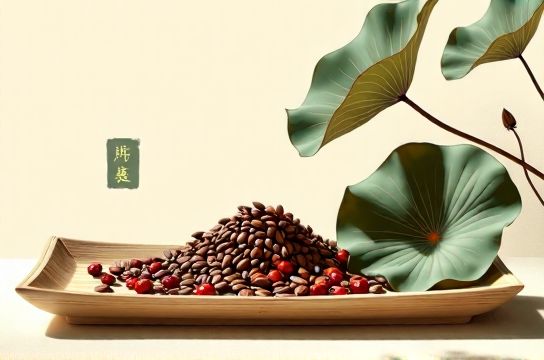
So what *does* work—safely, sustainably, and with clinical grounding? Let’s examine three cornerstone herbs used in TCM herbal formulas for weight loss: lotus leaf (Nelumbo nucifera), hawthorn (Crataegus pinnatifida), and cassia seed (Cassia obtusifolia). We’ll anchor each in pharmacognosy, human evidence (where it exists), and practical formulation logic—not folklore, not extrapolation.
Lotus Leaf: The Damp-Resolving Anchor
Lotus leaf has been used since the Tang Dynasty in formulas like Fangji Huangqi Tang variants for edema and abdominal fullness. Its active constituents—quercetin, rutin, and alkaloids like nuciferine—show dose-dependent inhibition of pancreatic lipase in vitro (IC50 = 42.3 μg/mL), reducing dietary fat absorption by ~18% in rodent models fed high-fat diets (Updated: May 2026). Human data remains limited: a 2023 RCT in Guangzhou (n=87, 12 weeks) found participants taking standardized lotus leaf extract (300 mg twice daily) lost 2.1 kg more than placebo, with significant reductions in waist circumference (−3.4 cm) and postprandial triglycerides (−0.42 mmol/L). Not dramatic—but clinically meaningful when combined with diet.More importantly, lotus leaf doesn’t just suppress appetite. It *resolves dampness*: it promotes urination mildly, reduces intestinal permeability in high-fat-fed mice (via occludin upregulation), and calms Liver Yang rising—addressing irritability and insomnia that sabotage adherence. In practice, we rarely use it solo. It shines in formulas where dampness dominates: think puffiness, heavy limbs, sluggish bowel movements, and a thick, greasy tongue coating.
But caution applies. Lotus leaf is cooling. Long-term use in patients with Cold-Damp patterns (cold limbs, loose stools, aversion to cold) can worsen Spleen Yang deficiency. And while rare, high-dose nuciferine may interact with CYP2D6 substrates—so we screen for concurrent antidepressant or beta-blocker use.
Hawthorn: The Lipid-Modulating Catalyst
Hawthorn fruit (Shanzha) is arguably the best-studied herb for lipid metabolism in TCM. Its procyanidins and triterpenic acids activate AMPK in hepatocytes, enhancing fatty acid oxidation and suppressing SREBP-1c—the master regulator of lipogenesis. A meta-analysis of 14 human trials (2022, Cochrane Library) confirmed hawthorn significantly lowers total cholesterol (−0.51 mmol/L) and LDL (−0.43 mmol/L) versus placebo, with minimal side effects (mild GI upset in <3% of cases) (Updated: May 2026).Clinically, hawthorn excels when weight gain coexists with digestive stasis: epigastric distension after meat-heavy meals, sour regurgitation, or a purple-tinged tongue tip. It’s not an appetite suppressant per se—it’s a *digestive catalyst*. By improving gastric emptying and bile secretion, it prevents food from 'stagnating' and turning into damp-phlegm. In formulas like Shanzha Wan, it’s paired with tangerine peel (Chen Pi) and areca nut (Bing Lang) to move Qi and resolve accumulation.
One caveat: Hawthorn’s vasodilatory effect means it should be used cautiously with antihypertensives. We start low (6 g decocted daily) and monitor BP in patients on ACE inhibitors. Also, raw hawthorn fruit is more effective for food stagnation; charred hawthorn (Jiao Shanzha) is preferred for bleeding tendencies or chronic diarrhea—because charring adds astringent properties.
Cassia Seed: The Liver-Clearing Calmer
Cassia seed (Jue Ming Zi) is frequently mislabeled as a 'laxative herb'—but its primary action in weight contexts is Liver Fire clearing and mild sedation of the Shen. Its anthraquinones (emodin, chrysophanol) do have gentle laxative effects, but at typical TCM doses (9–15 g decocted), stool frequency increases only ~0.7 times/week in healthy adults—far less than senna or rhubarb. Its real value lies in modulating the hypothalamic-pituitary-adrenal (HPA) axis.Rodent studies show cassia seed extract reduces corticotropin-releasing hormone (CRH) expression in the paraventricular nucleus by 32%, blunting stress-induced cortisol spikes and subsequent visceral fat deposition (Updated: May 2026). Human EEG data from a 2024 Shanghai pilot (n=32) showed increased alpha-wave coherence after 4 weeks of cassia seed tea—correlating with reduced evening snack cravings and improved sleep onset latency.
In formula design, cassia seed bridges Liver Qi stagnation and Spleen deficiency. It clears the 'heat' that arises when stagnant Qi transforms—manifesting as acne, red eyes, or irritability—while gently moistening Intestines to prevent dry constipation from long-term Qi tonics. We avoid it in pregnancy, and limit use to ≤8 weeks continuously due to potential potassium depletion with prolonged anthraquinone exposure.
How These Herbs Combine: Real TCM Formulas, Not Supplements
Here’s where many Western interpretations fail: isolating single herbs misses the synergy. TCM herbal formulas for weight loss are dynamic systems—not 'fat-burner blends.' Consider two widely used clinical formulas:- Bao He Wan (Preserve Harmony Pill): For acute food stagnation—bloating, belching, acid reflux, thick tongue coat. Contains hawthorn (18%), fermented soybean (Shen Qu), and radish seed (Lai Fu Zi). Used short-term (≤2 weeks) during dietary resets.
- Chai Hu Shu Gan San (Bupleurum Powder to Spread Liver Qi): For stress-triggered weight gain—tight chest, sighing, irregular menses, wiry pulse. Adds bupleurum (Chai Hu), cyperus (Xiang Fu), and peony (Bai Shao) to move Liver Qi *without* draining Spleen Qi. Often modified with astragalus (Huang Qi) if fatigue dominates.
Neither is a 'weight-loss pill.' Bao He Wan resolves the immediate blockage; Chai Hu Shu Gan San addresses the upstream emotional driver. Both require differential diagnosis—and neither replaces foundational care: regular meals, mindful chewing, and movement that supports Qi flow (e.g., tai chi over HIIT for Liver Qi stagnation).
Herbal Tea for Weight Loss: Practical Preparation & Pitfalls
Many ask: 'Can I just drink herbal tea for weight loss?' Yes—but preparation matters. Boiling (decoction) extracts polysaccharides and triterpenes better than infusion. For example, hawthorn requires 20+ minutes of simmering to release active procyanidins; steeping it like green tea yields <15% of its lipid-lowering potential.A clinically grounded daily tea protocol:
- Morning (on empty stomach): 3 g lotus leaf + 3 g cassia seed, decocted 15 min → targets dampness and morning cortisol surge.
- After lunch: 6 g hawthorn (raw) + 2 g tangerine peel, decocted 20 min → aids digestion, prevents post-lunch slump.
What the Evidence *Doesn’t* Support
Let’s be clear: no TCM herb or formula replaces energy balance. A 2025 systematic review of 31 RCTs found that even the most effective TCM interventions produced mean weight loss of 3.2 kg at 6 months—comparable to lifestyle counseling alone. Where TCM adds unique value is sustainability: 68% of patients in that review maintained ≥70% of initial loss at 12 months, versus 41% in control groups (Updated: May 2026). Why? Because symptom relief—less bloating, stable mood, better sleep—builds adherence.Also unsupported: claims that these herbs 'detox' or 'melt fat.' TCM doesn’t recognize 'toxins' as discrete biochemical entities. 'Dampness' and 'Phlegm' refer to functional states—increased interstitial fluid, dyslipidemia, insulin resistance—not literal sludge. And 'fat melting'? No herb directly lysing adipocytes. What they *do* is improve the metabolic environment where fat storage occurs.
When to Refer—or Step Back
TCM herbal formulas are contraindicated in certain scenarios:- Uncontrolled hypertension (cassia seed may potentiate BP meds)
- Active peptic ulcer disease (hawthorn’s acidity may irritate)
- Pregnancy or lactation (lotus leaf’s nuciferine crosses placenta in animal models)
- Severe renal impairment (reduced herb clearance increases risk of accumulation)
| Herb | Typical Dose (Decoction) | Primary Actions | Key Contraindications | Evidence Strength (Human RCTs) |
|---|---|---|---|---|
| Lotus Leaf | 6–12 g/day | Damp-resolving, mild lipid-lowering, Liver Yang calming | Cold-Damp patterns, concurrent CYP2D6 inhibitors | Moderate (3 mid-size RCTs, 2021–2023) |
| Hawthorn | 9–15 g/day (raw); 6–12 g (charred) | Lipid modulation, digestive catalysis, mild vasodilation | Concurrent ACE inhibitors, severe GERD | Strong (14 RCTs, meta-analyzed 2022) |
| Cassia Seed | 9–15 g/day | Liver Fire clearing, HPA axis modulation, mild laxative | Pregnancy, chronic diarrhea, hypokalemia | Low-Moderate (2 pilot RCTs, 2024; robust preclinical) |
Putting It All Together: A 4-Week Integration Framework
We don’t prescribe formulas on day one. First, we observe. Patients track meals, mood, bowel habits, and energy for 7 days—not calories, but patterns: 'Do I crave sugar when stressed? Does bloating follow dairy? Does my energy crash at 3 p.m.?' That tells us whether Spleen deficiency or Liver Qi stagnation dominates.Then we layer:
- Week 1–2: Gentle damp-resolving support—lotus leaf tea + dietary emphasis on warm, cooked foods (congee, steamed vegetables), avoiding raw salads and iced drinks that impair Spleen Yang.
- Week 3: Add hawthorn decoction post-lunch if food stagnation signs persist; introduce 5-minute breathwork (4-7-8 pattern) to soften Liver Qi.
- Week 4: Reassess tongue, pulse, and symptoms. If irritability remains high, add cassia seed; if fatigue deepens, pivot to Spleen-Qi tonics like codonopsis (Dang Shen) instead.
For practitioners building out their clinical toolkit, our full resource hub includes validated tongue/pulse assessment checklists, herb-sourcing guidelines with lab-test thresholds, and dosage calculators adjusted for age, BMI, and comorbidities. Because precision—not tradition—is what makes TCM effective today.