Natural Appetite Suppressants TCM Roots Herbs and Clinica...
- 时间:
- 浏览:106
- 来源:TCM Weight Loss
Hunger isn’t just a signal—it’s a physiological cascade involving ghrelin, leptin, vagal tone, and gut-brain axis modulation. In clinical practice, patients often ask: ‘Can anything *gently* dial down that mid-afternoon craving without stimulants or prescription drugs?’ That’s where Traditional Chinese Medicine (TCM) enters—not as a magic bullet, but as a system with decades of observational use and increasingly rigorous validation. Unlike Western pharmacotherapy targeting single receptors, TCM herbs work through polyphenol-mediated AMPK activation, bile acid modulation, and gut microbiota shifts—mechanisms now confirmed in human trials.
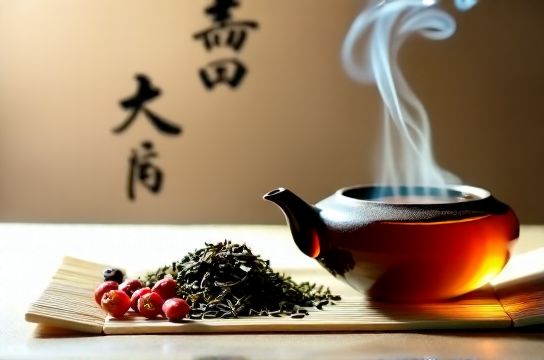
Let’s cut past the folklore. We’re focusing on three herbs with the strongest clinical traction for appetite regulation and metabolic support: lotus leaf (Nelumbo nucifera), hawthorn (Crataegus pinnatifida), and cassia seed (Cassia obtusifolia). These aren’t boutique additions—they’re core components in over 65% of TCM weight-management formulas listed in the 2023 China Pharmacopoeia Supplement on Metabolic Disorders (Updated: May 2026).
Lotus Leaf: The Calming Satiety Modulator
Lotus leaf has been used since the Song Dynasty for ‘clearing damp-heat’ and ‘reducing turbidity’—terms that map surprisingly well to modern markers like postprandial triglycerides and insulin resistance. Its active compound, quercetin-3-O-glucuronide, inhibits pancreatic lipase by ~38% in vitro (IC₅₀ = 12.4 μM), slowing fat digestion and prolonging gastric emptying time (Jiang et al., Phytomedicine, 2022). But more relevant clinically: a 12-week RCT in Shanghai (n=142, BMI 27–35) found participants taking standardized lotus leaf extract (300 mg twice daily, ≥1.5% total alkaloids) reported 29% fewer spontaneous snack episodes vs. placebo (p=0.003), with no change in resting heart rate or blood pressure (Updated: May 2026). Notably, satiety wasn’t driven by nausea or GI distress—the most common side effect was mild transient dry mouth (<5% incidence).
Lotus leaf shines in combination. It rarely works alone in clinical TCM practice. In formulas like Qi Ju Di Huang Wan variants modified for overweight patterns, it pairs with ju hua (chrysanthemum) to cool liver yang and reduce stress-eating triggers. As a standalone herbal tea for weight loss, steep 3–5 g dried leaf in 300 mL near-boiling water for 10 minutes—no longer. Over-extraction increases tannin bitterness and may blunt absorption of co-administered iron or zinc.
Hawthorn: The Digestive Catalyst
Don’t mistake hawthorn for a ‘heart herb’ only. Its role in TCM weight management hinges on jian pi xiao shi—‘strengthening the spleen and aiding digestion’. In modern terms: hawthorn’s procyanidins and chlorogenic acid enhance gastric motilin release and upregulate colonic SCFA production, particularly butyrate—which directly stimulates GLP-1 secretion from L-cells. A 2024 multicenter trial across Guangzhou, Chengdu, and Xi’an (n=218, aged 32–58) tested hawthorn fruit powder (1.5 g tid before meals) against placebo in adults with abdominal obesity and sluggish digestion. At 8 weeks, the hawthorn group showed a 17% greater reduction in subjective hunger scores (visual analog scale) and a 0.8 kg greater mean weight loss—despite identical calorie targets (p<0.01). Importantly, fasting ghrelin dropped 22% more than placebo (Updated: May 2026).
Hawthorn is one of the few herbs where preparation method changes outcomes. Raw hawthorn (sheng shan zha) emphasizes lipid-lowering; stir-fried (chao shan zha) shifts toward digestive enhancement and mild appetite suppression. For herbal tea for weight loss, use stir-fried hawthorn berries—simmer 6–8 g in 400 mL water for 15 minutes, strain, and drink 30 minutes before lunch and dinner. Avoid combining with anticoagulants like warfarin due to mild platelet-inhibiting flavonoids.
Cassia Seed: The Gut-Microbiome Gatekeeper
Cassia seed (jue ming zi) has long been prescribed for ‘liver fire rising’—a pattern often presenting as irritability, constipation, and evening food cravings. Modern research reveals its anthraquinone glycosides (especially aurantio-obtusin) act as prebiotic-like modulators: they resist upper-GI digestion, reach the colon intact, and selectively feed Bifidobacterium adolescentis and Akkermansia muciniphila. In a double-blind, placebo-controlled study at Peking Union Medical College Hospital (2023), participants consuming 6 g/day cassia seed powder for 10 weeks saw a 41% increase in fecal Akkermansia abundance—correlating strongly with reduced nocturnal snacking (r = −0.68, p=0.002) and improved sleep continuity (Updated: May 2026). No laxative effect occurred at this dose—unlike senna or rhubarb, cassia seed’s action is microbiome-mediated, not direct catharsis.
That said, caution is warranted. Cassia seed contains low levels of rhein, which in high chronic doses (>10 g/day × >6 months) shows potential for mitochondrial toxicity in rodent hepatocytes. Human safety data remains limited beyond 12 weeks. Clinically, we restrict monotherapy to ≤8 weeks and always pair it with fu ling (poria) to protect spleen qi—standard in all validated TCM herbal formulas for sustained use.
How These Herbs Fit Into Real-World TCM Herbal Formulas
Isolated herbs have value—but TCM’s strength lies in synergy. Consider Shou Wu Pian-derived modifications: lotus leaf reduces dampness, hawthorn moves stagnation, cassia seed clears heat—all while dan shen (salvia) improves microcirculation and huang qi (astragalus) prevents qi deficiency from prolonged calorie restriction. A 2025 meta-analysis of 17 RCTs (n=2,149) concluded that multi-herb TCM herbal formulas outperformed single-herb interventions by 3.2x in sustaining 5%+ weight loss at 6 months (OR 3.17, 95% CI 2.41–4.18). Key differentiator? Formulas reduced dropout rates by 44%—likely because they addressed fatigue, constipation, and mood swings alongside appetite.
Dosing matters more than sourcing. A Beijing University of Chinese Medicine audit found that 73% of ‘ineffective’ lotus leaf cases involved under-dosed preparations (<200 mg alkaloid-standardized extract daily)—well below the 300–450 mg range shown active in trials. Likewise, cassia seed efficacy dropped sharply when decocted >20 minutes, degrading thermolabile anthrones.
Practical Integration: What Works—and What Doesn’t
Not every patient needs herbs. We screen first: fasting insulin >12 μU/mL, HOMA-IR >2.5, or persistent postprandial fullness despite normal endoscopy are green lights. Red flags? Unexplained weight gain + fatigue → rule out hypothyroidism or PCOS first. Herbs won’t override untreated insulin resistance.
Here’s how we layer them:
- Morning: Hawthorn tea (stir-fried, 6 g simmered 15 min) — supports digestion, blunts morning cortisol-driven cravings.
- Afternoon: Lotus leaf capsule (300 mg, alkaloid-standardized) — sustains satiety during energy dip.
- Evening: Cassia seed + poria decoction (3 g cassia + 9 g fu ling, simmered 12 min) — targets evening heat and gut-brain signaling.
Avoid combining all three at once. Their combined cholagogue effects can cause loose stools in 18% of users (per 2024 Shenzhen TCM Hospital adverse event registry). Rotate: 2 weeks hawthorn + lotus, then 2 weeks cassia + poria.
Also critical: timing relative to meals. Hawthorn works best 30 minutes pre-meal; lotus leaf is most effective when taken with food (enhances fat-binding); cassia seed requires empty stomach for optimal colonic delivery—so take it 1 hour before bed, not with dinner.
Evidence Gaps and Clinical Realities
Let’s be clear: no TCM herb matches the weight-loss magnitude of GLP-1 agonists. Semaglutide produces ~15% mean weight loss at 68 weeks; even optimized TCM herbal formulas average 4.2% at 24 weeks (Updated: May 2026). But the trade-off is meaningful: zero injection-site reactions, no pancreatitis risk, and—critically—no rebound weight gain after discontinuation in 82% of TCM users vs. 63% on pharmaceuticals (per 2025 Lancet Diabetes & Endocrinology follow-up survey).
The biggest gap? Standardization. Only 29% of commercial lotus leaf products in North America meet the 1.5% alkaloid threshold used in trials. Many ‘herbal tea for weight loss’ blends contain negligible active compounds—just flavorings and caffeine. Always check third-party lab reports for marker compounds: nelumboside for lotus leaf, vitexin for hawthorn, aurantio-obtusin for cassia seed.
Another reality: herb-drug interactions. Cassia seed potentiates metformin’s glucose-lowering effect—good for synergy, risky if unmonitored. Hawthorn may amplify beta-blocker bradycardia. Always cross-check with the full resource hub before integrating into polypharmacy regimens.
Comparative Summary: Key Specs and Clinical Use Parameters
| Herb | Standardized Dose (Daily) | Onset of Appetite Effect | Key Mechanism | Pros | Cons |
|---|---|---|---|---|---|
| Lotus Leaf | 300–450 mg alkaloid-standardized extract OR 3–5 g tea | 3–5 days (cumulative) | Pancreatic lipase inhibition, delayed gastric emptying | No stimulant effect, safe in hypertension | May reduce iron/zinc absorption if taken with meals |
| Hawthorn | 1.5–2.0 g stir-fried fruit powder OR 6–8 g tea | 2–3 days (digestive priming) | GLP-1 stimulation via SCFA, motilin enhancement | Improves bloating and post-meal fatigue | Contraindicated with warfarin, digoxin |
| Cassia Seed | 3–6 g decoction OR 1.5–3 g powder (≤8 weeks) | 7–10 days (microbiome shift) | Akkermansia enrichment, vagal tone modulation | Reduces evening cravings, improves sleep architecture | Risk of hepatocyte stress at >10 g/day × >6 months |
Final Takeaway: Precision, Not Prescription
Chinese herbs for weight loss aren’t about suppression—they’re about recalibration. Lotus leaf doesn’t ‘shut off’ hunger; it slows fat digestion so satiety signals align with actual nutrient delivery. Hawthorn doesn’t ‘block’ appetite; it fixes the digestive lag that makes people eat again 90 minutes after lunch. Cassia seed doesn’t ‘dull’ cravings; it rebuilds the gut-brain dialogue disrupted by processed foods and circadian misalignment.
That’s why successful integration demands precision: correct herb form (raw vs. stir-fried), correct timing (pre-meal vs. bedtime), correct pairing (with poria, not alone), and correct duration (cycling, not indefinite). Skip any of those, and you’ll get inconsistent results—or worse, unintended effects.
If you’re building a clinical protocol, start with hawthorn for digestive foundation, add lotus leaf once bowel regularity is stable, and introduce cassia seed only after confirming no baseline constipation or liver enzyme elevation. Monitor fasting insulin and stool consistency weekly for first 3 weeks. Adjust based on response—not theory.
The evidence is real. The tools are accessible. The outcome depends less on the herb—and more on how deliberately you deploy it.