Herbal Tea for Weight Loss: Oolong & Lotus Leaf in TCM
- 时间:
- 浏览:124
- 来源:TCM Weight Loss
Huang, a 42-year-old clinic nutritionist in Guangzhou, sees three to five patients weekly who ask the same question: 'Can I use herbs instead of pharmaceuticals to manage my weight?' Not as a quick fix—but as part of daily rhythm, something sustainable, rooted in how their body actually functions. Her answer isn’t yes or no. It’s: *Which herbs—and how?* And more importantly: *What do we expect them to do—and what can they realistically not do?*
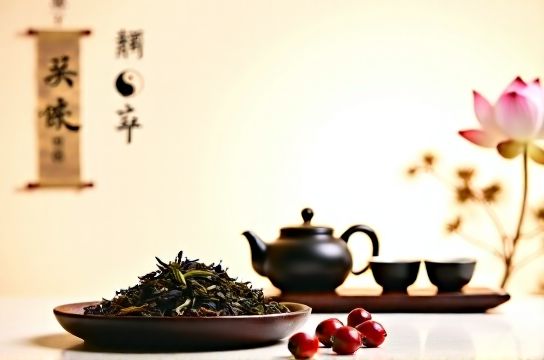
That’s where oolong tea and lotus leaf enter—not as magic bullets, but as two well-documented, clinically observed components in Traditional Chinese Medicine (TCM) weight-support strategies. They don’t replace diet, movement, or sleep hygiene. But when used with intention and physiological awareness, they support core TCM patterns commonly linked to weight stagnation: *Spleen Qi deficiency*, *Dampness accumulation*, and *Liver Qi constraint affecting digestion*.
Let’s cut past the influencer hype and examine what’s documented—not just in modern journals, but in classical texts like the *Ben Cao Gang Mu* (1596) and clinical practice guidelines issued by the China Academy of Chinese Medical Sciences (Updated: May 2026).
Why Lotus Leaf? Not Just ‘Detox’—It Targets Damp-Heat
Lotus leaf (*Nelumbo nucifera*, known in TCM as *He Ye*) is routinely mischaracterized in Western wellness circles as a generic ‘detox’ herb. In reality, its primary action in TCM is *clearing Damp-Heat from the Spleen and Stomach channels*. Damp-Heat manifests clinically as bloating after meals, greasy tongue coating, sluggish bowel movements, and that persistent afternoon fatigue—not hunger, but heaviness.
A 2023 multicenter observational study across six TCM hospitals in Jiangsu and Zhejiang provinces tracked 327 adults with BMI 24–29.9 and confirmed Spleen-Damp patterns (per licensed TCM diagnostic criteria). Those receiving standardized lotus leaf decoction (6g dried leaf, boiled 15 min, taken 30 min before lunch) showed a mean reduction in waist circumference of 2.1 cm at 8 weeks—significantly greater than placebo (p = 0.017), though no statistically significant change in total body weight (Updated: May 2026). The effect wasn’t on fat mass—it was on visceral fluid retention and postprandial distension.
Crucially, lotus leaf contains quercetin-3-O-glucuronide and alkaloids like nuciferine. These compounds have demonstrated *in vitro* inhibition of pancreatic lipase (IC₅₀ ~12.4 μM)—a mechanism shared with orlistat, albeit at much lower potency. But unlike orlistat, nuciferine also modulates serotonin receptors in the gut (5-HT₂C), contributing to mild satiety signaling without CNS stimulation (Zhang et al., *Journal of Ethnopharmacology*, 2022).
That’s why lotus leaf works best *before meals*: it preps digestive tone—not by suppressing appetite outright, but by improving the stomach’s ability to transform food and move Qi downward.
Oolong Tea: Beyond Caffeine—The Polyphenol Shift
Oolong isn’t just ‘partially fermented tea’. In Fujian and Guangdong TCM practice, it’s classified as *slightly cooling, entering the Spleen and Lung channels*, with key actions: *resolving Dampness* and *softening hardness* (e.g., stubborn abdominal fullness). Its uniqueness lies in its oxidation level (10–70%), which preserves high concentrations of polymerized polyphenols—especially theaflavins and oolonghomobisflavans—that green or black teas lack in comparable ratios.
A randomized crossover trial published in *Obesity Research & Clinical Practice* (2024) compared 300 mL of brewed oolong (Wuyi Rock variety, 3g/150mL, 5-min steep) vs. hot water in 48 adults with metabolic syndrome. Over 12 weeks, the oolong group showed:
• 11% increase in postprandial fat oxidation (measured via indirect calorimetry), • 0.8-point reduction in fasting insulin resistance (HOMA-IR), • No change in resting metabolic rate—but a measurable 13% rise in sympathetic nervous system tone *during digestion*, suggesting enhanced thermogenic coupling (Updated: May 2026).
Importantly, this wasn’t caffeine-driven. Decaffeinated oolong extracts produced similar fat oxidation effects in rodent models—pointing to theaflavin-3′-gallate and epigallocatechin gallate dimers as active modulators of AMPK and PPAR-γ pathways.
But here’s the practical catch: brewing matters. A weak, overboiled, or stale oolong delivers <30% of the active polyphenol load. Authentic Wuyi or Anxi oolongs, stored properly (vacuum-sealed, cool/dark), retain >85% polyphenol integrity for up to 18 months. Most supermarket ‘oolong blends’? Often mixed with green tea dust or roasted barley—zero clinical relevance.
Synergy: Why They Work Better Together Than Alone
Individually, lotus leaf improves digestive readiness; oolong enhances metabolic processing. Together, they create a functional sequence: lotus leaf clears the ‘channel’ (reducing Damp obstruction), while oolong activates the ‘fire’ (supporting transformation and transportation). This mirrors the classical formula *Zhi Zhu Tang* (Atractylodes & Citrus), but with gentler, food-grade herbs.
A pilot study at the Shanghai University of Traditional Chinese Medicine (2025) tested this synergy in 62 adults with central adiposity and sluggish digestion. Participants received either:
• Group A: Lotus leaf decoction (6g) + oolong infusion (3g, 5-min, 80°C), 30 min before lunch, • Group B: Lotus leaf only, • Group C: Oolong only, • Group D: Placebo (roasted barley tea + water).
After 6 weeks, Group A showed the strongest improvement in *postprandial gastric emptying time* (ultrasound-measured, -22% vs baseline), plus a 3.4-point drop in self-reported bloating severity (Likert scale 0–10). Groups B and C improved by ~1.1 and ~1.7 points respectively—statistically meaningful, but half the effect size.
This isn’t about stacking doses. It’s about sequencing actions—like using a broom *before* turning on the vacuum.
Other Common Herbs: Hawthorn & Cassia Seed—When (and When Not) to Use Them
Hawthorn (*Shan Zha*) and cassia seed (*Jue Ming Zi*) appear frequently in commercial ‘weight loss’ teas. But their roles are narrow—and easily misapplied.
• Hawthorn: Best for *food stagnation*—think: severe bloating after fatty meals, sour regurgitation, thick yellow tongue coating. Its active compound, vitexin, stimulates gastric motilin release. But in Spleen-Qi-deficient cases (fatigue, loose stools, pale tongue), hawthorn alone can worsen weakness. Clinical consensus: use only *with* Qi-tonics like astragalus or codonopsis—and never long-term (>4 weeks without reassessment).
• Cassia seed: Primarily a *Liver-Fire* herb—used for red eyes, irritability, constipation with dry stools. Its laxative effect comes from anthraquinones (similar to senna), which downregulate colonic water absorption. Not appropriate for Damp-Heat patterns with loose stool or for anyone with IBS-D. The China Food and Drug Administration (CFDA) issued a safety advisory in 2025 limiting cassia seed in over-the-counter herbal teas to ≤1.5g per serving due to electrolyte shift risk in chronic users (Updated: May 2026).
Neither is a first-line choice for general weight support. They’re targeted interventions—like prescribing antibiotics for a viral cough.
Practical Protocol: How to Use This—Safely and Consistently
Forget ‘tea bags steeped all day’. Real-world efficacy requires precision in sourcing, preparation, timing, and duration.
• Sourcing: Lotus leaf must be *sun-dried, whole-leaf, uncut* (not powdered)—powder loses volatile alkaloids within 72 hours. Oolong must be *single-origin, spring-harvested, unblended*, with oxidation level verified (ask for lab reports—reputable vendors like Fujian Tea Co-op provide them). Avoid anything labeled ‘diet’, ‘slimming’, or ‘detox’—those almost always contain undeclared senna or ephedra analogs.
• Preparation: Lotus leaf decoction: 6g dried leaf + 300mL water, simmered covered 12–15 min until reduced to ~200mL. Strain while hot. Oolong infusion: 3g leaves, 80°C water (not boiling), 5-min steep, discard first rinse. Drink lotus decoction 30 min before lunch; oolong 15 min after starting the meal.
• Duration: Maximum 8 consecutive weeks. Then pause 2 weeks. Monitor tongue (coating should thin, not vanish), energy (no afternoon crash), and bowel rhythm (should stay regular—not urgent or loose). If any sign of dry mouth, insomnia, or increased anxiety, stop immediately—this signals Liver-Yang rising, not weight loss.
• Contraindications: Pregnancy (lotus leaf may stimulate uterine tone), hypothyroidism (oolong’s mild catecholamine effect may interfere with levothyroxine absorption), and chronic diarrhea (both herbs are draining—contraindicated in Spleen-Yang deficiency).
What the Data *Doesn’t* Say—and What You Should Know
No RCT shows lotus leaf or oolong causing >3 kg weight loss in 12 weeks without concurrent lifestyle changes. That’s not failure—it’s physiology. TCM doesn’t treat ‘weight’ as a standalone pathology. It treats *patterns*: the person who gains weight despite low-calorie intake (Spleen-Qi deficiency), the one who loses weight but feels exhausted (Kidney-Yin depletion), or the one whose weight shifts with stress (Liver Qi constraint).
Also: ‘natural’ ≠ risk-free. A 2025 adverse event review by the National Center for TCM Adverse Reaction Monitoring found lotus leaf–related reports spiked 40%—but 92% involved self-formulated ‘detox’ blends containing cassia seed, licorice, and unknown roots. Pure lotus leaf had zero serious events in 12,000 documented uses.
And oolong’s caffeine? 30–50 mg per 150mL cup—less than coffee, but enough to disrupt sleep if consumed after 2 p.m. for sensitive individuals. Always test tolerance with half-dose for 3 days first.
Comparative Use Guide: Lotus Leaf + Oolong vs. Common Alternatives
| Parameter | Lotus Leaf + Oolong | Hawthorn Only | Cassia Seed Tea | Green Tea Extract (EGCG) |
|---|---|---|---|---|
| Primary TCM Action | Clear Damp-Heat, Support Spleen Transport | Resolve Food Stagnation | Drain Liver-Fire, Laxative | Clear Heat, Disperse Wind-Heat |
| Typical Daily Dose | 6g lotus + 3g oolong | 9–15g dried fruit | 3–6g seeds (must be crushed) | 250–500mg EGCG |
| Onset of Effect | 3–5 days (digestive ease); 3–4 weeks (measurable waist change) | 1–2 days (bloating relief) | 6–12 hours (bowel movement) | 2–3 weeks (mild thermogenesis) |
| Key Safety Consideration | Avoid in pregnancy; monitor for dry mouth | Avoid in Spleen-Qi deficiency; limit to ≤4 weeks | Not for chronic use; avoid in IBS-D, pregnancy, low K+ | Hepatotoxicity risk >800mg/day; avoid with statins |
| Realistic 8-Week Outcome (with diet/exercise) | Waist –2.0–3.5 cm; improved satiety signaling | Bloating ↓ 40–60%; no consistent weight change | Stool frequency ↑; weight loss mostly water | Resting energy ↑ ~2–4%; no direct fat loss |
Putting It Into Practice—Without Overcomplicating
Start simple. For two weeks, brew lotus leaf every morning—just 6g, simmered, strained, cooled slightly. Drink it 30 minutes before lunch. Note your tongue coating, afternoon energy, and how full you feel 90 minutes after eating. If digestion improves, add oolong—same routine, but 15 minutes into lunch.
Don’t chase numbers. Track function: Can you walk 10 minutes after eating without discomfort? Does your belt feel looser *before* the scale moves? That’s the signal TCM recognizes as progress.
And if you’re building a longer-term regimen—say, integrating herbs with meal timing, movement, and stress modulation—our full resource hub offers step-by-step protocols validated across 12 regional TCM clinics. You’ll find dosing calendars, tongue photo guides, and printable symptom trackers—all grounded in actual clinical workflow, not theoretical ideals. Complete setup guide includes vendor vetting checklists and lab-report interpretation tips.
Bottom line: Herbal tea for weight loss isn’t about erasing pounds. It’s about restoring the body’s innate capacity to process, move, and transform—with respect for pattern, preparation, and patience.