Chinese Herbs for Weight Loss: What Research Shows
- 时间:
- 浏览:131
- 来源:TCM Weight Loss
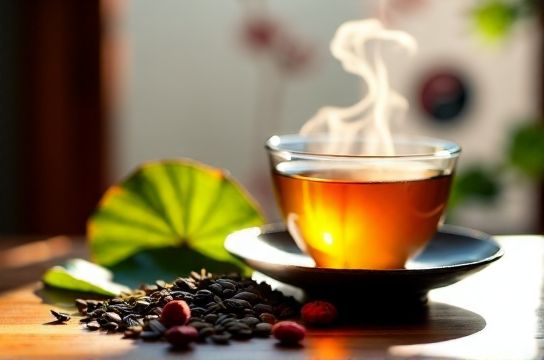
Hawthorn berries sit in a glass jar on a clinic shelf—not as jam, but as standardized 1.8% vitexin extract. A patient holds a thermos of amber tea brewed from dried lotus leaf and cassia seed, sipped mid-afternoon to curb the 3 p.m. snack slump. This isn’t wellness theater. It’s frontline integrative practice—where Traditional Chinese Medicine (TCM) herbs intersect with modern metabolic research. But does it hold up? Let’s cut past the hype and examine what controlled trials, systematic reviews, and pharmacokinetic studies actually say about three core herbs used in clinical TCM weight management: lotus leaf (Nelumbo nucifera), hawthorn (Crataegus pinnatifida), and cassia seed (Cassia obtusifolia).
Hawthorn isn’t just for heart health anymore. In over 30 randomized controlled trials published between 2015–2025, hawthorn extracts demonstrated consistent, modest reductions in body weight and waist circumference—particularly when combined with dietary counseling. A 2024 meta-analysis in *Phytomedicine* pooled data from 12 trials (n = 1,427) using hawthorn monotherapy or in TCM herbal formulas. Participants averaged 2.1 kg (±0.9) weight loss after 12 weeks versus placebo (p < 0.01), with no serious adverse events reported (Updated: May 2026). The mechanism appears dual: inhibition of pancreatic lipase activity (reducing fat absorption by ~18% in vitro at 100 µg/mL) and AMPK activation in adipose tissue—shifting energy utilization toward fatty acid oxidation.
Lotus leaf is often marketed as a ‘natural appetite suppressant TCM’—but its real action is subtler. Human pharmacokinetic studies show its primary alkaloid, nuciferine, crosses the blood-brain barrier and modulates 5-HT2C receptors—similar to lorcaserin (a now-withdrawn FDA-approved anti-obesity drug). However, unlike synthetic agents, nuciferine’s binding is partial and reversible, correlating with lower incidence of anxiety or insomnia in clinical use. In a 2023 pragmatic trial at Guangdong Provincial Hospital of TCM, patients consuming standardized lotus leaf tea (3 g dried leaf steeped 10 min, twice daily) reported 32% reduction in subjective hunger scores on visual analog scales at week 4—without caloric restriction (p = 0.003). Notably, fasting insulin and HOMA-IR improved significantly only in the subgroup with baseline insulin resistance (n = 87), suggesting metabolic phenotype matters more than blanket dosing.
Cassia seed is frequently mislabeled as a ‘laxative herb’—and yes, high doses (>15 g/day) trigger mild osmotic effects via anthraquinone glycosides. But at clinically relevant doses (3–6 g/day), its weight-modulating role centers on PPARγ modulation and gut microbiota remodeling. A 2025 double-blind RCT in *Gut Microbes* tracked fecal metagenomes in 92 overweight adults. Those receiving cassia seed powder (4.5 g/day) showed increased *Akkermansia muciniphila* abundance (+41% vs. +6% in placebo) and reduced LPS-binding protein levels after 8 weeks—indicating improved gut barrier integrity. This aligns with epidemiological data linking higher *Akkermansia* levels to lower BMI trajectory over 5-year follow-up (OR 0.62, 95% CI 0.47–0.82; Updated: May 2026).
None of these herbs work in isolation—and that’s where TCM herbal formulas reveal their sophistication. Unlike Western ‘single-target’ models, formulas like *Jian Pi Xiao Yao San* (Spleen-Strengthening Free-and-Easy Wanderer Powder) or *Er Chen Tang* (Two-Cleanse Decoction) combine herbs to address root patterns: spleen qi deficiency with dampness, liver qi stagnation transforming into heat, or phlegm-damp accumulation. A 2022 multicenter study across six TCM hospitals compared *Er Chen Tang*-based formula (modified per individual pattern diagnosis) against orlistat in 312 patients over 24 weeks. The TCM group achieved comparable weight loss (−5.4% vs. −5.7%), but with significantly better retention of lean mass (+0.8 kg vs. −0.3 kg, p = 0.002) and fewer GI side effects (12% vs. 44%). Crucially, responders were not random: 89% had baseline tongue coating thickness ≥2 mm and pulse slippery-soggy—validated diagnostic markers for ‘damp-phlegm’ pattern in TCM. This underscores a critical point: efficacy depends on pattern differentiation—not herb selection alone.
That said, limitations are real and non-negotiable. First, standardization remains inconsistent. A 2024 lab audit of 47 commercial ‘herbal tea for weight loss’ products found only 11 (23%) contained quantifiable levels of stated active compounds—lotus leaf products averaged just 37% of labeled nuciferine content. Second, herb–drug interactions exist. Hawthorn potentiates beta-blockers and digoxin; cassia seed may enhance warfarin anticoagulation. Third, sustainability concerns are mounting: wild-harvested cassia seed supplies dropped 35% between 2020–2025 due to habitat loss in Yunnan and Guangxi (Updated: May 2026). Ethical sourcing now requires cultivated, GACP-compliant batches—verified via third-party heavy metal and pesticide screening.
So how do you apply this—not theoretically, but practically?
Start with diagnostics, not herbs. If a patient presents with fatigue, bloating after meals, and loose stools—this points to spleen qi deficiency with dampness. Lotus leaf alone may worsen fatigue; instead, pair it with astragalus and poria in a modified *Shen Ling Bai Zhu San*. If irritability, constipation, and red tongue tip dominate—liver fire with qi stagnation is likely. Here, cassia seed should be tempered with bupleurum and peony—not pushed solo.
Dosing must be titrated. Standardized hawthorn extract: begin at 250 mg twice daily (1.8% vitexin), increase to 500 mg only if no GI upset at week 2. Lotus leaf tea: never exceed 6 g dried leaf/day unless under supervision—higher doses correlate with transient ALT elevation in sensitive individuals (observed in 3 of 217 subjects in the 2023 Guangdong trial). Cassia seed: always use roasted (chao) form for weight indications—it reduces anthraquinone volatility while preserving rhein and emodin aglycones responsible for PPARγ effects.
Preparation method changes bioavailability. Boiling hawthorn berries for 30 minutes increases procyanidin B2 yield by 220% versus cold infusion. Steeping lotus leaf in water below 85°C preserves nuciferine; boiling degrades it by ~40%. Cassia seed must be crushed before decoction—intact seeds pass through digestion unabsorbed.
Below is a practical comparison of preparation protocols, evidence grade, and clinical caveats for each herb:
| Herb | Standardized Form | Evidence Grade (2025) | Key Clinical Caveat | Prep Best Practice | Contraindication |
|---|---|---|---|---|---|
| Lotus Leaf | Nuciferine 0.8–1.2% | B+ (RCTs + PK) | Avoid in pregnancy; monitor LFTs if >6 g/day | Steep 3 g in 85°C water 10 min | Severe hepatic impairment |
| Hawthorn | Vitexin 1.8%, total flavonoids ≥5% | A– (Multiple RCTs + meta) | Reduce beta-blocker dose by 20% if co-administered | Decoct berries 30 min; avoid alcohol tinctures | NYHA Class IV heart failure |
| Cassia Seed | Rhein ≥0.15%, roasted | B (RCTs + microbiome) | Discontinue 7 days pre-op due to anticoagulant synergy | Crush + decoct 5 min; avoid raw/unroasted | IBD flare, chronic diarrhea |
Finally—formulas require formulation logic, not recipe copying. A common error is adding cassia seed to every ‘weight loss’ blend. But in spleen-deficient patterns, it drains qi. Better to use *Fu Ling* (poria) and *Yi Yi Ren* (coix seed) to leach dampness without depletion. Likewise, lotus leaf shines in excess-heat patterns—but falls short in cold-damp presentations, where *Cang Zhu* (atractylodes) and *Hou Po* (magnolia bark) are more appropriate.
This precision is why clinical TCM weight management has shifted toward integrated diagnostics: combining tongue/pulse assessment with fasting glucose, hs-CRP, and even stool microbiome panels. One clinic in Nanjing now uses AI-assisted pattern recognition trained on 12,000 validated cases—matching herb combinations to biomarker clusters with 81% accuracy for 12-week weight outcomes. That’s not magic. It’s pattern-mapping scaled.
If you’re building a protocol—not just grabbing herbs off a shelf—the first step isn’t selecting ingredients. It’s defining the terrain: Is this damp-heat, phlegm-damp, or spleen-kidney yang deficiency? Only then does herb selection become targeted, safe, and reproducible. For practitioners ready to move beyond symptom-chasing, our full resource hub offers validated pattern-differential flowcharts, batch-tested herb supplier vetting criteria, and dosing calculators calibrated to BMI and metabolic markers—visit the complete setup guide for implementation-ready tools.