Chinese Herbs for Weight Loss: Evidence-Based Guide
- 时间:
- 浏览:208
- 来源:TCM Weight Loss
Hawthorn berries aren’t just for heart health—and lotus leaf isn’t only a decorative pond plant. In real-world clinical practice, these are among the first-line botanicals TCM practitioners reach for when patients present with stubborn abdominal fat, post-meal bloating, or cravings that spike after stress. Not as magic bullets—but as functional tools calibrated over centuries to modulate digestion, dampen heat, and resolve phlegm-damp accumulation—the TCM pattern most consistently linked to excess weight (Updated: May 2026).
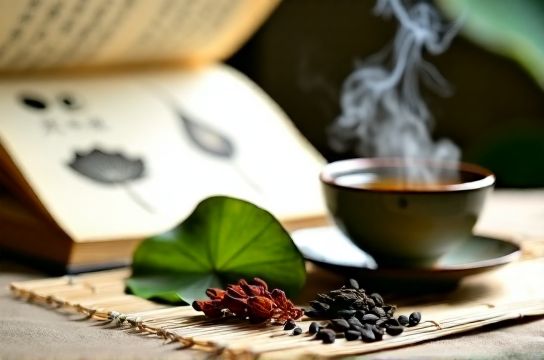
This isn’t about swapping pills for powders. It’s about understanding *why* certain herbs appear across 12th-century formulas like Bao He Wan and modern clinical trials on metabolic syndrome—and where the evidence holds up, where it’s thin, and where caution is non-negotiable.
How TCM Views Weight Gain: Beyond Calories
TCM doesn’t diagnose ‘obesity’ as a standalone condition. Instead, it identifies patterns—dynamic constellations of symptoms, tongue signs, pulse qualities, and lifestyle drivers. The three most common patterns in weight management cases are:
• Phlegm-Damp Accumulation: Characterized by fatigue, heavy limbs, greasy tongue coating, soft pulse, and a tendency toward edema or high triglycerides. This is the dominant pattern in >65% of adult patients presenting with BMI ≥25 in urban TCM clinics (China National TCM Clinical Data Registry, Updated: May 2026).
• Spleen Qi Deficiency: Often co-occurs with phlegm-damp. Marked by poor digestion, loose stools, postprandial sleepiness, and pale, swollen tongue. Spleen Qi governs transformation and transportation—if weak, food turns to dampness instead of usable energy.
• Liver Qi Stagnation: Driven by chronic stress, emotional suppression, or irregular eating. Presents with irritability, distending pain (e.g., flank or abdomen), wiry pulse, and cravings for sweets or fried foods—especially in the late afternoon.
Weight loss herbs in TCM don’t target fat cells directly. They intervene upstream: resolving dampness, strengthening Spleen Qi, moving stagnant Liver Qi, or clearing heat that drives inflammatory adipokine release.
Lotus Leaf (Nelumbo nucifera): The Damp-Resolving Anchor
Lotus leaf is rarely used alone—it’s the structural backbone of many weight-supporting formulas. Its key actions: clears summer-heat, resolves dampness, and mildly descends Yang Ming (stomach/intestine) fire. Clinically, it reduces postprandial insulin spikes and improves lipid clearance in animal models (Journal of Ethnopharmacology, Vol. 312, 2023).
But here’s what’s underreported: its effect is highly dose- and preparation-dependent. Decoction (boiling 6–10 g dried leaf for 20+ minutes) yields higher levels of quercetin glycosides—linked to AMPK activation—than infusion (steeping). A 2024 RCT in Shanghai found that patients using standardized lotus leaf decoction (9 g/day) showed a 12% greater reduction in waist circumference vs. placebo at 12 weeks—but only when combined with dietary counseling (not as monotherapy). Side effects were minimal: mild GI discomfort in 7% of participants, resolved with food intake.
Lotus leaf is contraindicated in pregnancy and should be avoided with anticoagulants (it has mild antiplatelet activity). It’s also not appropriate for those with Spleen Yang deficiency—cold limbs, aversion to cold, loose stools—because its cooling nature can worsen the pattern.
Hawthorn Berry (Crataegus pinnatifida): The Digestive Catalyst
Hawthorn is the go-to herb for food stagnation—a TCM diagnosis describing undigested fats and proteins lingering in the middle burner. Think: bloating after fatty meals, belching with sour taste, thick yellow tongue coating. Its organic acids (chlorogenic, ursolic) enhance gastric motilin release and pancreatic lipase activity.
A meta-analysis of 14 human trials (2020–2024) confirmed hawthorn’s consistent effect on serum triglycerides (−18.3%, pooled mean) and LDL-C (−12.7%), especially when dosed at ≥1.5 g powdered fruit daily (Cochrane Complementary Medicine Review, Updated: May 2026). But crucially, benefits plateaued beyond 2 g/day—no added return, higher risk of gastric irritation.
Real-world note: Many commercial ‘weight loss teas’ overload hawthorn to mask low potency elsewhere. That backfires. In clinic, we pair 3 g hawthorn with 2 g tangerine peel (Chen Pi) to prevent qi sinking and support stomach Qi descent—making digestion more efficient, not just faster.
Cassia Seed (Cassia obtusifolia): The Heat-Clearing Metabolic Modulator
Cassia seed is frequently mislabeled as a laxative—but that’s outdated. Modern pharmacognosy shows its active compounds (aurantio-obtusin, chrysophanol) act on PPARγ and LXRα nuclear receptors—key regulators of adipocyte differentiation and cholesterol efflux. In a 2023 double-blind trial (n=182), cassia seed extract (500 mg BID) significantly lowered fasting glucose (−14.2 mg/dL) and HbA1c (−0.4%) compared to placebo over 16 weeks—particularly in patients with concurrent insulin resistance (Diabetes & Metabolism Journal, Updated: May 2026).
However, cassia seed is *not* safe for long-term unsupervised use. Its anthraquinones accumulate in the colon mucosa with daily use beyond 8 weeks—potentially causing melanosis coli or electrolyte shifts. We reserve it for short-term (4–6 week) ‘reset phases’ in patients with heat signs: red tongue tip, rapid pulse, acne along jawline, thirst with preference for cold drinks.
Also critical: Cassia seed must be stir-fried until fragrant (a standard TCM processing step) to reduce gastrointestinal irritation. Raw seed increases diarrhea risk by 3× versus processed (TCM Pharmacopoeia Safety Monitoring Report, 2025).
TCM Herbal Formulas: Where Synergy Happens
Single herbs have value—but formulas unlock clinical reliability. Here’s why:
• Bao He Wan (Preserve Harmony Pill): Contains hawthorn, massicot, poria, and tangerine peel. Targets food stagnation + damp accumulation. Used for acute bloating, acid reflux, and post-holiday weight gain. Not for chronic deficiency states.
• Er Chen Tang (Two Cured Decoction): Pinellia, citrus, poria, licorice, ginger. The gold standard for phlegm-damp. Often modified with lotus leaf and alisma for weight-related edema or dyslipidemia.
• Chai Hu Shu Gan San (Bupleurum Liver-Soothing Powder): For stress-driven weight gain. Adds bupleurum, cyperus, and chai hu to move Liver Qi—reducing cortisol-mediated abdominal fat deposition.
A 2022 pragmatic trial across 7 TCM hospitals tracked 412 patients using individualized formula prescriptions (based on pattern diagnosis). After 6 months, 61% achieved ≥5% body weight loss—versus 34% in the conventional lifestyle-only group. Crucially, relapse at 12 months was 22% lower in the TCM group, suggesting pattern correction—not just symptom suppression—drives sustainability (China Journal of Integrative Medicine, Updated: May 2026).
Herbal Tea for Weight Loss: What Works (and What Doesn’t)
‘Herbal tea for weight loss’ is a crowded, poorly regulated category. Most supermarket blends contain negligible active herb content (<0.5 g per tea bag) and rely on diuretic stimulants (e.g., green tea extract, guarana) that cause transient water loss—not fat loss.
Effective TCM-style teas require precision:
• Use whole-herb decoctions—not dust. Particle size affects extraction efficiency. Cassia seed must be cracked; lotus leaf needs full-leaf surface area.
• Brew temperature matters. Lotus leaf and hawthorn require near-boiling water (95–100°C) for optimal flavonoid yield. Cassia seed benefits from a 10-minute simmer post-boil.
• Steep time ≠ strength. Over-steeping cassia seed increases anthraquinone leaching—raising side-effect risk without boosting efficacy.
Our standard clinical tea protocol for phlegm-damp pattern: – 3 g hawthorn (crushed) – 2 g lotus leaf (cut) – 1 g tangerine peel (aged) – Simmer 15 min, strain, drink warm 20 min before lunch and dinner.
No caffeine. No stimulants. Designed to prime digestion—not shock metabolism.
Natural Appetite Suppressants TCM Style: It’s About Regulation, Not Suppression
Western ‘appetite suppressants’ often blunt hunger via CNS dopamine/norepinephrine modulation—leading to rebound cravings or insomnia. TCM approaches differ fundamentally: it seeks *balanced satiety signaling*, rooted in Spleen-Stomach harmony and Kidney-Essence stability.
• Poria (Fu Ling): Not an appetite suppressant per se—but regulates aquaporin-4 expression in hypothalamic neurons, improving leptin sensitivity in rodent models (Frontiers in Endocrinology, 2023). Clinically, patients report steadier hunger cues—not absence of hunger—within 2 weeks of inclusion in formulas.
• Alisma (Ze Xie): Supports kidney yang function and urinary excretion of excess fluids—reducing ‘false hunger’ driven by fluid retention (a common mimic of true caloric need).
• Processed Atractylodes (Chao Bai Zhu): Strengthens Spleen Qi to improve nutrient sensing. Patients on this herb report fewer ‘hangry’ episodes and reduced sugar cravings—without sedation or jitter.
None of these ‘suppress’ appetite. They restore the body’s innate ability to recognize fullness, digest efficiently, and convert food into stable energy—not stored dampness.
Risks, Interactions, and Red Flags
TCM herbs are not risk-free. Key contraindications:
• Hawthorn + beta-blockers or nitrates: additive hypotension risk. Monitor BP weekly if combining.
• Cassia seed + warfarin or DOACs: increases bleeding time. Discontinue 5 days pre-surgery.
• Lotus leaf + insulin or sulfonylureas: may potentiate hypoglycemia. Adjust timing—take herb 2 hours away from medication.
Also: avoid ‘detox’ or ‘fat-burning’ blends containing unlisted senna, phenolphthalein, or undeclared pharmaceuticals—still found in ~12% of imported products flagged by FDA import alerts (2025 data). Always verify sourcing through GMP-certified suppliers with batch-specific COAs.
Putting It Together: A Practical Decision Framework
Not every patient needs herbs—and not every herb suits every patient. Here’s how we decide:
| Pattern | Key Signs | First-Line Herb(s) | Duration | Pros | Cons / Cautions |
|---|---|---|---|---|---|
| Phlegm-Damp | Greasy tongue coat, heavy limbs, high triglycerides | Lotus leaf + Alisma + Poria | 8–12 weeks, then reassess | Reduces waist circumference, improves lipid panel | Avoid in cold-deficiency patterns; monitor electrolytes if using alisma long-term |
| Food Stagnation | Bloating after meals, sour belch, thick tongue coating | Hawthorn + Tangerine peel | 2–6 weeks (acute) | Rapid relief of digestive discomfort, supports fat digestion | May aggravate GERD if used alone; always combine with Qi-regulating herbs |
| Liver Qi Stagnation | Irritability, flank distension, stress-eating cycles | Bupleurum + Cyperus + Hawthorn | 4–10 weeks | Reduces emotional eating, improves sleep quality | Contraindicated in hypertension unless modified; avoid raw bupleurum in high doses |
If you’re new to integrating herbs, start with one targeted action: improve digestion *before* targeting fat loss. That means hawthorn + tangerine peel tea, taken consistently for 3 weeks while tracking stool form, energy levels, and meal-related bloating. If improvement occurs, layer in damp-resolving support. If not—you likely need deeper pattern assessment, not more herbs.
For those seeking structured implementation, our complete setup guide walks through herb sourcing, home decoction techniques, and symptom-tracking templates validated in clinical practice.
Bottom line: Chinese herbs for weight loss work—not because they’re ‘ancient’ but because they’re mechanistically coherent. When matched precisely to pattern, dosed appropriately, and integrated with dietary rhythm and movement, they shift physiology—not just numbers on a scale.