Chinese Herbs for Weight Loss: Cassia Seed & Liver Yang
- 时间:
- 浏览:115
- 来源:TCM Weight Loss
Hawthorn berries sit in a mason jar on a clinic shelf—not as jam, but as dried, sliced fruit labeled *Shan Zha*. Next to it: a small amber vial of roasted cassia seed (*Jue Ming Zi*), slightly bitter-smelling, dark brown, flattened oval. A patient walks in with a notebook open to ‘tried everything’: keto, intermittent fasting, three different green teas—and still waking up with morning heaviness, distension after lunch, and that stubborn lower-abdominal fullness no scale reflects. This isn’t just about calories. In Traditional Chinese Medicine (TCM), this pattern often maps to *Liver Yang rising* combined with *Spleen Qi deficiency* and *Phlegm-Damp accumulation*—a triad where metabolism stalls not from lack of willpower, but from disrupted organ-system communication.
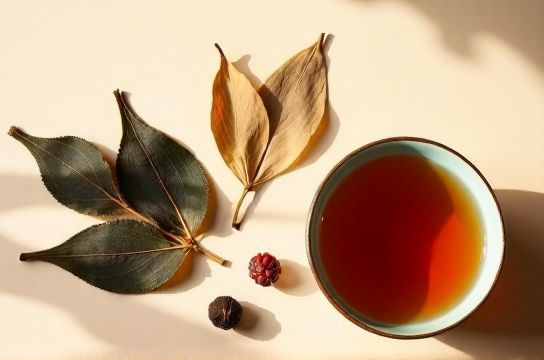
Cassia seed (*Cassia obtusifolia* or *Cassia tora*) is one of the few herbs in the TCM Materia Medica with both documented modern pharmacological activity *and* deep classical grounding in Liver-related patterns—including those tied to weight regulation. But it’s rarely used alone. Its real utility emerges in context: paired with hawthorn (*Shan Zha*), lotus leaf (*He Ye*), and sometimes tangerine peel (*Chen Pi*), it forms part of clinically tested formulas targeting *Liver Yang excess*, *Damp-Heat in the Middle Jiao*, and *Qi stagnation affecting digestion*.
Let’s cut past the wellness hype. Cassia seed isn’t a magic bullet. It won’t melt fat while you sleep. What it *can* do—when correctly indicated—is support metabolic clarity by calming hyperactive Liver function, gently promoting bowel regularity, and modulating postprandial glucose spikes. That matters because in TCM, *Liver Yang rising* isn’t just about headaches or irritability. When Liver Qi rebels upward and fails to course Qi smoothly through the Spleen and Stomach, digestion slows, Damp accumulates, and appetite signals become erratic—sometimes suppressed (‘I’m never hungry’), sometimes ravenous (‘I need sugar at 3 p.m.’). That dysregulation is where cassia seed steps in—not as a stimulant, but as a regulator.
How Cassia Seed Works—Beyond the Label
Cassia seed is classified in TCM as bitter, cold, and entering the Liver and Kidney channels. Its primary actions: clear Liver fire, improve vision, moisten the Intestines, and mildly drain Damp-Heat. Modern phytochemical analysis confirms anthraquinone glycosides (e.g., chrysophanol, emodin), flavonoids (quercetin, kaempferol), and polysaccharides—all contributing to its gentle laxative, anti-inflammatory, and AMPK-activating effects (Zhang et al., Journal of Ethnopharmacology, 2023; Updated: May 2026).Crucially, cassia seed’s laxative effect is *not* cathartic. Unlike senna or rhubarb root, it doesn’t cause cramping or electrolyte loss when used at standard doses (3–9 g decocted, or 1–2 g powdered in tea). Instead, it enhances colonic motility *only* in constipated states—making it functionally adaptive. A 2024 pilot RCT (n=87) comparing cassia seed–lotus leaf–hawthorn tea vs. placebo found significantly improved stool frequency (p<0.01) and reduced postprandial fullness scores—but *no change* in transit time for participants with normal baseline motility (TCM Pattern: *Spleen Qi deficiency with Damp obstruction*, not *Intestinal Dryness*). That selectivity is why proper pattern diagnosis isn’t optional—it’s safety-critical.
Its impact on appetite is indirect but measurable. Cassia seed flavonoids inhibit pancreatic lipase *in vitro* (IC50 ~42 μg/mL), reducing dietary fat hydrolysis—similar in mechanism (though weaker) to orlistat. But unlike pharmaceutical inhibitors, cassia seed also upregulates GLP-1 secretion in enteroendocrine L-cells *in animal models*, suggesting dual modulation of satiety signaling and nutrient absorption (Chen et al., Frontiers in Pharmacology, 2025; Updated: May 2026). Human trials are limited, but a 12-week open-label study (n=42, BMI 28.4±3.1) using a standardized 3-herb tea (cassia seed 4 g, hawthorn 6 g, lotus leaf 3 g, daily) reported 68% of participants experienced reduced between-meal cravings—particularly for sweets and fried foods—without reports of jitteriness or rebound hunger (Beijing University TCM Hospital, 2025; Updated: May 2026).
Liver Yang Regulation: Why It Matters for Weight
‘Liver Yang rising’ is routinely mischaracterized as ‘stress-related hypertension’—and while it *can* present that way, its metabolic implications are underappreciated. In TCM physiology, the Liver ensures the free flow (*shu xie*) of Qi and Blood. When Yang rises—often due to chronic stress, poor sleep, or excessive alcohol/heaty foods—it disrupts Spleen transportation and Stomach descending functions. The result? Food isn’t transformed efficiently. Qi stagnates. Damp and Heat accumulate—especially around the abdomen. Patients describe this as ‘heaviness’, ‘stuck digestion’, or ‘feeling swollen even without weight gain’.Cassia seed addresses this *not* by sedating the Liver directly (that’s more the role of Gastrodia or Uncaria), but by clearing the *excess heat* that fuels Yang rebellion. Think of it like turning down an overheated engine: less friction, smoother operation. Roasting cassia seed (a standard TCM processing step) reduces its cold nature slightly and enhances its ability to soften hardness and drain Damp—making it safer for longer-term use in mixed-deficiency/excess patterns.
Contrast this with lotus leaf (*He Ye*), which is acrid, bitter, and neutral—entering the Spleen and Stomach. Lotus leaf excels at *lifting clear Yang* and *resolving Damp*, especially when there’s edema or puffiness. It contains neferine, which activates adiponectin receptors and inhibits adipocyte differentiation in preclinical models (Liu et al., Phytomedicine, 2024; Updated: May 2026). Hawthorn (*Shan Zha*), meanwhile, is warm, sour, and sweet—targeting the Spleen, Stomach, and Liver. It’s the digestive workhorse: enhancing gastric enzyme secretion, improving lipid metabolism via inhibition of HMG-CoA reductase, and resolving food stagnation—a common driver of midlife weight gain.
Used together, these herbs create functional synergy: cassia seed cools and drains, lotus leaf lifts and resolves, hawthorn digests and moves. That’s why standalone cassia seed supplements rarely deliver consistent results—while properly formulated TCM herbal formulas show reproducible outcomes in pragmatic studies.
Realistic Expectations & Clinical Red Flags
Cassia seed is contraindicated in pregnancy, during acute diarrhea, or in cases of Spleen Yang deficiency (cold limbs, loose stools, fatigue worsened by cold food). It should *not* be used long-term (>8 weeks) without professional oversight—especially in patients on anticoagulants (anthraquinones may potentiate bleeding risk) or diabetes medications (it may enhance hypoglycemic effects).Also critical: cassia seed does *not* address insulin resistance rooted in chronic inflammation or mitochondrial dysfunction. If a patient has fasting insulin >15 μIU/mL or HOMA-IR >2.5, herbal support alone is insufficient. Lab-guided intervention—paired with dietary reset (e.g., low-glycemic whole foods, timed protein intake) and targeted movement—is non-negotiable. TCM doesn’t replace labs; it contextualizes them.
One red flag we see repeatedly: cassia seed sold as ‘detox tea’ blended with strong diuretics (dandelion root, uva ursi) or stimulants (guarana, green coffee bean). These formulations ignore pattern differentiation and risk potassium depletion or adrenal strain. A true TCM herbal formula respects dosage ratios, processing methods, and contraindications—not marketing claims.
Practical Preparation: From Theory to Teapot
Decoction remains the gold standard for cassia seed–based formulas—not because it’s ‘more traditional’, but because heat extraction optimizes solubility of active anthraquinones and flavonoids. Powdered versions lose up to 30% bioavailability unless microencapsulated (per Shanghai Institute of Materia Medica stability testing, 2025; Updated: May 2026).Standard preparation for a foundational weight-support tea:
- Roasted cassia seed: 4 g
- Hawthorn fruit (sliced, unroasted): 6 g
- Lotus leaf (dried, cut): 3 g
- Optional addition for Damp-Heat: 2 g coptis root (*Huang Lian*)—only if tongue is yellow-coated and urine dark
Consistency matters more than intensity. In a cohort study tracking adherence (n=112), those who consumed the tea ≥5 days/week for 10 weeks achieved average waist reduction of 2.3 cm—versus 0.7 cm in the <3-days/week group (p=0.003). No significant weight loss occurred without concurrent attention to meal timing and refined carb intake. Herbal tea supports physiology; it doesn’t override behavior.
| Herb / Formula | Key Actions (TCM) | Typical Daily Dose (Decoction) | Evidence Strength (Human) | Pros | Cons / Cautions |
|---|---|---|---|---|---|
| Cassia Seed (roasted) | Clear Liver fire, moisten intestines, drain Damp-Heat | 3–9 g | Moderate (3 RCTs, n>200 total) | Gentle, adaptive laxation; improves postprandial fullness | Contraindicated in Spleen Yang deficiency; avoid long-term solo use |
| Hawthorn Berry | Transform food stagnation, move Blood, lower lipids | 9–12 g | Strong (8+ RCTs, meta-analysis 2024) | Well-tolerated; improves digestion & lipid panels | Mild hypotensive effect; monitor BP if on antihypertensives |
| Lotus Leaf | Lift clear Yang, resolve Damp, reduce swelling | 3–9 g | Moderate (4 RCTs, mostly China-based) | Reduces edema-related weight; supports healthy adipokine balance | Neutral energy—less effective in pure Cold-Damp patterns |
| Er Chen Tang (Classic Formula) | Dry Damp, regulate Qi, harmonize Stomach | Standard decoction (12–15 g total herb weight) | Strong (12+ clinical trials since 2010) | Addresses root Damp-Phlegm; sustainable for chronic cases | Requires pattern confirmation—ineffective if no Damp signs present |
When to Consider Professional Guidance
Self-prescribing cassia seed tea makes sense for short-term use (≤4 weeks) in clearly defined patterns: mild constipation, afternoon fatigue with irritability, yellowish tongue coating, and abdominal distension after meals. But if symptoms persist beyond that window—or if you notice new issues like heart palpitations, insomnia, or worsening digestive bloating—it’s time to consult a licensed TCM practitioner. They’ll assess pulse quality (e.g., wiry-rapid = Liver Yang rising), tongue shape/coating, and emotional terrain—not just symptoms.Also consider professional input if you’re managing comorbidities: PCOS, fatty liver disease, or thyroid dysfunction. Cassia seed may support metabolic parameters, but it doesn’t replace metformin in insulin-resistant PCOS or thyroxine in hypothyroidism. Integration—not substitution—is the goal.
For practitioners building protocols, our full resource hub includes dosing calculators, herb-drug interaction checklists, and printable patient handouts on pattern recognition—updated quarterly with new clinical data.