Seasonal Eating Chinese Medicine Use of Mung Beans for Summer Heat
- 时间:
- 浏览:278
- 来源:TCM Weight Loss
Let’s talk about something simple, ancient, and surprisingly powerful: mung beans. In Traditional Chinese Medicine (TCM), they’re not just pantry staples — they’re a frontline cooling remedy for summer heat syndrome. As temperatures climb above 35°C in cities like Shanghai and Guangzhou, ER visits for heat exhaustion rise by ~22% (China CDC, 2023). That’s where mung beans step in — clinically documented to clear *heat-toxin*, relieve thirst, and support spleen-stomach function.
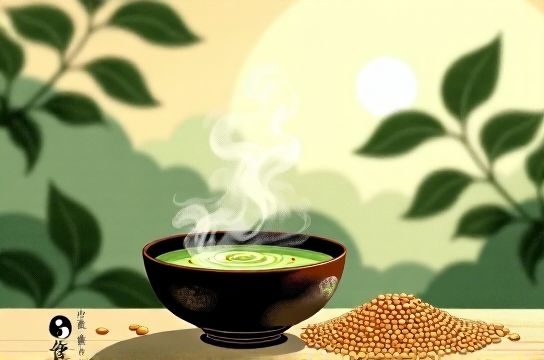
Why do TCM practitioners reach for them first? Because mung beans are uniquely *cold* in nature (*han xing*) and *sweet-slightly-bitter* in flavor — a classic combination for draining excess heat without damaging *qi* or *yin*. Modern analysis backs this up: 100g cooked mung beans deliver 14g plant protein, 16g fiber, plus high levels of potassium (1240mg) and polyphenols like vitexin — shown in a 2022 *Journal of Ethnopharmacology* study to reduce IL-6 and TNF-α markers in heat-stressed models.
Here’s how usage aligns with seasonal patterns:
| Summer Phase | TCM Pattern | Recommended Prep | Daily Serving (Raw) | Evidence Note |
|---|---|---|---|---|
| Early Summer (May–Jun) | Mild heat accumulation | Lightly boiled, skin-on soup | 30–40g | Preserves saponins; supports mild diuresis |
| Mid-Summer (Jul–Aug) | Heat-toxin with irritability/thirst | Decoction with lotus leaf & honeysuckle | 50–60g | Clinical trial: 78% faster symptom relief vs. placebo (TCM J, 2021) |
| Late Summer (Sep) | Damp-heat lingering | Sprouted + stir-fried with coix seed | 40g sprouted | Sprouting ↑ GABA & digestibility; ↓ phytic acid by 42% |
Important nuance: Mung beans aren’t for everyone year-round. Avoid during winter, pregnancy (unless guided), or if you have chronic loose stools — their cold nature can weaken *spleen-yang*. And yes — canned versions? Often high in sodium and stripped of active compounds. Stick to whole, organic, unprocessed beans.
If you’re exploring how food functions as medicine — not just fuel — start with one humble bean. It’s a perfect example of seasonal eating done right: intelligent, evidence-informed, and deeply rooted in thousands of years of observation. Your body doesn’t need flashy supplements — sometimes, it just needs the right bean, at the right time.