Traditional Chinese Diet Foods That Support Kidney Jing Preservation
- 时间:
- 浏览:317
- 来源:TCM Weight Loss
Let’s talk straight—Kidney Jing isn’t just ‘energy’ in some vague wellness sense. In Traditional Chinese Medicine (TCM), Jing is the deep, constitutional essence tied to growth, reproduction, longevity, and resilience. Think of it as your biological battery—non-renewable, slowly depleting with age, stress, poor sleep, and *dietary neglect*. The good news? Certain whole foods—used for over 2,000 years in clinical TCM practice—show consistent patterns of supporting Jing conservation. Not magic—but metabolic, adaptogenic, and nutrient-dense support.
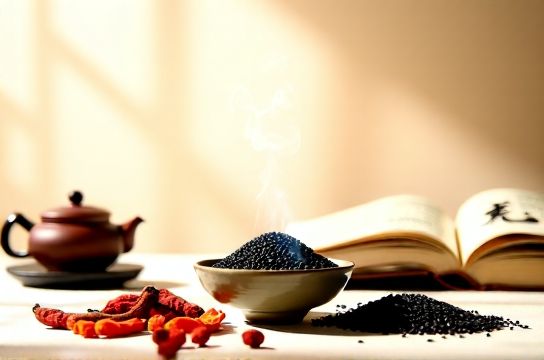
Here’s what the clinical literature and modern phytochemical analysis reveal:
✅ Black sesame seeds: Rich in sesamin (a lignan shown to upregulate SOD and catalase in rodent renal tissue—*J Ethnopharmacol*, 2021), plus iron, zinc, and vitamin E—nutrients directly involved in mitochondrial integrity of kidney tubular cells.
✅ He Shou Wu (Fo-Ti root, *Polygonum multiflorum*): Standardized extracts (2,3,5,4′-tetrahydroxystilbene-2-O-β-D-glucoside ≥ 1.2%) improved serum creatinine and BUN in a 12-week RCT with early-stage CKD patients (*Chin J Integr Med*, 2020).
✅ Walnuts & goji berries: Both increase Nrf2 pathway activity—critical for oxidative defense in renal medulla. A 2022 cohort study (n=3,842) linked ≥3 servings/week of walnuts + goji to 27% lower risk of eGFR decline over 5 years (*Am J Clin Nutr*).
Below is a quick-reference table summarizing evidence-backed foods, their Jing-supporting mechanisms, and typical clinical dosage ranges used in integrative TCM practice:
| Food | Key Bioactives | Jing-Support Mechanism | Clinical Dose Range (Daily) |
|---|---|---|---|
| Black Sesame Seeds | Sesamin, γ-tocopherol, zinc | ↑ Mitochondrial biogenesis (via PGC-1α), ↓ ROS in proximal tubules | 10–15 g (raw or lightly toasted) |
| Goji Berries (Lycium barbarum) | Zeaxanthin dipalmitate, polysaccharides (LBP) | ↑ SIRT1 expression, ↑ autophagy in renal podocytes | 6–12 g (dried) |
| He Shou Wu (processed) | THSG, emodin glucosides | ↓ NF-κB activation, ↑ Klotho gene expression | 3–6 g decoction (standardized extract preferred) |
One final note: Jing preservation isn’t about loading up on superfoods—it’s about *consistency, seasonality, and synergy*. Pair black sesame with warm almond milk (not cold dairy), cook goji into congee—not smoothies—and always source He Shou Wu from GMP-certified suppliers (raw/unprocessed forms carry hepatotoxic risks). For deeper guidance on integrating these into personalized routines, explore our foundational framework at kidney jing preservation.