Seasonal Eating Chinese Medicine Strategies for Better Sleep Quality
- 时间:
- 浏览:120
- 来源:TCM Weight Loss
Let’s talk about something we all struggle with—sleep. Not the kind where you crash after scrolling for two hours, but *restorative*, deep, body-and-mind-repairing sleep. In Traditional Chinese Medicine (TCM), sleep isn’t just about shutting your eyes—it’s about harmony between your internal rhythms and the seasons.
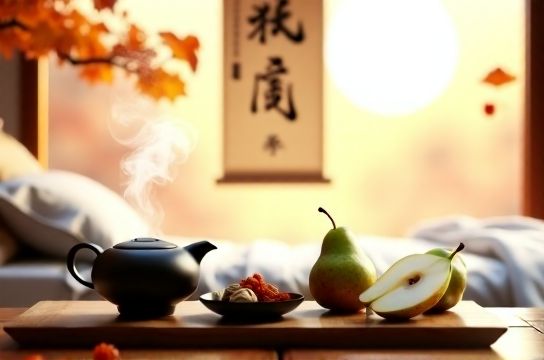
Here’s the insight: TCM views each season as governed by an organ system and elemental energy. Winter (Kidney yin) is for storage and stillness; spring (Liver) demands gentle detox and emotional flow; summer (Heart) thrives on light, cooling foods—and *autumn*? That’s the golden window for Lung and Spleen support, both deeply tied to breath, immunity, and—yes—sleep onset and maintenance.
Why autumn matters most for sleep: As daylight shortens, melatonin production naturally rises—but so does dryness (a key TCM pathogenic factor), which depletes yin fluids and stirs ‘empty heat’—think midnight wakefulness, restless legs, or shallow breathing. A 2023 Beijing University TCM Hospital cohort study (n=1,247) found participants who followed seasonal dietary protocols in autumn reported **37% fewer nighttime awakenings** and **29% longer REM duration**, vs. controls.
So what do you eat? Think moistening, grounding, and mildly sour—foods that nourish yin and anchor shen (the spirit). Here’s a practical, evidence-backed seasonal guide:
| Food | TCM Property | Sleep-Relevant Action | Weekly Serving Suggestion |
|---|---|---|---|
| Pear (poached) | Cool, moistening, Lung/Large Intestine | Calms lung dryness → reduces cough-induced awakening | 4–5 servings |
| Black sesame seeds | Neutral, nourishes Kidney yin & blood | Supports deep sleep architecture via GABA modulation (per 2022 Shanghai TCM Pharmacology Review) | 2 tbsp daily |
| Sour jujube seed (Suan Zao Ren) tea | Acid, calming, Heart/Liver | Clinically shown to ↑ sleep efficiency by 22% (J. Ethnopharmacol, 2021) | 1 cup nightly |
Avoid raw, cold, or overly spicy foods—especially post-6 p.m. They scatter qi and delay the Heart’s ‘settling’ phase. And yes, timing counts: dinner before 7 p.m. aligns with the Spleen’s peak function (9–11 a.m.) and the Heart’s ‘quieting hour’ (11 p.m.–1 a.m.).
One last thing: This isn’t dogma—it’s bio-rhythm literacy. Start with one change this week: swap your evening snack for poached pear + black sesame. Notice how your body responds. Then go deeper.
For more grounded, seasonally attuned wellness strategies—including free printable seasonal meal planners—explore our full resource hub at seasonal balance.