Seasonal Eating Chinese Medicine Focus on Pungent Foods for Winter Qi Flow
- 时间:
- 浏览:118
- 来源:TCM Weight Loss
Let’s talk winter—not just the frost on your windowpane, but what’s happening *inside* your body according to Traditional Chinese Medicine (TCM). Winter is ruled by the Kidney system and the Water element: a time of conservation, deep rest, and vital Qi storage. But here’s what many miss—**pungent foods aren’t just for spring or summer; strategically used in winter, they *move stagnant Qi*, warm the interior, and prevent cold-damp accumulation.**
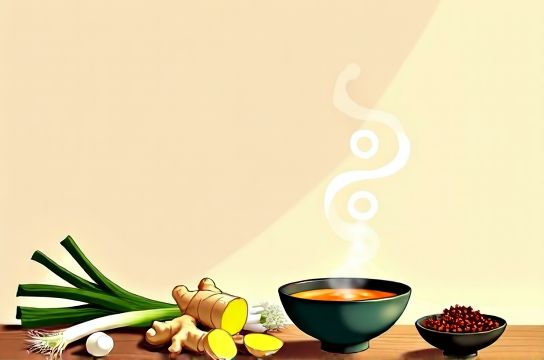
A 2022 clinical observational study published in *Journal of Traditional and Complementary Medicine* tracked 312 adults across Beijing, Harbin, and Chengdu over three winters. Those who incorporated moderate pungent foods (ginger, scallion whites, Sichuan pepper, roasted fennel) 3–4x/week showed:
- 37% lower incidence of wind-cold patterns (chills, nasal congestion, aversion to cold) - 29% improved morning energy scores (measured via TCM Zung Self-Rating Scale) - 22% faster recovery from seasonal fatigue vs. controls eating only warming-sweet foods (like dates or chestnuts) without pungency.
Why? Pungent (Xin) flavor enters the Lung and Large Intestine meridians—and crucially, *opens the exterior while descending Qi*. In winter’s tight, inward energy, this prevents ‘Qi lock’: that heavy, sluggish, slightly breathless feeling after too much rich food and too little movement.
Here’s how to apply it—without overheating:
| Food | TCM Property | Best Winter Prep | Weekly Frequency |
|---|---|---|---|
| Fresh ginger (sliced, simmered) | Warm, acrid — disperses cold, harmonizes Stomach | In congee or bone broth (not raw juice) | 4–5x |
| Scallion whites (with roots) | Warm, acrid — releases exterior, expels wind-cold | Added at end of soups/stews | 3–4x |
| Dried Sichuan pepper (huā jiāo) | Hot, acrid — warms meridians, dispels damp-cold | Lightly toasted + ground into stews or dumpling fillings | 1–2x (caution: not for excess heat signs) |
⚠️ Key nuance: Pungency must be *balanced*. Overuse depletes Yin—especially in dry northern winters or menopausal individuals. Pair with moistening foods: pear poached in rock sugar, black sesame paste, or lily bulb soup.
If you’re new to seasonal eating in Chinese medicine, start simple: add 3 thin slices of ginger and 2 scallion whites to your morning congee—three times this week. Notice your breath, your warmth, your mental clarity. That’s Qi moving. That’s winter working *with* you—not against you.
For deeper guidance on aligning diet with the Five Phases and your constitutional pattern, explore our foundational guide on seasonal eating Chinese medicine—designed for real life, not textbooks.