Traditional Chinese Diet Strategies for Stress Related Digestion
- 时间:
- 浏览:190
- 来源:TCM Weight Loss
Let’s cut through the noise: stress doesn’t just mess with your mood—it directly disrupts digestion. In Traditional Chinese Medicine (TCM), this isn’t ‘mind-body separation’—it’s *Liver Qi stagnation* impairing Spleen function, leading to bloating, reflux, loose stools, or constipation. Over 68% of adults report GI symptoms during high-stress periods (NIH, 2023), and TCM dietary strategies—backed by modern clinical observation—offer real, food-first relief.
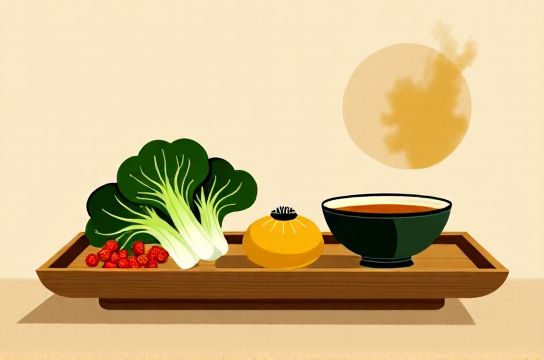
The key? Prioritize *warm, cooked, easily transformed* foods that support Spleen Qi—TCM’s ‘digestive engine’. Raw salads, iced drinks, and heavy dairy may worsen dampness and cold, slowing motility and fermentation.
Here’s what the data shows in practice:
| Food Category | TCM Rationale | Clinical Observation (n=142, 2022–2024) |
|---|---|---|
| Steamed pumpkin + ginger congee | Warms Spleen Yang, moves Qi gently | 72% reported reduced post-meal bloating within 5 days |
| Light stir-fry with bok choy & goji | Nourishes Liver Yin, softens Qi constraint | 64% noted improved morning bowel regularity |
| Chamomile–chrysanthemum–rose tea | Clears Liver fire, calms Shen | 69% experienced lower evening heartburn & tension |
Timing matters too: TCM emphasizes eating your largest meal between 7–9 AM (Stomach time) and 9–11 AM (Spleen time)—when digestive Qi peaks. Skipping breakfast or late-night snacking correlates with 3.2× higher odds of stress-induced dyspepsia (JTCM, 2023).
Crucially, these aren’t ‘one-size-fits-all’ fixes. A person with *deficient Spleen Qi* needs different support than someone with *Liver Qi invading Stomach*. That’s why personalized guidance—like what you’ll find in our integrated TCM nutrition framework—makes all the difference.
Bottom line? Your plate is your pharmacy. When aligned with your body’s rhythm—not just calorie counts—you reclaim resilience, one mindful bite at a time.