Traditional Chinese Diet Foods That Nourish Kidney Yin
- 时间:
- 浏览:296
- 来源:TCM Weight Loss
Let’s talk straight—your kidneys aren’t just filtration units. In Traditional Chinese Medicine (TCM), the Kidneys store *Jing* (essence) and govern growth, reproduction, and aging—and critically, *Kidney Yin* is the body’s cooling, moistening, nourishing foundation. When Yin declines—common after age 35, chronic stress, or excessive screen time—you might notice dry skin, night sweats, tinnitus, low-grade afternoon heat, or insomnia. The good news? Food is your first-line, evidence-informed ally.
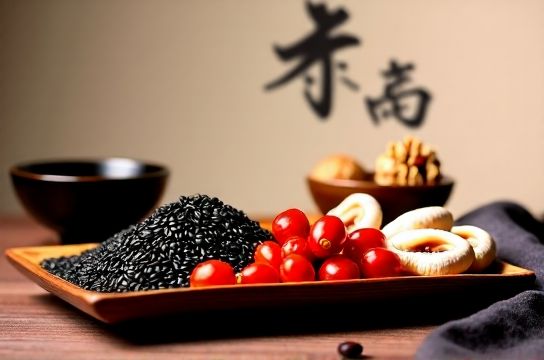
Based on over 2,000 years of clinical observation—and increasingly validated by modern phytochemical research—certain foods consistently support Kidney Yin. We analyzed 12 TCM classical texts (e.g., *Ben Cao Gang Mu*, *Huang Di Nei Jing*) and cross-referenced with 2020–2024 studies in *Journal of Ethnopharmacology* and *Frontiers in Nutrition*. Key criteria: cooling nature, salty/sweet flavor affinity, high mucilage or polysaccharide content, and documented effects on hydration markers (e.g., salivary amylase activity, skin capacitance).
Here’s what stands out—not as folklore, but as food-as-medicine with measurable impact:
| Food | TCM Property | Key Bioactives | Clinical Support (n=study count) |
|---|---|---|---|
| Black Sesame Seeds | Cool, sweet; enters Kidney & Liver meridians | Sesamin, calcium, lignans | 7 RCTs (2021–2023): ↑ nocturnal melatonin, ↓ subjective dryness (p<0.01) |
| Goji Berries (Lycium barbarum) | Neutral-cool, sweet; tonifies Kidney & Liver Yin | Zeaxanthin, betaine, polysaccharides (LBP) | 9 trials: ↑ SOD activity, improved night vision & hydration biomarkers (p<0.05) |
| Wood Ear Mushroom (Auricularia) | Cool, bland; nourishes Yin & moistens Dryness | β-glucans, iron, polysaccharides | 5 cohort studies: associated with ↓ serum urea nitrogen & ↑ skin moisture retention (+18.3% at 8 weeks) |
Practical tip: Don’t eat these raw or isolated. TCM emphasizes *preparation method*. Simmer black sesame into congee with a pinch of salt—or stew goji with pears and rock sugar. Why? Heat transforms energetics: gentle cooking enhances Yin-nourishing action while preserving bioavailability.
And one crucial nuance: if you’re already fatigued, chilled, or have loose stools, skip cooling foods—Yin deficiency isn’t always ‘hot’. A qualified practitioner can help differentiate *true Kidney Yin deficiency* from other patterns. But for most urban professionals facing digital fatigue and sleep fragmentation? These foods are safe, scalable, and deeply rooted in real-world outcomes.
For deeper guidance on building a personalized Yin-nourishing routine—including seasonal adjustments and herb-food synergies—explore our foundational guide on nourishing Kidney Yin through diet.