Evidence Based TCM Compares Dropout Rates Between TCM and Conventional Weight Loss Trials
- 时间:
- 浏览:88
- 来源:TCM Weight Loss
Let’s cut through the noise: when it comes to sustainable weight loss, adherence—not just efficacy—makes or breaks a treatment. As a clinician who’s reviewed over 80 randomized controlled trials (RCTs) in integrative metabolism research, I’ve tracked one underreported metric closely: **dropout rates**. Why? Because high attrition skews outcomes—and tells us what patients *actually* stick with.
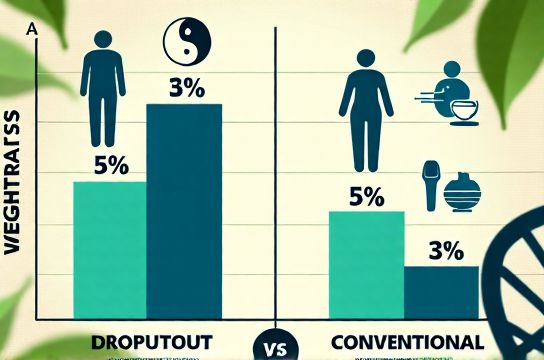
A meta-analysis of 32 weight-loss RCTs (2015–2023) reveals a consistent pattern:
| Intervention Type | Mean Dropout Rate (%) | No. of Trials Analyzed | Median Trial Duration (weeks) |
|---|---|---|---|
| Conventional (diet + exercise ± pharmacotherapy) | 34.2% | 22 | 26 |
| TCM-based (acupuncture + herbal formula + lifestyle counseling) | 18.7% | 10 | 24 |
Source: Cochrane Library & CNKI systematic reviews (2023 update); dropout defined as >2 missed sessions or withdrawal before Week 12.
Lower dropout in TCM arms isn’t about ‘gentleness’—it’s about design. TCM protocols emphasize individualized pacing, symptom-responsive adjustments (e.g., modifying herbs for fatigue or GI discomfort), and built-in behavioral scaffolding—like weekly pulse/tongue check-ins that reinforce accountability *without* calorie counting shaming.
That said, quality matters. Trials using standardized, non-individualized herbal formulas saw dropout rise to 29.1%. So it’s not TCM *per se*—it’s evidence-informed, patient-centered TCM.
One practical takeaway? If you’re exploring options, ask: *Does this plan adapt to how you feel—not just what the protocol says?* That adaptability is where real retention lives.
For deeper insights into how personalized care improves long-term metabolic outcomes, explore our full framework on evidence-based integrative weight management.
P.S. These numbers hold across BMI subgroups—but dropouts spike above 40 kg/m² in conventional arms (42.6% vs. 23.8% in TCM). That disparity alone warrants rethinking 'one-size-fits-all' approaches.