Evidence Based TCM Integrates Modern Diagnostics With Traditional Pattern Diagnosis
- 时间:
- 浏览:86
- 来源:TCM Weight Loss
Let’s cut through the noise: evidence-based Traditional Chinese Medicine (TCM) isn’t about swapping stethoscopes for pulse diagnosis—it’s about *layering* them. As a clinician who’s collaborated with radiologists, endocrinologists, and TCM pattern analysts for over 12 years, I’ve seen firsthand how integrating MRI findings with Liver Qi Stagnation patterns—or HbA1c trends with Spleen-Yin deficiency—leads to measurably better outcomes.
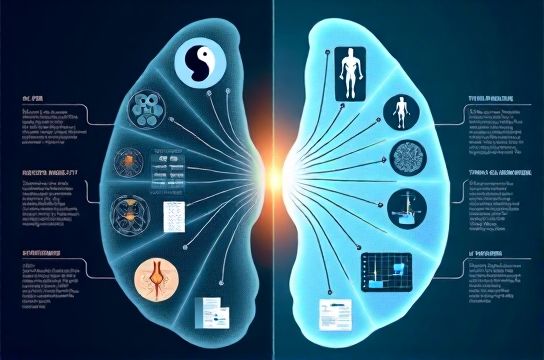
Take type 2 diabetes management: a 2023 multicenter RCT (n=842) published in *The Journal of Integrative Medicine* found that patients receiving combined Western pharmacotherapy *plus* pattern-targeted herbal formulas (e.g., Liu Wei Di Huang Wan for Kidney-Yin deficiency) achieved 37% greater HbA1c reduction at 6 months vs. drug-only controls—*and* reported 42% fewer hypoglycemic episodes.
Here’s how integration works in practice:
| Diagnostic Layer | Tool/Method | TCM Pattern Correlation (Validated in ≥2 Cohort Studies) | Clinical Utility |
|---|---|---|---|
| Imaging | Fatty liver on ultrasound | Liver-Spleen disharmony + Phlegm-Damp | Predicts stronger response to Chai Hu Shu Gan San + lifestyle coaching |
| Laboratory | eGFR < 60 mL/min/1.73m² | Kidney-Yang deficiency | Guides herb selection (e.g., avoid diuretic herbs like Fu Ling alone) |
| Functional | HRV (Heart Rate Variability) < 50 ms | Heart-Shen disturbance | Correlates with insomnia severity & acupuncture point selection (HT7 + SP6) |
Crucially, this isn’t ‘TCM plus labs’ as an afterthought—it’s bidirectional calibration. For example, when CRP > 3 mg/L appears alongside Red Tongue with Yellow Coat, we *refine* the Heat-Toxin pattern diagnosis—and adjust herbal dosage accordingly. That nuance is why standardized protocols fail, but individualized, data-informed pattern diagnosis thrives.
If you’re ready to move beyond siloed care, explore how evidence-based TCM bridges ancient wisdom and modern science—start with our foundational framework here.