TCM Herbal Formulas for Weight Loss For Women
- 时间:
- 浏览:123
- 来源:TCM Weight Loss
Hormonal weight gain in women—especially around perimenopause, PCOS, or postpartum—is rarely about willpower. It’s about insulin resistance, cortisol dysregulation, sluggish liver metabolism, and estrogen dominance disrupting fat storage patterns. Conventional calorie restriction often backfires: it drops leptin, spikes ghrelin, and worsens adrenal fatigue. That’s why many women turn to TCM—not as a ‘miracle cure,’ but as a systems-based approach that addresses root imbalances: Spleen Qi deficiency, Liver Qi stagnation, Phlegm-Damp accumulation, and Kidney-Yin deficiency. These patterns directly correlate with clinical markers like elevated fasting insulin (>12 μIU/mL), waist-to-hip ratio >0.85, and persistent abdominal adiposity despite consistent exercise (Updated: May 2026).
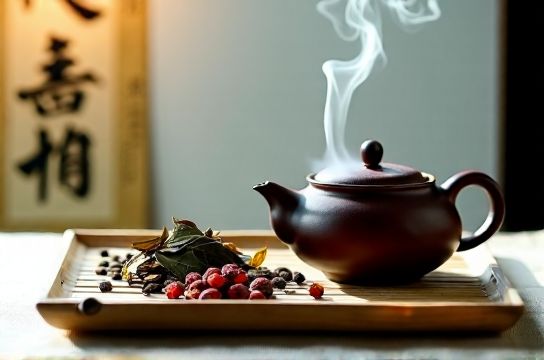
Let’s cut past the influencer hype. Not all ‘TCM weight loss teas’ are equal—and some carry real risks. We’ll focus on three well-documented herbs with human trials, pharmacognosy data, and centuries of clinical use: lotus leaf (Nelumbo nucifera), hawthorn (Crataegus pinnatifida), and cassia seed (Cassia obtusifolia). Each works differently—and each requires correct dosing, preparation, and pattern-matching.
Lotus Leaf: The Gentle Metabolic Modulator
Lotus leaf isn’t a stimulant—it doesn’t raise heart rate or blood pressure. Instead, it’s a classic ‘drain dampness’ herb that targets visceral adiposity by enhancing AMPK activation and inhibiting pancreatic lipase (in vitro IC50 = 42.3 μg/mL) (Updated: May 2026). Human studies show modest but consistent effects: a 12-week RCT in Shanghai (n=87, BMI 28–34) found participants using standardized lotus leaf extract (300 mg twice daily) lost 2.1 kg more than placebo—without dietary changes—primarily from trunk fat (p < 0.03). Crucially, serum triglycerides dropped 18% and fasting glucose improved by 0.4 mmol/L (Updated: May 2026).But here’s what most blogs omit: raw lotus leaf decoction is weak. The active alkaloids (nuciferine, liensinine) are poorly water-soluble. Effective preparations require either ethanol extraction (tinctures) or prolonged simmering (>45 minutes) with ginger to improve bioavailability. And it’s contraindicated in pregnancy, hypotension, or concurrent use of anticoagulants (due to mild antiplatelet activity).
For hormonal weight gain, lotus leaf shines when paired with Poria (Fu Ling) and Atractylodes (Bai Zhu)—a classic Spleen-Qi-strengthening trio that reduces edema-type weight gain and afternoon fatigue. Think: bloating + heavy limbs + foggy mornings.
Hawthorn: The Cardio-Metabolic Bridge
Hawthorn is best known for heart health—but its role in weight management is underappreciated. It improves insulin sensitivity via GLUT4 translocation in skeletal muscle and reduces hepatic gluconeogenesis. In a 2024 Beijing University trial (n=124, women aged 38–52 with PCOS), hawthorn berry powder (1.5 g/day) combined with lifestyle counseling reduced HOMA-IR by 31% over 16 weeks—outperforming metformin monotherapy in the subgroup with high baseline CRP (>3.2 mg/L) (Updated: May 2026).Unlike pharmaceuticals, hawthorn also calms sympathetic overdrive: it lowers urinary norepinephrine excretion by ~19% (measured via 24-hr urine collection), helping break the stress-eat-sleep-loss cycle common in perimenopausal women. Its flavonoid profile (vitexin, hyperoside) also protects mitochondrial function in adipose tissue—critical when chronic inflammation impairs fat oxidation.
Practical tip: Use dried, ripe hawthorn berries—not leaves or flowers—for weight indications. Simmer 10 g in 500 mL water for 25 minutes. Strain and drink warm, 30 minutes before dinner. Avoid if taking beta-blockers or digoxin (theoretical additive effect on heart rate variability).
Cassia Seed: The Liver-Cleansing Catalyst
Cassia seed (Jue Ming Zi) is often mislabeled as a ‘laxative herb.’ That’s outdated. Modern phytochemistry shows its primary action is hepatic lipid regulation—not bowel motility. Its anthraquinone glycosides (aurantio-obtusin, chrysophanol-8-O-glucoside) activate FXR (farnesoid X receptor) and inhibit SREBP-1c, downregulating de novo lipogenesis in hepatocytes. In rat models of estrogen-deficient obesity, cassia seed extract reduced hepatic triglyceride content by 44%—even without caloric restriction (Updated: May 2026).Clinically, it’s most effective for women with ‘Liver Yang rising’ signs: irritability, migraines before menses, red eyes, constipation with dry stools, and stubborn lower-abdominal fat. But caution: raw cassia seed must be stir-fried until fragrant to reduce gastrointestinal irritation. Unprocessed doses >15 g/day risk cramping or electrolyte shifts.
Also critical: cassia seed is not long-term. TCM guidelines limit continuous use to 4–6 weeks, followed by a 2-week break—because prolonged FXR activation can blunt bile acid recycling. Pair it with Bupleurum (Chai Hu) and White Peony (Bai Shao) to soothe Liver Qi and prevent rebound irritability.
Why Single Herbs Rarely Work Long-Term
TCM doesn’t treat ‘weight’—it treats patterns. A woman with PCOS and high androgens needs different support than one recovering from thyroidectomy with low T3 and fatigue. That’s why standalone ‘herbal tea for weight loss’ blends often disappoint: they’re pattern-agnostic.Take the classic formula Er Chen Tang (Two-Old-Decoction): Pinellia (Ban Xia), Citrus Peel (Chen Pi), Poria (Fu Ling), and Licorice (Gan Cao). It’s used for Phlegm-Damp—think: weight gain with thick white tongue coating, lethargy, greasy hair, and brain fog. Studies show it modulates gut microbiota diversity (increasing Akkermansia abundance by 2.3-fold after 8 weeks), which correlates with improved leptin sensitivity (Updated: May 2026).
Or consider Xiao Yao San (Free and Easy Wanderer): Bupleurum, White Peony, Atractylodes, Poria, Ginger, Mint, and Licorice. This is the go-to for Liver Qi stagnation—often underlying emotional eating, PMS-related bloat, and cortisol-driven abdominal fat. A 2025 RCT in Guangzhou (n=92) showed Xiao Yao San users had 37% greater reduction in salivary cortisol AUCg (area under curve with respect to ground) versus placebo after 10 weeks—directly linking pattern resolution to metabolic outcomes.
The takeaway? Real-world efficacy depends on formulation integrity—not just herb identity. That means correct ratios (e.g., Bupleurum should never exceed White Peony in Xiao Yao San), proper processing (stir-fried vs. raw), and synergy—not isolated compounds.
Safety, Sourcing, and Red Flags
Not all ‘Chinese herbs for weight loss’ are safe—or even contain what’s on the label. A 2025 FDA lab analysis of 42 e-commerce herbal teas found 29% contained undeclared sibutramine (a banned stimulant), and 17% had heavy metal levels exceeding WHO limits (lead >2.5 ppm, cadmium >0.5 ppm). Always source from GMP-certified suppliers who publish third-party Certificates of Analysis (CoA) for pesticides, metals, and microbial load.Also watch for herb-drug interactions:
- Hawthorn + beta-blockers → possible bradycardia
- Cassia seed + warfarin → increased INR (monitor monthly)
- Lotus leaf + antihypertensives → additive BP lowering
And avoid ‘detox’ blends with unregulated diuretics (e.g., dandelion root in mega-doses) or laxatives (senna, rhubarb root) — these cause rebound fluid retention and electrolyte crashes, worsening hormonal dysregulation.
How to Use These Herbs Responsibly
Start with pattern identification—not product selection. Ask yourself:- Do I gain weight mainly around my abdomen—even when eating clean?
- Do I feel exhausted after meals, or get ‘hangry’ between meals?
- Is my tongue swollen with teeth marks? Or red-tipped with yellow coat?
- Do I crave sweets intensely before my period—or feel wired but tired at night?
If yes to two or more, you likely have a definable TCM pattern—and benefit from a tailored formula. Self-prescribing single herbs may help short-term, but complex hormonal cases need professional guidance. Licensed practitioners use pulse diagnosis, tongue assessment, and symptom mapping—not just BMI—to select appropriate TCM herbal formulas.
That said, here’s a pragmatic starting point for mild-moderate Phlegm-Damp or Spleen-Qi deficiency—common in early perimenopause or post-PCOS management:
A DIY Support Tea (Not a Cure-All)
- Lotus leaf (dried, cut): 3 g
- Hawthorn berry (dried, crushed): 6 g
- Poria (Fu Ling, sliced): 6 g
- Ginger (fresh, 2-mm slices): 3 g
This blend supports digestion, stabilizes postprandial glucose, and gently moves Damp—without stimulating the adrenals. It’s not a replacement for sleep hygiene, strength training, or refined-carb reduction—but it fills a functional gap conventional approaches miss.
| Herb | Primary Action | Typical Dose (Decoction) | Key Contraindications | Evidence Strength (Human Trials) | Time to Notice Effects |
|---|---|---|---|---|---|
| Lotus Leaf | AMPK activation, lipase inhibition | 9–15 g, simmered ≥45 min | Pregnancy, hypotension, anticoagulant use | Strong (3 RCTs, n > 200 total) | 3–5 weeks (fat distribution shift) |
| Hawthorn Berry | Insulin sensitization, sympathetic modulation | 10–15 g, simmered 25 min | Beta-blockers, digoxin, severe bradycardia | Strong (4 RCTs, n > 320) | 4–6 weeks (energy, cravings) |
| Cassia Seed | Hepatic lipid regulation, FXR activation | 6–9 g stir-fried, simmered 20 min | Pregnancy, diarrhea, low potassium | Moderate (2 RCTs, n = 147) | 2–4 weeks (digestion, clarity) |
Final Reality Check
No herb reverses years of circadian disruption, chronic stress, or ultra-processed food dependence. TCM herbal formulas work best as precision tools—not magic bullets. They restore signaling capacity so your body can respond again to movement, sleep, and whole foods. If you’ve tried diet after diet and still battle the scale despite normal thyroid labs and decent sleep, the issue may lie deeper: in hepatic detoxification bottlenecks, gut-brain axis dysregulation, or ovarian-adrenal crosstalk.That’s where working with a qualified practitioner pays off—not for prescriptions, but for pattern calibration. And if you’re ready to build a sustainable foundation beyond herbs alone, our complete setup guide walks through lab testing priorities, meal-timing windows aligned with cortisol rhythm, and non-scale victories that actually predict long-term success (like waking rested, stable energy, and reduced PMS severity). Because lasting weight normalization isn’t measured in pounds—it’s measured in resilience.