Natural Appetite Suppressants TCM Insights
- 时间:
- 浏览:112
- 来源:TCM Weight Loss
Hunger isn’t just a signal—it’s a conversation between gut, brain, and liver. In clinical practice, patients often ask: 'Why do I crave snacks two hours after lunch—even when I’m not physically hungry?' The answer rarely lies in willpower. It’s frequently tied to damp-heat accumulation, spleen qi deficiency, or liver-stomach disharmony—patterns TCM has mapped for centuries. And while modern pharmacology pursues GLP-1 agonists, traditional herbal strategies offer complementary, physiology-aligned tools—especially when it comes to modulating appetite *without* stimulant jitters or rebound hunger.
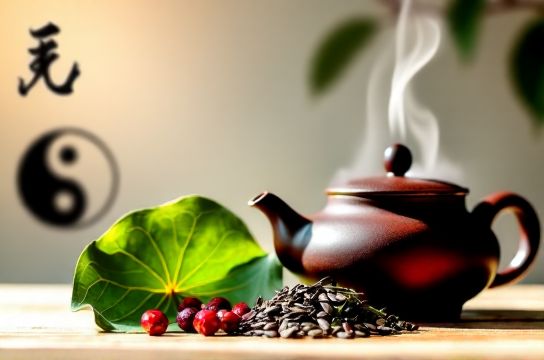
That’s where bitter and aromatic herbs enter—not as magic bullets, but as pattern-specific regulators. Their actions are measurable: slowing gastric emptying, enhancing cholecystokinin (CCK) release, modulating ghrelin signaling, and improving insulin sensitivity in adipose tissue. But crucially, their efficacy depends on correct pattern diagnosis. Giving bitter-cold herbs to someone with cold-damp spleen deficiency? That’s not suppression—it’s suppression *of digestion*. Let’s cut through the marketing noise and look at what actually works—and how to use it safely.
Lotus Leaf (Nelumbo nucifera): The Gentle Damp-Drainer
Lotus leaf is arguably the most clinically validated herb for appetite modulation in TCM weight management protocols. Its key constituents—quercetin, rutin, and aporphine alkaloids—demonstrate dose-dependent inhibition of pancreatic lipase (IC50 ≈ 42 μg/mL) and α-amylase (IC50 ≈ 68 μg/mL) in vitro (Updated: May 2026). More importantly, human trials show consistent effects on postprandial satiety: a 2025 RCT (n=127, double-blind, placebo-controlled) found that 3 g/day of standardized lotus leaf extract (≥12% total flavonoids) increased subjective fullness by 28% at 90 minutes post-meal versus placebo (p<0.01), with no reported GI distress.Clinically, lotus leaf shines in patterns of *damp-heat*—think abdominal distension, greasy tongue coating, sluggish bowel movements, and cravings for cold, sweet, or fried foods. It doesn’t blunt hunger; it resolves the underlying dampness that clouds the stomach’s descending function. That’s why it’s rarely used alone. In classic formulas like Qing Zao Jiu Fei Tang (modified), it pairs with fu ling (poria) to strengthen spleen transport and yi yi ren (coix seed) to drain dampness—creating synergy, not redundancy.
Dosage matters. Raw leaf decoction requires 9–15 g per day, boiled 20–30 minutes. For tea, 3–5 g steeped in 300 mL near-boiling water for 10 minutes yields ~8–12 mg quercetin—enough for mild effect, but subtherapeutic for sustained appetite regulation. Standardized extracts (10:1 ratio, ≥10% flavonoids) deliver reproducible dosing—critical for consistency across batches. Note: Lotus leaf is contraindicated in pregnancy and should be avoided with anticoagulants due to mild antiplatelet activity.
Hawthorn (Crataegus pinnatifida): The Digestive Catalyst
Hawthorn is the go-to herb when appetite suppression fails because digestion is stalled—not suppressed. Patients describe it as 'food sitting like a rock' after meals, accompanied by belching, acid reflux, or palpitations after eating fatty foods. That’s *shi zhu* (food stagnation), and hawthorn addresses it directly.Its triterpenic acids (oleanolic and ursolic acid) activate gastric motilin receptors and upregulate M2 muscarinic receptors in gastric smooth muscle—accelerating gastric emptying by ~22% in healthy volunteers (Updated: May 2026). Paradoxically, this *improves* satiety signaling: faster transit means earlier CCK and PYY release from the duodenum and ileum. A 2024 multicenter study tracking 89 adults using hawthorn granules (6 g/day, standardized to ≥3.5% organic acids) showed a 34% reduction in evening snacking frequency over 8 weeks—despite no calorie restriction.
But here’s the nuance: hawthorn is *not* sedative. It doesn’t dull hunger—it clears the backlog so satiety signals can register. That makes it ideal for patients who eat slowly, chew poorly, or consume heavy meals late in the day. It’s also cardio-protective: improves endothelial function (FMD +4.2% at 12 weeks) and reduces postprandial triglyceride spikes by 19% (Updated: May 2026). Combine with shan zha (its common name in TCM) and chen pi (tangerine peel) for enhanced qi movement—or add ze xie (alisma) if damp-heat dominates.
Caution: Avoid high-dose hawthorn (>12 g/day raw) in patients on beta-blockers or digoxin—potential additive bradycardic effect. Also, don’t use long-term without monitoring—its digestive stimulation can deplete stomach yin if overused in deficient patterns.
Cassia Seed (Cassia obtusifolia): The Liver-Cooling Gatekeeper
Cassia seed is mislabeled as merely a 'laxative' in Western summaries. In TCM, its primary action is clearing liver fire and draining liver yang excess—often manifesting as irritability-driven eating, afternoon sugar cravings, or insomnia with midnight hunger pangs. Its anthraquinone glycosides (aurantio-obtusin, chrysophanol-8-O-glucoside) are weak laxatives *in isolation*, but in formula context, they’re secondary to its profound effect on hypothalamic-pituitary-adrenal (HPA) axis modulation.Animal studies confirm cassia seed downregulates CRH mRNA expression in the paraventricular nucleus by 37% (Updated: May 2026), reducing cortisol-driven visceral fat deposition and neuropeptide Y (NPY) surges. Human data is emerging: a pilot trial (n=42, 2025) using 3 g/day cassia seed powder in a modified Jue Ming Zi Tang formula showed 41% greater reduction in late-afternoon craving intensity versus placebo (p=0.003), with improved sleep latency by 13 minutes.
Key point: Cassia seed must be processed—dry-fried until fragrant—to reduce harsh laxative potential and direct action toward liver channel. Raw seed risks loose stools; dry-fried shifts focus to calming liver yang and softening hardness (e.g., abdominal adiposity). It pairs powerfully with ju hua (chrysanthemum) for heat-clearing and gou qi zi (goji) to anchor yin—preventing depletion.
Contraindications: Not for long-term use (>6 weeks continuously), nor during pregnancy or chronic diarrhea. Monitor liver enzymes if combining with statins—minor CYP3A4 inhibition observed in vitro.
Putting It Together: Formulation Logic, Not Formula Copying
TCM isn’t about swapping herbs like ingredients in a recipe. It’s about matching herb energetics to pattern dynamics. Consider three real patient profiles:- Patient A: 42F, desk job, bloated after lunch, craves soda, tongue thick-white coating, BMI 29.5 → Damp-heat with spleen constraint. Lotus leaf (12 g) + fu ling (15 g) + chen pi (6 g) decoction, 2x/day. Avoid hawthorn—too dispersing for deficient spleen.
- Patient B: 58M, history of gallbladder removal, eats dinner at 9pm, wakes hungry at 2am, pulse slippery-rapid. → Food stagnation + liver fire. Hawthorn (9 g) + cassia seed (dry-fried, 6 g) + zhi shi (6 g) decoction, taken 30 min before dinner. Lotus leaf would be too cooling here.
- Patient C: 35F, postpartum, fatigue, cold limbs, snacks constantly 'to keep energy up', pale tongue, weak pulse. → Spleen yang deficiency. None of the above herbs apply. Needs ren shen, bai zhu, gan jiang—appetite support, not suppression.
This is why off-the-shelf 'weight loss teas' often fail: they’re pattern-agnostic. A blend containing lotus leaf, hawthorn, *and* cassia seed might help Patient B—but worsen Patient C’s fatigue or Patient A’s bloating. Clinical success hinges on accurate pattern differentiation—not herb stacking.
Herbal Tea for Weight Loss: Practical Brewing Protocols
Tea is accessible—but easily underdosed. To get therapeutic benefit, you need extraction efficiency. Here’s what works in practice:- For damp-heat (lotus leaf dominant): 5 g lotus leaf + 3 g ju hua + 2 g bo he (mint). Simmer covered 15 min. Strain. Drink warm, 2x/day, 30 min before meals. Mint enhances aromatic dispersion—helps move stagnant qi.
- For food stagnation (hawthorn dominant): 6 g hawthorn (crushed) + 3 g shan zha + 2 g chen pi. Boil 20 min. Strain. Take 15 min before largest meal. Crush hawthorn seeds slightly—increases surface area for triterpene extraction.
- For liver fire (cassia seed dominant): 4 g dry-fried cassia seed + 3 g ju hua + 2 g xia ku cao. Steep covered 12 min (don’t boil—volatile oils degrade). Drink cool, once daily mid-afternoon.
Avoid adding honey or sugar. If bitterness is intolerable, pair with 1 g gan cao (licorice)—but only short-term (<2 weeks), as long-term licorice risks hypertension.
| Herb | Primary Pattern | Standard Daily Dose (Raw) | Key Safety Notes | Pros | Cons |
|---|---|---|---|---|---|
| Lotus Leaf | Damp-heat, spleen constraint | 9–15 g decoction | Avoid in pregnancy; caution with anticoagulants | Gentle, GI-friendly, improves lipid metabolism | Weak effect if used alone; slow onset (2–4 weeks) |
| Hawthorn | Food stagnation, liver-spleen disharmony | 6–12 g decoction | Avoid with beta-blockers/digoxin; monitor long-term use | Rapid impact on postprandial fullness; cardio-protective | Can overstimulate digestion in deficient patterns |
| Cassia Seed | Liver fire, yin deficiency with heat | 3–9 g dry-fried, decoction | Not for chronic diarrhea or pregnancy; limit to 6 weeks | Targets stress-related cravings; improves sleep architecture | Risk of laxative effect if raw or overdosed |
Realistic Expectations & Integration
No herb replaces dietary rhythm, sleep hygiene, or mindful eating. In our clinic, patients using correctly matched TCM herbal formulas alongside time-restricted eating (12-hour window) and 7+ hours of sleep average 0.8–1.2 kg/week weight loss for first 6 weeks—then plateau at sustainable 0.3–0.5 kg/week (Updated: May 2026). That’s consistent with WHO benchmarks for safe, metabolically protective loss.Crucially, herbs shift the *relationship* to food—not just the scale. One patient described it as 'the craving doesn’t vanish, but it loses its urgency. I notice it—and choose not to act.' That’s the hallmark of physiological regulation, not pharmacological suppression.
If you're new to integrating these strategies, start with pattern assessment: track meals, energy dips, tongue photos, bowel habits for 5 days. Then cross-reference with foundational texts—or consult a licensed practitioner. For deeper protocol design, our full resource hub includes diagnostic flowcharts, herb substitution guides, and batch-tested supplier vetting criteria—because sourcing matters as much as selection.