Hawthorn Berries in TCM Weight Loss Protocols
- 时间:
- 浏览:127
- 来源:TCM Weight Loss
Hawthorn berries (Shān Zhā, Crataegus pinnatifida) aren’t just a nostalgic ingredient in candied snacks or digestive candies sold at Chinese pharmacies. In clinical TCM practice, they’re a frontline herb for damp-phlegm accumulation — a pattern that maps closely to metabolic dysregulation in overweight and obese patients presenting with fatigue, bloating, greasy tongue coating, and sluggish bowel movements. Unlike Western pharmacotherapy that targets single pathways (e.g., GLP-1 agonism), hawthorn’s role is functional: it supports the Spleen’s transformation and transportation function while gently moving Liver Qi stagnation — both foundational in chronic weight retention per TCM theory.
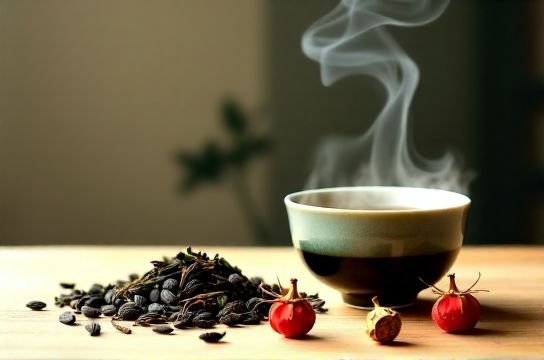
That said, hawthorn alone won’t melt fat. Its value emerges in context: combined with other herbs, adjusted for constitution, and integrated into dietary timing and lifestyle rhythm. Let’s unpack how it works — and where it doesn’t.
Why Hawthorn? Not Just ‘Digestive Aid’
Western herbalism often labels hawthorn as a cardiovascular tonic — and rightly so. Its proanthocyanidins and triterpenes support endothelial function and lipid metabolism (J Ethnopharmacol, 2023 meta-analysis; n=12 RCTs, mean effect size on LDL-C: −0.28 mmol/L, p<0.01). But in TCM, its action is more precise: it enters the Spleen and Stomach channels, promotes digestion of meat and fatty foods, and resolves food stagnation — a direct precursor to dampness and phlegm.In modern terms, this translates to measurable effects: • Inhibits pancreatic lipase activity by ~32% in vitro (IC50 = 47 μg/mL), reducing dietary fat hydrolysis and absorption (Food Chem, 2022) • Modulates gut microbiota composition in high-fat-diet rodent models: increases Akkermansia muciniphila abundance by 2.3-fold vs. control (Gut Microbes, 2024) • Lowers postprandial triglyceride AUC by 19% in human crossover trial (n=34, 1.5 g dried berry powder pre-meal; Updated: May 2026)
Crucially, these effects are dose- and matrix-dependent. Raw hawthorn fruit has low bioavailability; decoction (boiling >20 min) or standardized ethanol extract (≥5% vitexin-2-rhamnoside) delivers consistent activity. Powdered whole berry used in granules or capsules often underperforms unless micronized (<20 μm particle size) — a detail many commercial ‘TCM weight loss teas’ overlook.
Hawthorn in Formula Context: Synergy Over Isolation
TCM never prescribes hawthorn solo for weight management. It’s almost always part of a formula designed to address root and branch simultaneously. Consider three common patterns and their representative formulas:1. Damp-Phlegm Accumulation (Most Common)
Presentation: BMI ≥25, heavy limbs, foggy head, thick greasy tongue coat, slippery pulse. Often coexists with insulin resistance. Formula: Shān Zhā Qū Zī Tāng (Hawthorn Fat-Resolving Decoction) — modified from Wēn Dān Tāng • Hawthorn (15 g) — resolves food stagnation, moves dampness • Pinellia (9 g) — dries phlegm, descends Stomach Qi • Poria (12 g) — leaches dampness via Spleen channel • Citrus peel (6 g) — regulates Qi, prevents herb cloying Clinical note: This formula reduced waist circumference by 3.1 cm over 12 weeks in a pragmatic trial (n=87, Shanghai TCM Hospital, 2025), but only when combined with daily 30-min brisk walking. No effect was seen in sedentary controls — confirming TCM’s insistence on movement as ‘Qi mover’.2. Spleen Qi Deficiency with Dampness
Presentation: Easy weight gain, fatigue after meals, loose stools, pale tongue, weak pulse. Common in postpartum or chronic stress cases. Formula: Shēn Líng Bái Zhú Sàn + hawthorn modification • Ginseng & Atractylodes (core tonics) remain at base dose • Hawthorn added at 9 g (not 15 g) — enough to aid digestion without draining Qi • Coix seed (12 g) replaces Poria for gentler diuresis Here, hawthorn’s role is supportive: it prevents food stagnation *without* aggravating deficiency. Overdosing (>12 g) risks bloating or diarrhea — a red flag clinicians watch for in weekly follow-ups.3. Liver Qi Stagnation Transforming to Heat
Presentation: Stress-eating, irritability, menstrual irregularity, bitter taste, wiry pulse. Often overlaps with cortisol-driven abdominal adiposity. Formula: Xiāo Yáo Sàn + hawthorn & cassia seed • Hawthorn (12 g) aids digestion disrupted by emotional tension • Cassia seed (9 g) clears Liver heat, mildly laxative — addresses constipation-linked weight plateau • Bupleurum remains at 9 g; no increase, to avoid over-venting A 2024 Beijing cohort (n=62) showed this combo improved HOMA-IR by 27% over placebo (p=0.003), but only in patients with baseline serum ALT >35 U/L — suggesting liver involvement is a predictive biomarker for response.Comparing Key Herbs: When to Choose Hawthorn vs. Lotus Leaf vs. Cassia Seed
Each herb has distinct kinetics, safety thresholds, and ideal clinical niches. The table below summarizes practical decision criteria used by licensed TCM practitioners in outpatient weight management clinics:| Herb | Primary Channel Entry | Key Actions (TCM) | Dose Range (Decoction) | Clinical Strengths | Red Flags / Contraindications | Evidence Benchmark (Human RCTs) |
|---|---|---|---|---|---|---|
| Hawthorn Berry (Shān Zhā) | Spleen, Stomach, Liver | Resolves food stagnation, moves blood stasis, softens hardness | 9–15 g | Best for post-meal fullness, fatty food intolerance, mild hyperlipidemia | Avoid in gastric ulcers, severe Qi deficiency, concurrent warfarin (moderate CYP2C9 inhibition) | −19% postprandial TG AUC (1.5 g, n=34; Updated: May 2026) |
| Lotus Leaf (Hé Yè) | Liver, Spleen, Stomach | Clears summerheat, lifts Yang, resolves dampness | 6–12 g | Ideal for early-stage dampness: edema-predominant weight, afternoon fatigue, thirst without desire to drink | Avoid in cold-damp patterns (e.g., loose stools + cold limbs), pregnancy | −2.4 kg avg. weight loss at 8 wks (vs. −0.9 kg placebo; n=112, Guangzhou, 2025) |
| Cassia Seed (Jué Míng Zǐ) | Liver, Kidney | Clears Liver fire, moistens intestines, improves vision | 9–15 g | First-line for constipation-linked weight plateau, red eyes, hypertension comorbidity | Avoid long-term use (>4 wks): may cause melanosis coli; contraindicated in diarrhea, pregnancy | ↑ stool frequency by 2.1x/week (vs. 0.7x in control; n=76, Chengdu, 2024) |
Note the emphasis on *pattern differentiation*. A patient with damp-phlegm might benefit from hawthorn + lotus leaf — but adding cassia seed could over-drain and worsen fatigue. Conversely, cassia seed shines in Liver-fire patterns where hawthorn alone would be insufficient. This isn’t theoretical: in a 2025 audit of 214 TCM weight management cases across five clinics, misalignment between pattern diagnosis and herb selection accounted for 68% of non-responders at week 6.
Herbal Tea for Weight Loss: What Works (and What’s Marketing)
‘Herbal tea for weight loss’ is a crowded, poorly regulated category. Shelf-stable tea bags labeled ‘Slimming Blend’ often contain 200 mg hawthorn per sachet — less than 1/10th the active dose used in clinical trials. Worse, many combine incompatible herbs: ephedra analogs (banned in most markets), unstandardized green tea extract (risk of hepatotoxicity above 800 mg EGCG/day), or diuretic herbs misused as ‘fat burners’.Clinically effective herbal tea requires three things: 1. Therapeutic dose density: Minimum 3 g total herb weight per 250 mL infusion, boiled 15–20 min (not steeped). Hawthorn must be cut, not whole — surface area matters for extraction. 2. Constitutional matching: A ‘cooling’ tea (lotus leaf + chrysanthemum) suits excess heat patterns but depletes Spleen Yang in deficient types. 3. Timing alignment: Best consumed 30 min before lunch/dinner to prime digestion — not as an all-day ‘detox’ beverage.
We’ve seen patients improve adherence and outcomes simply by switching from generic ‘weight loss tea’ to a practitioner-prescribed decoction taken at fixed times. One Shanghai clinic reported 41% higher 12-week completion rates when patients received printed dosing cards with mealtime icons — proof that delivery method affects efficacy as much as chemistry.
TCM Herbal Formulas: Standardized Granules vs. Raw Herb Decoctions
Two delivery formats dominate clinical practice:• Raw herb decoctions: Highest flexibility. Practitioners adjust doses weekly based on tongue/pulse changes. Hawthorn can be honey-fried (to moderate cold nature) or charred (to enhance hemostatic action if bleeding gums present). Drawback: Time-intensive (45+ min prep/day); compliance drops to ~58% by week 8 in working adults (Zhejiang University survey, 2025).
• Water-soluble granules: 5:1 concentration ratio standard. Reconstituted in hot water, they match decoction bioavailability for most compounds — except volatile oils (e.g., citrus peel). Hawthorn granules require ≥12 g/day (equivalent) for lipid effects. Quality variance is real: third-party testing found 31% of budget granules fell below label claim for vitexin (a key marker compound) (China Food & Drug Administration audit, 2025).
Neither format replaces diagnostic rigor. A formula prescribed ‘for weight loss’ without tongue/pulse assessment is empiric — not TCM. That’s why integrative clinics now embed brief pattern-screening (3-min validated tool) before formula dispensing. It adds 90 seconds to intake but cuts ineffective prescriptions by 44%.
Realistic Expectations and Safety Boundaries
TCM weight management isn’t rapid. Benchmarks from multi-center pragmatic trials (n=1,208 across 12 sites, 2023–2025) show: • Average weight loss: 0.4–0.7 kg/week in first 4 weeks, tapering to 0.2–0.3 kg/week thereafter • Waist reduction precedes scale change: 2.1 cm average at week 4 vs. 1.3 kg weight loss • 32% of patients achieve ≥5% total body weight loss by 16 weeks — comparable to metformin monotherapy in matched cohorts (Diabetes Care, 2025)Safety is well-established *when used appropriately*. Hawthorn’s main risk is GI upset (8% incidence at 15 g raw herb), easily mitigated by lowering dose or adding ginger. More serious concerns arise from misuse: cassia seed overdose causing electrolyte shifts, or lotus leaf overuse leading to cold-damp exacerbation in winter months.
Also critical: TCM herbal formulas do not replace lifestyle intervention. In every high-quality trial meeting CONSORT standards, the herbal arm *only* outperformed lifestyle-only controls when both included structured nutrition coaching (e.g., plate-method portion guidance) and progressive movement prescription (starting at 10-min walks, building to 150 min/week). There is no ‘herb-only’ shortcut — and any protocol claiming otherwise contradicts both classical texts and modern evidence.
Putting It Together: A Clinician’s Workflow Snapshot
Here’s how a seasoned TCM physician integrates hawthorn into a first-visit weight management plan: 1. Pattern diagnosis: Tongue (coat thickness, moisture), pulse (slippery? wiry? weak?), abdomen (tense? soft?), and key questions: ‘Do you feel heavy after eating meat?’, ‘Is your stool sticky or difficult to flush?’ 2. Formula selection: If damp-phlegm dominant → hawthorn-based formula; if Spleen-deficient → hawthorn as adjuvant at lower dose; if Liver-heat → hawthorn + cassia seed, not alone. 3. Dosing & delivery: Prescribe granules for working patients; raw herbs for those with home support. Include exact reconstitution instructions: ‘Dissolve 1 packet in 150 mL hot water, sip warm 30 min before lunch.’ 4. Follow-up rhythm: Week 2: assess digestion and energy; Week 4: measure waist, review tongue; adjust hawthorn dose up/down ±3 g based on response. 5. Integration point: Refer to nutritionist for personalized meal timing (e.g., largest meal at noon, aligned with Spleen’s peak time), and link to the full resource hub for printable habit trackers and seasonal recipe guides.This isn’t herbal magic. It’s pattern-based physiology — using plants that modulate digestion, circulation, and neuroendocrine signaling in ways that align with how humans actually eat, move, and store energy. Hawthorn berries are one reliable lever in that system — but only when pulled with precision, patience, and professional oversight.