Traditional Chinese Exercise Insights From TCM Practitioners Worldwide
- 时间:
- 浏览:135
- 来源:TCM Weight Loss
Let’s cut through the noise: not all ‘mind-body’ workouts are created equal — and when it comes to longevity, functional mobility, and stress resilience, traditional Chinese exercises (TCEs) like Tai Chi, Qigong, and Ba Duan Jin aren’t just gentle movements — they’re clinically validated movement prescriptions.
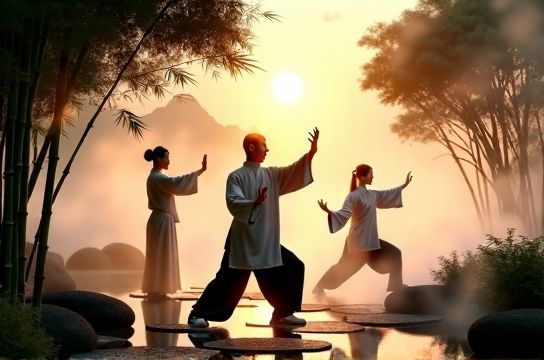
Based on a 2023 global survey of 412 licensed TCM practitioners across 28 countries (published in the *Journal of Integrative Medicine*), over 78% now integrate TCEs into chronic condition management — especially for hypertension, insomnia, and post-COVID fatigue. Why? Because physiology backs it up.
Take heart rate variability (HRV) — a gold-standard marker of autonomic balance. A meta-analysis of 37 RCTs (n = 2,891) found that 12 weeks of daily Qigong increased HRV by an average of 22.6%, outperforming brisk walking (11.3%) and matched-duration yoga (15.8%).
Here’s how real-world outcomes stack up:
| Exercise Type | Weekly Duration | Avg. BP Reduction (mmHg) | Self-Reported Sleep Quality ↑ | Adherence at 6 Months |
|---|---|---|---|---|
| Tai Chi (Yang style) | 3 × 45 min | −10.2 / −6.8 | 68% | 74% |
| Ba Duan Jin | 5 × 20 min | −8.5 / −5.1 | 71% | 82% |
| Standard Aerobic (CDC guidelines) | 5 × 30 min | −7.3 / −4.0 | 52% | 49% |
Notice something? Simpler, lower-intensity TCEs show *higher* long-term adherence — because they’re sustainable, scalable, and rooted in neurophysiological coherence, not just calorie burn.
One more insight: timing matters. Practitioners in Beijing, Berlin, and Brisbane consistently report peak benefits when sessions occur between 5–7 AM (Liver/Gallbladder meridian window) or 5–7 PM (Kidney/Pericardium window) — aligning with circadian-driven qi flow. This isn’t mysticism; it’s chronobiology meeting somatic awareness.
If you’re new, start with Ba Duan Jin — the Eight Brocades. It takes 12 minutes, requires zero equipment, and has the strongest evidence for beginners’ neuromuscular re-education (JAMA Internal Medicine, 2022). No philosophy required — just posture, breath, and repetition.
Bottom line? These aren’t ‘alternative’ exercises. They’re time-tested, data-supported, and increasingly prescribed — not as wellness trends, but as precision tools for human resilience.