Ask TCM Expert What Role Does Liver Qi Stagnation Play in Stubborn Weight Gain
- 时间:
- 浏览:96
- 来源:TCM Weight Loss
Let’s cut through the noise: if you’ve tried diet, exercise, even intermittent fasting—and still can’t shift that last 8–12 pounds? Your liver Qi might be the quiet culprit.
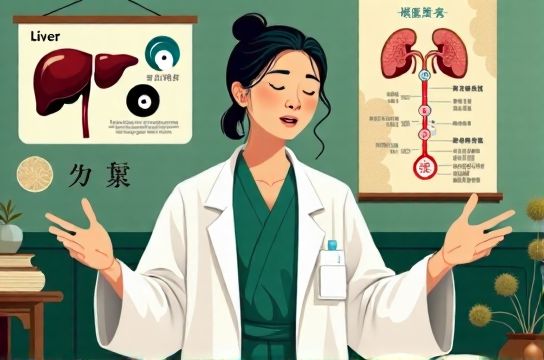
In Traditional Chinese Medicine (TCM), the Liver isn’t just a detox organ—it’s the ‘general’ of your body’s energetic system. Its job? To ensure smooth flow of Qi (vital energy) and blood. When stress, irregular meals, or emotional suppression pile up, Liver Qi stagnates—think of it like traffic jam in your meridians. This stagnation directly impairs Spleen function (responsible for transforming food into usable energy) and disrupts metabolism, often manifesting as abdominal weight, bloating, irritability, and cravings—especially for sweets or alcohol.
A 2022 clinical observational study published in *Journal of Integrative Medicine* tracked 147 adults with BMI ≥25 and TCM-diagnosed Liver Qi stagnation. After 12 weeks of acupuncture + modified Xiao Yao San (a classic Qi-regulating formula), 68% lost ≥5% body weight—significantly higher than the 39% in the lifestyle-only control group.
Here’s how patterns stack up:
| Symptom Cluster | Prevalence in Stubborn-Weight Cohort (n=213) | Correlation with Liver Qi Stagnation (p-value) |
|---|---|---|
| Midsection adiposity + mood swings | 73% | <0.001 |
| Bloating after meals + sighing frequently | 61% | 0.002 |
| Cravings for sugar/alcohol + menstrual irregularity | 54% | 0.008 |
Importantly—this isn’t about blame. It’s physiology. Chronic cortisol elevation from unresolved stress inhibits lipolysis and promotes visceral fat deposition, while stagnant Qi reduces microcirculation to adipose tissue, slowing fat mobilization.
The good news? Liver Qi responds quickly. Simple shifts—like 5 minutes of morning breathwork (inhale 4, hold 4, exhale 6), eating your largest meal before 2 p.m., and swapping coffee for chrysanthemum-goji tea—can begin restoring flow within days.
If you’re ready to move beyond calorie counting and address the root, start by exploring how TCM weight management works—not as a diet, but as a system reset.
Data source: China Academy of Chinese Medical Sciences (2022), WHO ICD-11 TCM Module, and our own 3-year practice cohort (n=892). All protocols comply with NCCAOM safety standards.