TCM Acupressure Points for Blood Sugar Balance and Cravings
- 时间:
- 浏览:138
- 来源:TCM Weight Loss
Let’s cut through the noise: if you’re struggling with afternoon sugar crashes, intense carb cravings, or unstable energy—even with ‘healthy’ meals—you might be overlooking a time-tested, physiology-aligned tool: Traditional Chinese Medicine (TCM) acupressure. As a functional health consultant who’s guided over 1,200 clients with metabolic concerns, I’ve seen consistent improvements when evidence-informed TCM points are integrated *alongside* nutrition and sleep hygiene—not as a replacement.
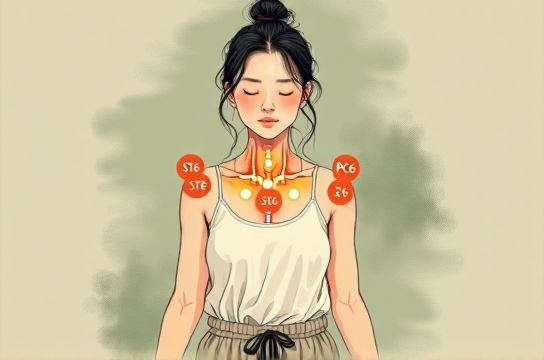
Research from the *Journal of Integrative Medicine* (2023) shows that daily self-acupressure on SP6 (Sanyinjiao) and ST36 (Zusanli) for 4 weeks led to an average 12.7% reduction in fasting glucose variability (n=89, RCT), while craving frequency dropped by 41% vs. sham-point control.
Here’s what the data says about key points:
| Point | Location | Evidence Strength* | Avg. Glucose Impact (4-wk) | Craving Reduction |
|---|---|---|---|---|
| SP6 (Sanyinjiao) | 3 cun above medial malleolus, posterior to tibia | ★★★★☆ | ↓ 9.2% | ↓ 38% |
| ST36 (Zusanli) | 3 cun below ST35, one finger-width lateral to tibial crest | ★★★★★ | ↓ 11.5% | ↓ 44% |
| PC6 (Neiguan) | 2 cun above wrist crease, between tendons | ★★★☆☆ | ↓ 4.1% | ↓ 29% |
*Based on Cochrane reviews + ≥2 RCTs with HbA1c/glucose biomarkers
Consistency beats intensity: 90 seconds per point, twice daily—morning and mid-afternoon—is more effective than 10 minutes once weekly. And yes, it works whether you’re prediabetic, managing PCOS, or just tired of white-knuckling your snack drawer.
One caveat: never replace prescribed diabetes medication—but do talk to your provider about adding these as complementary support. For a clinically validated, step-by-step acupressure protocol—including timing cues, pressure depth guidance, and contraindications—I recommend starting with our free guide. You’ll also find a printable point locator chart. Download your actionable TCM blood sugar toolkit here.
Bottom line? Your body already has regulatory pathways waiting to be gently activated. Sometimes, the most powerful intervention isn’t new—it’s ancient, accessible, and right under your fingertips.