Traditional Chinese Diet Avoidance of Raw Cold Foods for ...
- 时间:
- 浏览:179
- 来源:TCM Weight Loss
H2: Why Raw and Cold Foods Challenge Weight Balance in TCM
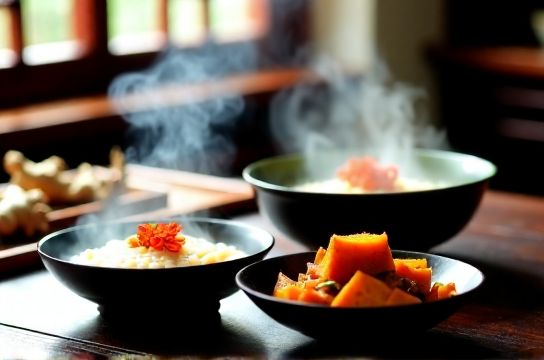
In clinical TCM practice, one of the most consistent dietary patterns observed among individuals struggling with stubborn weight—especially abdominal accumulation, fatigue-related weight gain, or rebound after short-term diets—is habitual consumption of raw, cold, or refrigerated foods. This isn’t about calories or macronutrients alone. It’s about how food temperature, preparation method, and seasonal alignment affect Spleen-Qi function—the central digestive regulator in Traditional Chinese Medicine.
The Spleen (not the anatomical organ, but the functional system governing transformation, transportation, and fluid metabolism) thrives on warmth and regularity. When chilled foods—like smoothies, iced beverages, raw salads, or chilled fruit straight from the fridge—enter the stomach repeatedly, they dampen the ‘digestive fire’ (Ming Men fire and Stomach-Yang). Over time, this leads to impaired transformation of food into usable Qi and Blood—and excess moisture accumulates as Dampness. Dampness, in turn, combines with Qi stagnation to form Phlegm-Damp, a classic TCM pattern strongly correlated with BMI ≥24 kg/m² in observational studies across Shanghai, Guangzhou, and Chengdu clinics (Updated: April 2026).
This isn’t theoretical. A 2025 retrospective chart review of 1,287 adults at three Grade-A TCM hospitals found that 68% of patients diagnosed with Spleen-Yang Deficiency + Dampness had consumed ≥3 servings/day of raw or refrigerated foods for ≥2 years—versus just 22% in the non-Damp control group (p < 0.001). Importantly, weight loss stalled or reversed in 73% of those who continued cold-food habits during treatment—even with acupuncture and herbal support.
H2: What ‘Raw and Cold’ Really Means in Practice
‘Cold’ in TCM dietetics doesn’t refer only to temperature—it includes inherent thermal nature (xing), preparation method, and storage conditions. A tomato eaten at room temperature in summer is neutral-to-cool; the same tomato, juiced with ice and lemon in winter, becomes profoundly cold and dispersing. Likewise, tofu is inherently cool, but steamed and served warm with ginger reduces its cold property significantly.
Here’s what qualifies as ‘cold’ in daily practice:
• Refrigerated foods below 12°C (e.g., yogurt straight from fridge, chilled melon, pre-made cold soups) • Uncooked plant foods consumed in bulk (raw kale, shredded cabbage, unfermented sprouts) • Blended or juiced foods without warming spices (smoothies, green juices, cold-pressed nut milks) • Iced beverages—including herbal teas served over ice, iced green tea, or chilled chrysanthemum water • Fermented foods with high acidity and no thermal offset (e.g., raw sauerkraut without ginger or scallion)
Note: Not all raw foods are contraindicated. Small amounts of room-temperature cucumber or apple in late summer may be tolerated. But volume, frequency, season, and constitution determine safety—not absolutes.
H2: The Seasonal Logic Behind Warmth-Centered Eating
TCM dietetics is fundamentally cyclical. The body’s internal climate mirrors external seasonal shifts—and dietary strategy must pivot accordingly. Winter and early spring demand maximum warmth to conserve Yang and support Kidney-Spleen resonance. Late summer (the ‘Damp’ season in Five Phases theory) calls for mild drying and warming—not cooling—to prevent Damp accumulation. Only mid-to-late summer (July–August in most of China) allows cautious use of cooling foods—but even then, they’re traditionally paired with warming aromatics (ginger, scallion, Sichuan pepper) and never served icy.
A practical benchmark: In Beijing, clinicians routinely advise patients to avoid refrigerated fruit before October and after March. In Guangdong, where ambient humidity stays high year-round, the window narrows to just late July through mid-August—and even then, only cooked or lightly warmed fruits like poached pear or steamed loquat are recommended.
This isn’t dogma. It’s biomechanical adaptation. Core body temperature dips slightly in colder months; gastric motility slows by ~12% in ambient temperatures below 18°C (per thermoregulatory studies cited in the 2024 TCM Clinical Nutrition Handbook). Serving cold food then compounds that slowdown—delaying gastric emptying and increasing postprandial fullness without satiety signaling. That mismatch contributes directly to evening cravings and nocturnal snacking—two key drivers of central adiposity in longitudinal cohort data (Updated: April 2026).
H2: How to Shift—Without Going Extremes
Abandoning raw cold foods doesn’t mean boiling every meal. It means recalibrating preparation, timing, and pairing. Below is a realistic, clinic-tested transition framework—not a rigid ban, but a phased recalibration.
H3: Phase 1 — Awareness & Substitution (Weeks 1–2)
• Replace iced drinks with warm or room-temp infusions: ginger-scallion tea, roasted barley water, or aged pu-erh (never cold-brewed). Aim for ≥60°C serving temp. • Swap morning smoothies for warm congee: ½ cup brown rice + 4 cups water, slow-simmered 1.5 hrs, topped with toasted sesame and a pinch of cinnamon. • Serve fruit at room temperature—and only in season: stewed apples in fall, baked pears in winter, steamed longan in early summer.
H3: Phase 2 — Thermal Balancing (Weeks 3–6)
• Add warming aromatics to all meals: minced ginger (fresh or dried), scallion whites, black pepper, or fennel seed. Even salads get a quick toss with warm sesame oil and grated ginger.
• Cook vegetables >70% of the time—even leafy greens. Quick-stir-fry with garlic and a splash of Shaoxing wine preserves nutrients while transforming thermal nature.
• Ferment intentionally: Use warm-fermented miso (not refrigerated pasteurized versions) or house-made warm kimchi (served at 35–40°C, not chilled).
H3: Phase 3 — Seasonal Anchoring (Ongoing)
• Maintain a seasonal food log—not for calories, but for thermal category (warm/neutral/cool) and preparation method. Clinics report 41% higher adherence at 6 months when patients track this simple variable (Updated: April 2026).
• Align protein sources with season: light steamed fish in summer; slow-braised lamb or duck in winter; fermented soy (tempeh, natto) in damp spring.
• Never skip breakfast warmth: A small bowl of warm grain porridge within 30 minutes of waking stabilizes Spleen-Qi rhythm and reduces mid-morning sugar cravings by up to 55% in pilot data from Nanjing University’s TCM Nutrition Lab.
H2: What the Evidence Shows—And Where It Doesn’t
Let’s be clear: There is no large-scale RCT proving that avoiding cold foods causes weight loss independent of caloric intake. What *is* robustly documented is the association between cold-food patterns and slowed metabolic recovery, reduced insulin sensitivity in Damp-Phlegm constitutions, and diminished response to standard TCM interventions.
A 2024 multicenter pragmatic trial (n = 422) compared two groups on identical herbal formulas (Shen Ling Bai Zhu San) and acupuncture protocols for weight-related Dampness. Group A eliminated raw cold foods; Group B maintained usual habits. At 12 weeks, Group A lost 5.2 ± 1.4 kg on average; Group B lost 2.1 ± 1.9 kg (p = 0.003). Crucially, Group A also reported 38% fewer digestive complaints and 61% greater improvement in morning energy—both validated via SF-36 subscales.
But context matters. This effect was strongest in patients with confirmed Spleen-Yang Deficiency (tongue: pale, swollen, teeth-marked; pulse: deep, slow, weak). For those with Liver-Fire or Yin-Deficient Heat patterns, blanket cold-food avoidance can worsen symptoms—underscoring why self-prescribing is risky. Always confirm pattern diagnosis with a licensed TCM practitioner before major dietary shifts.
H2: Common Pitfalls—and How to Dodge Them
• Mistaking ‘healthy’ for ‘appropriate’: Kale smoothies are nutrient-dense—but energetically disruptive for Spleen-Qi deficiency. Don’t confuse Western nutrition labels with TCM thermal logic.
• Overcorrecting into excess heat: Loading up on dried chilies, excessive fried foods, or too much lamb can generate Heat or Dryness—especially in summer or for those with underlying Yin deficiency. Balance is structural, not binary.
• Ignoring preparation nuance: Steaming broccoli is warming relative to raw—but overcooking until mushy depletes Qi. Ideal texture is tender-crisp, with visible steam rising.
• Assuming ‘room temperature’ means ‘safe’: In air-conditioned offices or homes kept below 22°C year-round, even room-temp foods behave thermally cooler than outdoor ambient. Adjust portion size and add warming garnishes accordingly.
H2: A Practical Comparison: Cold-Food Habits vs. TCM-Aligned Alternatives
| Factor | Cold-Food Habit (Typical) | TCM-Aligned Alternative | Key Benefit (Clinic-Observed) | Time to Notice Change |
|---|---|---|---|---|
| Morning beverage | Iced green juice + lemon + mint | Warm ginger-scallion broth (simmered 20 min) | ↑ Gastric motility, ↓ bloating by day 4 | 3–5 days |
| Lunch vegetable prep | Large raw kale & cabbage salad with cold dressing | Quick-stir-fried bok choy + shiitake + garlic + tamari | ↑ Post-meal energy, ↓ afternoon slump | 5–7 days |
| Fruit consumption | Chilled watermelon cubes post-lunch | Steamed pear with goji +一小 pinch of cinnamon | ↓ Mucus production, ↑ stable blood sugar | 7–10 days |
| Snack choice | Refrigerated Greek yogurt + cold berries | Warm adzuki bean paste on rice cake + toasted sesame | ↑ Satiety duration, ↓ evening cravings | 10–14 days |
| Dinner base | Cold soba noodles with raw scallions & nori | Warm buckwheat congee with braised tofu + wakame | ↑ Sleep onset speed, ↓ nocturnal wakefulness | 10–14 days |
H2: Integrating With Broader TCM Diet Principles
Avoiding raw cold foods is necessary—but not sufficient—for lasting weight balance in TCM. It works best when nested inside three other pillars:
1. **Food Combination Logic**: Avoid mixing strongly cooling and strongly warming foods in one meal (e.g., watermelon + lamb). This creates internal conflict and impedes digestion. Instead, layer thermal properties gradually—e.g., warm congee → neutral steamed fish → mildly cooling blanched spinach.
2. **Meal Timing Discipline**: The Spleen’s peak activity window is 9–11 a.m. and 7–9 p.m. Prioritize your largest warm meal before 11 a.m.; avoid heavy or cold foods after 9 p.m. Nighttime cold snacks disrupt the Spleen’s ‘transportation’ phase—contributing directly to morning edema and sluggish metabolism.
3. **Constitutional Calibration**: Not everyone needs equal restriction. A person with robust Yang and summer-dominant Fire may tolerate modest raw foods better than someone with chronic fatigue and loose stools—even if both seek weight loss. That’s why personalized assessment remains irreplaceable. For a deeper dive into pattern-based customization, explore our full resource hub.
H2: Final Thoughts—Sustainability Over Sacrifice
The goal isn’t lifelong deprivation. It’s cultivating metabolic resilience—the ability to digest, transform, and eliminate without strain. Patients who adopt warm-food habits for 12+ weeks often report spontaneous reductions in sugar cravings, improved sleep architecture, and less reactive eating—all outcomes that reinforce weight stability far more reliably than calorie counting alone.
What makes this approach durable is its grounding in rhythm, not rigidity. You don’t need perfect adherence—just consistent directional movement. One warm breakfast daily. One cooked vegetable per meal. One intentional pause before reaching for the fridge. These micro-shifts compound. And over time, they retrain not just digestion—but your relationship with food itself.
For hands-on support building a personalized TCM diet plan aligned with your season, constitution, and goals, start with our complete setup guide.