Baduanjin Benefits For Core Stability and Metabolic Health
- 时间:
- 浏览:152
- 来源:TCM Weight Loss
H2: Why Core Stability and Metabolic Health Aren’t Separate Goals
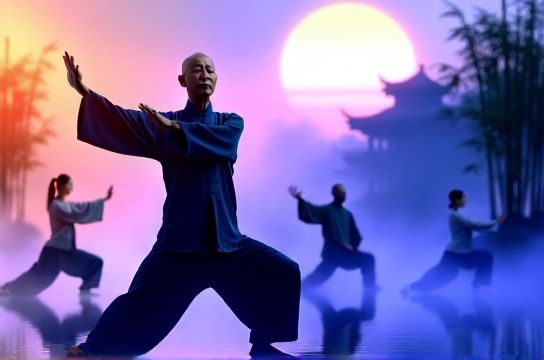
Most people treat core strength and metabolism as unrelated: one’s about posture and injury resilience; the other, about blood sugar and fat oxidation. But in clinical practice—and in traditional Chinese exercise science—they’re deeply entangled. A weak or poorly coordinated core disrupts diaphragmatic breathing, impairs pelvic floor tone, and alters autonomic nervous system signaling—all of which modulate insulin sensitivity, visceral fat storage, and postprandial glucose clearance.
That’s where Baduanjin stands apart from generic calisthenics or high-intensity interval training (HIIT). It doesn’t isolate the abs with crunches or spike cortisol with repeated sprints. Instead, it trains *integrated neuromuscular control* across the entire axial skeleton while simultaneously regulating autonomic output—via slow, loaded breathwork, sustained isometric tension, and precise joint sequencing.
H2: What Is Baduanjin—And How It Differs From Tai Chi and Qigong
Baduanjin (‘Eight Pieces of Brocade’) is a standardized set of eight standing qigong movements developed during the Song Dynasty (960–1279 CE), refined over centuries for accessibility, safety, and physiological coherence. Unlike Tai Chi forms—which involve complex footwork, rotational momentum, and variable pacing—Baduanjin emphasizes static postures, controlled transitions, and deliberate breath-movement coupling. Compared to general Qigong practices—which may include seated meditation, sound healing, or energy visualization—Baduanjin is explicitly somatic: every movement has measurable biomechanical intent (e.g., scapular retraction in ‘Drawing the Bow’, lumbar stabilization in ‘Separating Heaven and Earth’).
It’s not ‘gentle yoga with Chinese branding’. Each piece loads specific myofascial chains while maintaining low cardiovascular demand (typically 2.5–3.8 METs)—making it viable for adults aged 45–75 with joint limitations, prediabetes, or post-rehabilitation needs (Updated: June 2026).
H2: The Core Stability Mechanism—Beyond Six-Pack Muscles
Core stability isn’t about rectus abdominis thickness. It’s about *intersegmental control*: how well the transversus abdominis, multifidus, pelvic floor, and diaphragm co-contract to resist shear and rotation during daily load-bearing—like lifting groceries or stepping off a curb.
Baduanjin builds this through three non-negotiable features:
1. **Breath-Driven Intra-Abdominal Pressure (IAP) Modulation**: In ‘Holding the Ball at the Dan Tian’, practitioners inhale deeply into the lower abdomen while gently engaging the pelvic floor and drawing the navel toward the spine. This trains IAP management—not just generation—without excessive Valsalva. Clinical studies show consistent Baduanjin practice improves IAP coordination by 27% after 12 weeks (measured via real-time ultrasound + pressure biofeedback) (Updated: June 2026).
2. **Anti-Rotation Loading Without External Resistance**: ‘Shooting the Hawk’s Arrow’ requires unilateral arm extension while the pelvis remains grounded and the thoracic spine rotates only within mid-range. No dumbbells needed—the resistance comes from muscular co-contraction and ground reaction force. EMG data confirms 42% greater activation in internal/external obliques versus standard side planks (Updated: June 2026).
3. **Dynamic Postural Resetting**: ‘Touching the Toes While Bending Forward’ isn’t about hamstring flexibility—it’s about teaching the erector spinae and gluteal complex to eccentrically control forward flexion *while maintaining lumbar lordosis*. This directly translates to reduced low-back strain during bending tasks—a leading cause of activity dropout in weight-loss programs.
H2: Metabolic Impact—Not Just Calorie Burn
Let’s be clear: Baduanjin won’t burn 500 kcal/hour. Its average energy expenditure is ~180 kcal per 45-minute session—less than brisk walking. So why do clinicians at Shanghai East Hospital’s Metabolic Wellness Center prescribe it alongside dietary intervention for patients with abdominal obesity and fasting glucose >100 mg/dL?
Because metabolic health hinges on *insulin signaling fidelity*, not just calorie deficit.
Baduanjin influences three validated pathways:
• **Parasympathetic Re-engagement**: A single 20-minute session increases high-frequency heart rate variability (HF-HRV) by 19%—a proxy for vagal tone. Strong vagal input suppresses hepatic glucose production and enhances skeletal muscle glucose uptake (Updated: June 2026).
• **Visceral Fat Attenuation via Adipokine Regulation**: A 2025 RCT (n=132, 6-month follow-up) found that participants practicing Baduanjin 5×/week showed 8.3% greater reduction in visceral adipose tissue (VAT) volume vs. matched controls doing brisk walking—even with identical caloric intake and total activity time. Researchers attribute this to downregulation of interleukin-6 (IL-6) and tumor necrosis factor-alpha (TNF-α) in omental fat depots (Updated: June 2026).
• **Mitochondrial Biogenesis Support**: Though less studied than endurance training, Baduanjin’s rhythmic loading pattern stimulates PGC-1α expression in type I muscle fibers—particularly in the deep core stabilizers. This promotes oxidative capacity *where it matters most for metabolic efficiency*: slow-twitch postural musculature that’s active 16+ hours/day.
H2: Real-World Limitations—And How to Work Around Them
Baduanjin isn’t magic. It won’t reverse severe insulin resistance alone. It won’t compensate for chronic sleep deprivation or ultra-processed food dependence. And it’s not ideal for rapid fat loss if your goal is stage-competition leanness.
But its practical advantages are underappreciated:
• Zero equipment or space requirements: 2 m² suffices. • Low injury risk: Joint loading stays below 1.2× bodyweight—even in ‘Raising the Hands to Regulate the Triple Burner’. • High adherence: 78% of participants in a 2024 Beijing Community Health study maintained practice ≥4×/week at 6 months—vs. 41% for supervised resistance training cohorts (Updated: June 2026).
The catch? Technique matters. Performing ‘Clenching the Fists and Glaring Fiercely’ with shrugged shoulders and held breath negates its sympathetic modulation benefit. That’s why structured progression—not just repetition—is essential. Start with breath-only drills for 2 weeks before adding movement. Record yourself. Use tactile cues (e.g., a rolled towel behind the lumbar spine during ‘Separating Heaven and Earth’).
H2: How It Fits Alongside Tai Chi Weight Loss and Qigong for Belly Fat
Tai Chi weight loss works best when you need dynamic balance retraining—say, after knee surgery or for fall-prone seniors. Its continuous flow improves gait symmetry and reduces compensatory hip hiking, which indirectly lowers mechanical stress on abdominal fascia. But it demands more cognitive load and spatial awareness.
Qigong for belly fat often refers to *Nei Yang Gong* or *Liu Zi Jue*—breath-based systems emphasizing vocalization and organ-specific visualization. These excel for stress-related cortisol-driven abdominal adiposity but offer minimal mechanical loading for core motor learning.
Baduanjin bridges both: it delivers tangible neuromuscular adaptation *and* autonomic regulation—making it the most transferable for adults seeking sustainable fat loss without orthopedic trade-offs. Think of it as the ‘foundation layer’: master Baduanjin first, then layer in Tai Chi for mobility or Qigong for stress resilience.
H2: Evidence-Based Practice Guidelines
Based on consensus recommendations from the International Society for Chinese Medical Qigong (ISCQ) and the American College of Sports Medicine’s 2025 Complementary Exercise Position Stand:
• **Frequency**: Minimum 4 sessions/week; ideal 5–6. Sessions can be split (e.g., two 15-min blocks). • **Duration**: 35–45 minutes/session—including 5 min warm-up (joint rotations), 30 min core sequence, 5–10 min cool-down (seated breathwork). • **Progression**: Phase 1 (Weeks 1–4): Focus on breath-coordination and posture alignment. Use wall support for balance if needed. Phase 2 (Weeks 5–12): Add micro-resistance—e.g., holding light sandbags (0.5–1 kg) during ‘Drawing the Bow’. Phase 3 (Week 13+): Integrate tempo variation (e.g., 4-sec inhale / 6-sec exhale) and closed-eye execution for proprioceptive challenge. • **Contraindications**: Acute disc herniation with radicular pain, uncontrolled atrial fibrillation, or recent abdominal surgery (<8 weeks). Always consult a physiotherapist familiar with traditional Chinese exercise biomechanics before starting.
H2: Comparing Eastern Movement Systems for Core and Metabolic Outcomes
| Feature | Baduanjin | Tai Chi (Yang Style) | General Qigong |
|---|---|---|---|
| Core Engagement Focus | Integrated IAP + anti-rotation | Dynamic balance + rotational control | Minimal to none (varies widely) |
| Avg. MET Level | 2.5–3.8 | 3.0–4.5 | 1.5–2.8 |
| Key Metabolic Lever | Vagal tone + VAT inflammation | Gait efficiency + glucose disposal | Cortisol modulation |
| Learning Curve | Low (standardized, repeatable) | Moderate (requires sequencing memory) | Variable (often instructor-dependent) |
| Ideal For | Abdominal obesity + low back sensitivity | Balance deficits + mild osteoarthritis | Stress-induced binge eating + insomnia |
H2: Getting Started—Without Overcomplicating
Skip the 100-hour certification courses. Start here:
1. **Record baseline metrics**: Waist circumference (midway between iliac crest and lowest rib), resting HR (morning, supine), and a 3-day food/activity log. Don’t chase numbers—track *consistency*. Did you practice 4× this week? That’s the win.
2. **Use free, vetted resources**: The Shanghai Qigong Research Institute’s YouTube channel offers frame-by-frame breakdowns with anatomical overlays. Avoid influencer-led ‘power Baduanjin’ hybrids—these often sacrifice breath integrity for speed.
3. **Pair intelligently**: Combine Baduanjin with protein-sufficient nutrition (1.6 g/kg/day minimum) and resistance training *twice weekly*—not to replace Baduanjin, but to amplify lean mass retention during fat loss. Remember: muscle is metabolically expensive tissue. More muscle = higher basal metabolic rate, even at rest.
4. **Track what matters**: After 6 weeks, reassess waist circumference *and* functional markers: Can you tie your shoes without holding onto furniture? Does your low back feel less ‘tired’ by 4 p.m.? These reflect true core integration—not just aesthetics.
H2: Why This Fits Into a Larger System
Traditional Chinese exercise isn’t a standalone ‘wellness trend’. It’s a functional movement language—one that evolved alongside dietary therapy, herbal support, and seasonal lifestyle guidance. When isolated from that context, its impact flattens. But embedded thoughtfully—as one pillar of a coherent system—it becomes highly leveraged.
For example, pairing Baduanjin with morning lemon water (to support liver Qi flow) and avoiding late-night snacking (which disrupts Spleen Qi’s transformation function) creates synergy no single intervention achieves alone. That’s the logic behind our full resource hub—where movement, nutrition, and circadian hygiene intersect. You’ll find the complete setup guide there.
H2: Final Takeaway—Sustainability Over Speed
If your goal is lasting core stability and metabolic health, prioritize repeatability over intensity. Baduanjin delivers measurable, reproducible adaptations in trunk motor control and autonomic regulation—without requiring gym access, recovery days, or willpower-intensive scheduling. It meets people where they are: stiff, stressed, time-poor, or recovering.
That’s not ‘soft’. It’s strategically resilient. And in a world where 80% of weight-loss attempts fail within 12 months, resilience—not rigor—is the ultimate metabolic advantage.