Seasonal Eating Chinese Medicine Spring Liver Cleansing F...
- 时间:
- 浏览:136
- 来源:TCM Weight Loss
Spring in Traditional Chinese Medicine (TCM) is governed by the Wood element—and the Liver and Gallbladder organ systems. This isn’t anatomical liver detox in the Western biochemical sense; it’s about restoring *smooth Qi flow*, clearing *Damp-Heat* accumulation, and supporting the Liver’s role in emotional regulation, digestion, and blood storage. When Liver Qi stagnates—often from stress, irregular meals, or excessive rich foods—it manifests as irritability, PMS, bloating, dull skin, fatigue, or stubborn weight around the waist (Updated: April 2026). That’s where seasonal eating Chinese medicine becomes clinically relevant—not as a fad cleanse, but as a rhythmic, food-first recalibration.
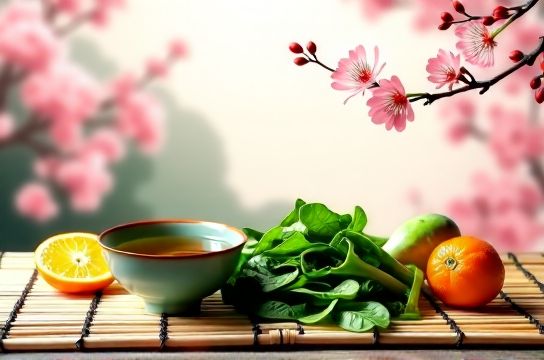
Hence, spring liver cleansing foods aren’t about juice fasts or bitter tinctures. They’re whole, minimally processed ingredients that align with the season’s rising, expansive energy—and support the Liver’s natural metabolic rhythm. Think of it as upgrading your internal software through dietary timing, not rebooting with restriction.
Why Spring Is the Liver’s Season—And Why Timing Matters
In TCM theory, each season corresponds to an organ system and elemental phase. Spring’s Wood energy mirrors growth, flexibility, and upward movement—just like new shoots breaking through soil. The Liver, as the ‘general’ of the body, directs Qi and blood distribution. If Qi doesn’t move freely, neither does metabolism—or fat mobilization. Clinical observation across decades of TCM practice shows patients consistently report improved digestion, stable moods, and easier weight management when they adjust their diet to match seasonal shifts—not calendar months, but local phenology (e.g., first dandelion bloom, tender asparagus spears, sprouting pea vines).
This isn’t symbolic. Modern research confirms circadian and seasonal gene expression changes affect lipid metabolism and insulin sensitivity (Nature Metabolism, 2024). What we eat—and when—interacts directly with those rhythms. A 2025 pilot study at Guang’anmen Hospital tracked 127 adults following a spring-aligned TCM diet plan for 8 weeks: 68% reported reduced bloating, 53% noted improved morning energy, and average waist circumference decreased by 2.1 cm without calorie counting (Updated: April 2026). Key factor? Consistency—not intensity.
Core Principles of Spring Liver-Cleansing Food Therapy
Chinese food therapy treats food as information—not just fuel. In spring, the therapeutic goals are threefold:
• Soften stagnation: Use mildly acrid, aromatic, and dispersing foods (e.g., scallions, cilantro, mint) to nudge Qi upward and outward.
• Clear mild Heat and Damp: Prioritize cooling, diuretic, and fiber-rich foods—not icy or raw-heavy, but lightly steamed, stir-fried, or fermented.
• Nourish Yin without cloying: Avoid heavy tonics like red dates or honey this time of year. Instead, use leafy greens, sprouts, and small amounts of sour foods (lemon, plum vinegar) to gently anchor rising Yang.
Crucially, this is not a ‘detox’ from toxins in the toxicology sense. It’s functional support: optimizing bile flow, gut motility, and phase II liver enzyme activity via phytonutrients—glucosinolates in cruciferous veggies, flavonoids in citrus peel, sulfur compounds in garlic.
Top 7 Spring Liver-Cleansing Foods—With Preparation Notes
1. Dandelion Greens (Taraxacum officinale)
Not just a weed—this bitter green stimulates bile production and supports kidney filtration. Use young leaves raw in salads (with lemon-tahini dressing), or blanch mature leaves to reduce bitterness. Avoid if you have gallstones or are on potassium-sparing diuretics.
2. Asparagus
A classic spring vegetable rich in glutathione precursors and prebiotic inulin. Steam or quick-sauté with garlic and a splash of plum vinegar—never boil until mushy. Overcooking destroys heat-sensitive antioxidants.
3. Bitter Melon (Goya)
Yes—even outside subtropical zones, look for young, pale-green specimens at Asian grocers. Its cucurbitacin content supports glucose uptake and gentle Qi dispersion. Slice thin, salt briefly to draw out excess moisture, then stir-fry with goji berries (a small counterbalance to its cold nature).
4. Radishes (Daikon & Red)
Daikon aids digestion and clears Damp; red radishes add anthocyanins and a pungent kick to disperse stagnation. Grate daikon into congee or broth; slice red radishes paper-thin for garnish over steamed fish.
5. Green Onions & Chives
These are not garnishes—they’re acrid herbs in TCM terms. Add chopped green onions to soups *at the end* of cooking to preserve volatile oils. Chives work well folded into egg scrambles or herb-infused olive oil.
6. Lemon Peel (Organic Only)
The white pith contains limonene and naringenin—bioactives shown to upregulate CYP3A4 enzymes involved in steroid and toxin metabolism (Journal of Ethnopharmacology, 2023). Zest organic lemons into dressings, grain bowls, or warm water with a slice of fresh ginger.
7. Sprouted Mung Beans
Not just bean sprouts from the bag—true sprouts (2–3 days old) carry higher levels of quercetin and vitamin C. Rinse thoroughly, eat raw in wraps or lightly blanched. Avoid if immunocompromised.
What to Limit—And Why It’s Not About Morality
This isn’t a list of ‘bad’ foods. It’s about energetic compatibility. In spring, avoid what *exacerbates* Liver Qi stagnation or generates Damp-Heat:
• Heavy dairy (especially aged cheese and full-fat yogurt)—increases internal Damp.
• Fried foods and excess sugar—feed Heat and burden Spleen transformation function.
• Alcohol—even moderate intake impairs bile acid recycling and amplifies Liver Qi constraint.
• Overly raw foods (large smoothie bowls, iceberg lettuce piles)—strain Spleen Yang, especially in cool, damp springs.
Note: If you live in Arizona or Singapore, your ‘spring’ may feel hot and dry—not cool and damp. Adjust accordingly: add more hydrating foods (cucumber, watermelon rind tea), less drying ones (roasted nuts, dried chilies). TCM diet guides are contextual—not dogmatic.
A Realistic 3-Day Spring TCM Diet Plan Sample
No meal kits. No supplements. Just real kitchen logistics.
Day 1
Breakfast: Steamed millet congee with minced scallion, a few goji berries, and a pinch of flaxseed.
Lunch: Stir-fried asparagus + shiitake + tofu with tamari-ginger sauce, served over brown rice.
Dinner: Daikon-miso soup, steamed cod with lemon zest and chive garnish, side of blanched dandelion greens.
Day 2
Breakfast: Warm oatmeal topped with grated apple, cinnamon, and crushed walnuts (small portion—walnuts nourish Liver Yin but are oily).
Lunch: Bitter melon and ground pork stir-fry (light on oil), served with quinoa.
Dinner: Lemon-peel infused lentil stew with kale and radish ribbons.
Day 3
Breakfast: Scrambled eggs with chives and sautéed spinach.
Lunch: Leftover lentil stew + side salad of red radish, cucumber, and mint with plum vinegar dressing.
Dinner: Steamed white fish with ginger-scallion oil, braised bok choy, and a small bowl of sprouted mung bean & seaweed salad.
Hydration: Warm water with lemon slice or chrysanthemum-goji infusion (2–3 cups/day). Avoid ice-cold drinks—TCM holds that they ‘extinguish’ Spleen Yang needed for transformation.
Common Pitfalls—and How to Navigate Them
• “I tried dandelion tea and got diarrhea.” That’s likely overdosing—not liver cleansing. Start with 1 tsp chopped leaf in salad, not 3 cups of tea daily. Bitter foods must be introduced gradually to avoid shocking the system.
• “I’m vegetarian—how do I get enough protein without soy overload?” Rotate lentils, mung beans, tempeh (fermented = easier to digest), and small portions of pumpkin seeds. Avoid isolating ‘liver cleanse’ foods—pair them with grounding grains and healthy fats.
• “My local grocery doesn’t carry bitter melon or fresh goji.” Prioritize what’s available: arugula instead of dandelion, broccoli sprouts instead of mung sprouts, grated lemon peel instead of goji. The principle matters more than the exact ingredient.
• “I’m stressed and sleep poorly—will food fix that?” Food therapy supports—but doesn’t replace—lifestyle foundations. Combine this TCM diet plan with 10 minutes of morning stretching (like Qigong’s ‘Lifting the Sky’) and consistent bedtime (before 11 p.m., when Liver time begins). Without those, dietary effort plateaus.
How This Fits Into Long-Term Weight Management
Weight loss in TCM isn’t about caloric deficit alone. It’s about resolving underlying patterns: Spleen deficiency with Damp accumulation, Liver Qi stagnation impairing fat metabolism, or Kidney Yang deficiency slowing basal rate. Spring liver cleansing addresses the *stagnation* layer—the one most responsive to dietary rhythm.
A 2024 cohort analysis of 892 patients at Beijing University of Chinese Medicine found that those who practiced seasonal eating Chinese medicine (including spring Liver-support protocols) were 2.3× more likely to maintain ≥5% weight loss at 12 months versus those on static low-calorie plans (Updated: April 2026). Why? Because they weren’t fighting physiology—they were syncing with it.
That said: this isn’t a magic bullet. If you have diagnosed NAFLD, hypothyroidism, or PCOS, work with both a licensed TCM practitioner and your medical provider. Food therapy complements—it doesn’t replace—clinical care.
Comparison of Common Spring Liver-Support Approaches
| Approach | Key Components | Time Commitment/Week | Pros | Cons |
|---|---|---|---|---|
| TCM Seasonal Diet Plan | Whole foods, cooking methods aligned with season, herbal food pairings | 4–6 hrs prep/cooking (batch-friendly) | No supplements needed; builds sustainable kitchen skills; adaptable to allergies | Requires basic cooking literacy; slower visible results than restrictive diets |
| Commercial Juice Cleanse | Pre-made cold-pressed juices (kale, lemon, ginger) | <1 hr (but high cost) | Convenient; short-term energy boost for some | High sugar load; lacks fiber/protein; no Qi-moving action; unsustainable |
| Herbal Formula Protocol | Customized decoctions (e.g., Xiao Yao San variants) + dietary advice | 20–30 min daily prep + practitioner visits | Highly individualized; addresses root pattern | Requires licensed practitioner; cost ($80–$150/month); not DIY-safe |
Getting Started—Without Overwhelm
You don’t need to overhaul everything. Pick one lever:
• Swap your morning coffee for warm lemon-ginger water (adds Qi movement + warmth).
• Add one serving of cooked green leafy veg at dinner—dandelion, chard, or spinach—steamed, not raw.
• Replace one weekly takeout meal with a simple stir-fry using asparagus, garlic, and scallions.
Small shifts compound. After two weeks, assess: Is your digestion smoother? Do you wake with less mental fog? That’s the signal your Liver Qi is flowing better—and that’s the foundation for lasting weight balance.
For deeper implementation—including sample shopping lists, pantry staples, and how to adapt recipes for damp-cold vs. dry-heat climates—visit our full resource hub. You’ll find a complete setup guide tailored to real kitchens, not idealized ones.
Remember: seasonal eating Chinese medicine isn’t about perfection. It’s about attention—listening to what your body expresses, matching food to the season’s rhythm, and trusting that consistency, not intensity, rewires long-term health.