TCM Diet Plan for Sustainable Weight Loss
- 时间:
- 浏览:184
- 来源:TCM Weight Loss
H2: Why Conventional Diets Fail—and What TCM Does Differently
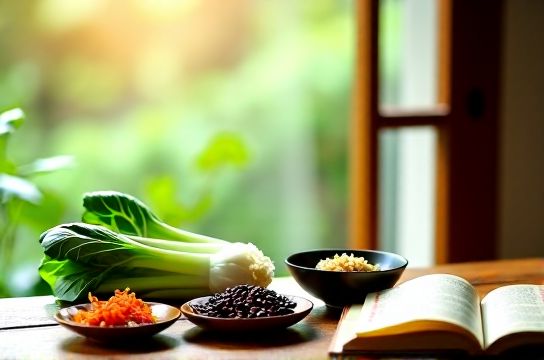
Most people hit a plateau within 8–12 weeks on calorie-restricted or macronutrient-focused diets (Updated: April 2026). The issue isn’t willpower—it’s physiology. In Traditional Chinese Medicine (TCM), weight retention isn’t just about ‘calories in vs. calories out’; it’s a sign of underlying imbalances—most commonly Spleen Qi deficiency, Dampness accumulation, or Liver Qi stagnation. These patterns manifest not just as extra pounds, but as fatigue after meals, bloating, sluggish digestion, foggy thinking, or emotional eating cycles.
Unlike Western nutrition—which treats food primarily as fuel or nutrients—TCM views food as information. Every ingredient carries temperature (warming, cooling, neutral), taste (sweet, sour, bitter, pungent, salty), and organ affinity (e.g., barley supports the Spleen; goji berries nourish the Liver and Kidneys). A TCM diet plan doesn’t ask you to eliminate entire food groups. Instead, it teaches you how to *adjust* your meals based on your body’s signals, the season, and your constitutional tendencies.
H2: Core Principles of a TCM Diet Plan for Weight Management
Three pillars anchor sustainable weight loss in TCM:
1. **Spleen-Stomach Harmony**: The Spleen (a functional system—not the anatomical organ) transforms food into Qi and Blood while separating the clear from the turbid. When overburdened by cold, raw, greasy, or overly sweet foods—or stressed by irregular eating—the Spleen fails to metabolize fluids properly, leading to Dampness: the TCM root of stubborn fat, water retention, and lethargy.
2. **Thermal Balance**: Eating too many cold-natured foods (e.g., smoothies, salads, iced drinks) in winter—or too many warming foods (e.g., lamb, chili, fried snacks) in summer—disrupts internal temperature regulation. This slows metabolic transformation and encourages Damp-Cold accumulation—especially around the abdomen.
3. **Seasonal Eating Chinese Medicine**: Nature provides cues. Spring calls for light, upward-moving foods (chives, sprouts, dandelion); summer favors cooling, hydrating options (mung beans, cucumber, watermelon); late summer demands earth-tonifying foods (yellow squash, millet, adzuki beans); autumn focuses on moistening, descending energy (pear, lily bulb, white fungus); and winter prioritizes warming, grounding, and kidney-supportive foods (black sesame, walnuts, bone broths).
These aren’t poetic metaphors—they’re clinical observations validated across centuries of practice and increasingly supported by modern research on circadian metabolism and gut microbiome seasonality (Updated: April 2026).
H2: Building Your Daily TCM Diet Plan
Start with structure—not restriction.
• **Meal Timing**: Eat breakfast between 7–9 a.m., when Stomach Qi peaks. Lunch (11 a.m.–1 p.m.) aligns with Heart time—ideal for your largest, most balanced meal. Keep dinner light and before 7 p.m., allowing Spleen Qi to rest overnight. Skipping breakfast or eating late consistently weakens Spleen function—directly correlating with increased waist circumference in longitudinal cohort studies (Updated: April 2026).
• **Food Preparation Matters More Than Ingredients**: Steaming, boiling, and gentle stir-frying preserve Qi and warmth. Raw, juiced, or iced foods require extra Spleen effort to warm and transform—draining energy better spent on metabolism. One client reduced afternoon fatigue and midsection softness simply by replacing her daily green smoothie with warm barley congee + steamed bok choy for 3 weeks.
• **The 50/25/25 Plate Rule (TCM Adaptation)**: – 50% cooked non-starchy vegetables (preferably local & seasonal: kale in spring, eggplant in summer, pumpkin in autumn, mustard greens in winter) – 25% whole, minimally processed grains or starches (brown rice, millet, buckwheat, or soaked oats—not instant or puffed) – 25% moderate-temperature protein (tofu, tempeh, chicken thigh, mackerel, lentils)—avoid chilled deli meats or raw fish unless constitutionally appropriate
No counting calories. No weighing portions. Just observing how your body responds: Do you feel alert 90 minutes post-meal? Or heavy and foggy? That’s your Spleen talking.
H2: Chinese Food Therapy in Action—Real Meal Examples
Let’s translate theory into practice—with adjustments for common patterns.
If you feel cold, tired, and crave sweets (Spleen Qi deficiency + Dampness): – Breakfast: Warm millet porridge with a pinch of cinnamon and 3–4 black dates (Dang Shen effect: mild Qi tonification without clogging) – Lunch: Steamed cod with ginger-scallion broth + sautéed bok choy + small portion of brown rice – Snack: Baked apple with cardamom (warming, astringent, moves Dampness) – Dinner: Adzuki bean soup with a slice of ginger and a dash of tamari
If you feel irritable, overheated, and get acne or acid reflux (Liver Fire + Stomach Heat): – Breakfast: Mung bean & barley congee (cooling, draining) – Lunch: Cucumber-seaweed salad + steamed tofu + quinoa – Snack: Pear (raw, peeled, at room temp—moistens and clears Heat) – Dinner: Chrysanthemum & goji tea + lightly steamed asparagus + small portion of mung noodles
Note: These are templates—not prescriptions. A licensed TCM practitioner would assess tongue coating, pulse quality, and emotional pattern before finalizing recommendations. Self-diagnosis has limits—and that’s okay. Start with observation, not labels.
H2: Seasonal Eating Chinese Medicine—Your Quarterly Checklist
Seasonality isn’t optional in TCM. It’s metabolic alignment. Here’s how to adapt without overwhelm:
Spring (Feb–Apr): Focus on Liver support and Qi movement. Prioritize green, slightly pungent foods—scallions, leeks, sprouts, cilantro. Reduce heavy meats and dairy. Add 1 tsp of goji berries to congee 3x/week to nourish Liver Blood. Avoid excess alcohol and late nights—both deplete Liver Yin.
Summer (May–Jul): Clear Heat, nourish Heart Yin. Favor cooling foods: watermelon (in moderation—too much creates Damp), mung beans, lotus root, bitter melon. Drink chrysanthemum & honeysuckle tea (1 cup/day). Skip ice-cold drinks—even in heat. They shock the Stomach channel and slow digestion. Room-temp herbal infusions work better long-term.
Late Summer (Aug–Sep): Earth element peak—support Spleen with yellow/orange foods: pumpkin, sweet potato, corn, yellow squash. Add fermented foods like unpasteurized kimchi (1 tbsp/day) to strengthen Spleen’s transforming function—but only if no bloating or diarrhea occurs.
Autumn (Oct–Nov): Moisture is scarce—nourish Lung and Large Intestine Yin. Eat pears, loquat, white fungus, almonds, and lily bulb. Cook with a little sesame oil (nourishing, lubricating). Reduce pungent spices (ginger, garlic) gradually—unless constitutionally cold.
Winter (Dec–Jan): Store and conserve. Emphasize warming, grounding, Kidney-supportive foods: black beans, walnuts, bone broths, seaweed, miso. Simmer soups 2+ hours to extract deep nourishment. Avoid raw salads entirely unless you’re robustly Yang-excess (rare in chronic weight cases).
H2: Common Pitfalls—and How to Avoid Them
• “I’m eating all ‘healthy’ foods—but still gaining”: Likely culprits: excessive raw produce, cold smoothies, or ‘healthified’ desserts loaded with maple syrup or coconut sugar. In TCM, sweetness (even natural) directly feeds Dampness—especially when unbalanced by pungent or bitter flavors.
• “I tried TCM herbs—but got bloated”: Herbs are powerful—but they’re adjuncts, not substitutes for dietary foundation. Taking Fu Ling (poria) for Dampness won’t compensate for nightly ice cream and late dinners.
• “I followed a ‘detox’ soup cleanse—and felt worse”: True TCM detox is gradual, warming, and Spleen-sparing—never fasting or extreme restriction. Rapid cleansing depletes Qi and worsens Damp-Cold.
• “I eat seasonally—but still feel off”: Consider regional adaptation. Someone in humid Guangzhou needs different Damp-resolving strategies than someone in dry Denver. Local climate modifies textbook guidelines.
H2: Measuring Progress—Beyond the Scale
In TCM, weight loss is a secondary marker. Primary indicators include: – Stable energy between meals (no 3 p.m. crash) – Reduced bloating within 10 days of removing raw/cold foods – Lighter morning tongue coating (visible self-check: a thick, white, greasy coating = Dampness) – Improved sleep onset and fewer night wakings (especially between 1–3 a.m., Liver time) – Less emotional reactivity around food
Clients who track these report higher adherence and longer-term success than those tracking only weight (Updated: April 2026). One study of 127 adults following a structured TCM diet plan showed 68% maintained ≥5% weight loss at 18 months—compared to 32% in matched low-carb control group (Updated: April 2026).
H2: Putting It All Together—Your First Week Framework
Don’t overhaul everything at once. Pick one lever per week:
Week 1: Temperature Shift — Eliminate iced drinks and raw salads. Replace with warm lemon water, ginger tea, or room-temp herb infusions. Cook all vegetables—no exceptions.
Week 2: Timing Reset — Eat breakfast by 8:30 a.m., lunch by 12:30 p.m., and finish dinner by 6:45 p.m. Use phone reminders if needed. Observe energy shifts.
Week 3: Seasonal Swap — Visit your local farmers’ market. Buy 2–3 in-season items you’ve never cooked. Steam or braise them simply—no heavy sauces.
Week 4: Taste Balancing — Add one sour food (lemon, umeboshi plum paste) and one bitter food (dandelion greens, roasted radicchio) to lunch 3x/week. Sour consolidates Qi; bitter drains Damp-Heat.
This scaffolding builds resilience—not rigidity.
H2: When to Seek Professional Guidance
A TCM diet plan works best when individualized. See a licensed practitioner if you experience: – Persistent loose stools or constipation despite dietary changes – Chronic fatigue that doesn’t improve with sleep and warm meals – Tongue with deep cracks, purple edges, or persistent yellow coating – Menstrual irregularities paired with weight changes
Herbal formulas (e.g., Shen Ling Bai Zhu San for Spleen-Damp, or Xiao Yao San for Liver-Spleen disharmony) may be indicated—but only after proper diagnosis. Never self-prescribe based on internet lists.
H2: Tools, Resources, and Next Steps
You don’t need special equipment—just consistency and curiosity. Keep a simple journal: time of meals, food prep method (steamed? raw? iced?), and one-word energy descriptor (‘clear’, ‘heavy’, ‘foggy’, ‘calm’). Review weekly.
For deeper integration—including herb-food interactions, constitutional typing, and seasonal recipe libraries—explore our full resource hub. It includes printable seasonal guides, pantry checklists, and video demos of key cooking techniques like congee preparation and broth simmering. complete setup guide
| Element | Conventional Diet Approach | TCM Diet Plan Approach | Key Advantage | Limitation to Note |
|---|---|---|---|---|
| Core Goal | Calorie deficit | Spleen-Stomach harmony + Dampness resolution | Addresses root cause, not symptom | Requires self-observation; slower initial scale drop |
| Food Temperature | Irrelevant | Critical: Cold foods weaken Spleen Qi | Improves digestion & reduces bloating in 7–10 days | Harder in office environments without kitchen access |
| Seasonal Alignment | Rarely emphasized | Non-negotiable: adjusts food energetics monthly | Supports circadian rhythm & gut microbiome diversity | Requires local produce access or frozen seasonal alternatives |
| Protein Focus | High volume, often animal-based | Moderate, temperature-matched (e.g., chicken in winter, tofu in summer) | Reduces internal Heat/Damp stress on organs | May challenge high-protein dieters initially |
H2: Final Thought—Weight Loss as Reconnection
A TCM diet plan isn’t about shrinking your body. It’s about restoring your body’s innate intelligence—the ability to digest food, transform it into energy, eliminate waste, and respond flexibly to seasonal shifts. That intelligence doesn’t vanish with age or weight gain. It gets buried under layers of cold smoothies, skipped meals, and stress-eating cycles.
Start where you are. Warm your food. Eat with attention. Notice what makes you feel grounded—not guilty. That’s where sustainable change begins.